
Why Zambia Needs a President Who Listens Before He Lectures
Speak to the People, Not Down to Them
Why Zambia Needs a President Who Listens Before He Lectures
By Thandiwe Ketiš Ngoma
There is a line that has followed President Hakainde Hichilema since long before he sat in the chair at Plot 1, that he is a “calculator boy.” The man who said it did not mean it as a compliment, but if one strips away the politics for a moment, there is an uncomfortable truth underneath it. A nation is not a balance sheet, and a president is not an accountant reading out figures to a boardroom. A president is a person the citizens must feel understood by.
That is where leadership is won or lost, not in GDP percentages and not in inflation targets recited at a podium, but in whether the man on a bicycle in Mansa, the market woman in Kanyama, and the boy selling airtime on a roadside in Mongu can look at their president and say he knows what my life is like. By that measure, something is missing.
Numbers Don’t Feed Anyone
Every time the cost of mealie meal climbs, every time a young graduate finishes another year without work, and every time a small trader in Soweto Market loses stock to council demolitions, the response from the top has too often been the same: a statistic, a percentage, or a reassurance dressed in technical language that means little to a mother deciding which child eats today.
You cannot quote your way out of hunger. You cannot recite your way into someone’s trust. People do not want a lecture on macroeconomic stability when their stomachs are empty and their pockets are lighter than they were last year. They want to know that they are seen and that something will be done about what is seen, not simply explained away.
This reflects the gap between governing and connecting. HH governs in spreadsheets. Zambia needs a leader who governs through conversation.
Brian Mundubile Speaks the Language of the People
This is precisely why Brian Mundubile stands apart. He has not built his political identity on jargon or distance, but on presence. He shows up where the people are, listens before assuming he already has the answer, and speaks plainly about the issues that shape daily Zambian life, such as the price of fuel, the dignity of a job, and the right of a small trader to earn a living without fear.
Mundubile understands something HH has either forgotten or never learned: sincerity cannot be manufactured with statistics. It is earned by showing up, by listening more than speaking, and by treating the people not as an audience to be managed but as partners in building the nation.
A president who appears stiff, elite, distant, and most comfortable speaking the language of donors and economists will struggle to inspire a population that needs to be met where they live, not addressed from a distance.
A Hired Crowd Is Not a Movement
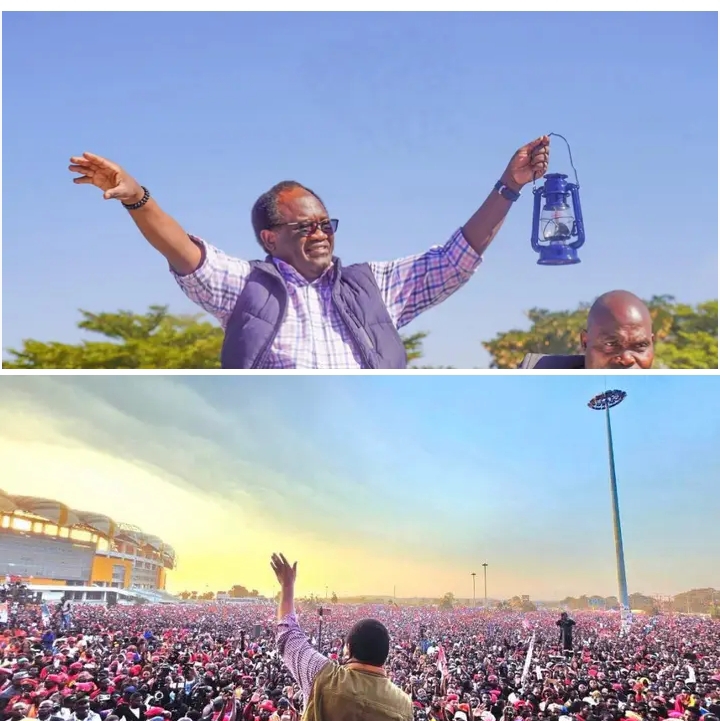
It is also necessary to speak plainly about public rallies. Transporting crowds to create attendance does not inspire confidence; it suggests the opposite. When people must be ferried in to fill a venue, the public notices, and discussions continue long after the event has ended.
If support is genuine, people show up willingly. They walk, travel, and gather on their own because belief drives participation. A movement that must manufacture its audience reveals the depth of its support.
Real support cannot be hired. It is given freely, or it is not given at all.
Leadership Is a Relationship, Not a Report
Every significant political movement, both within Africa and beyond, has been built on connection rather than correctness. Numbers may influence international institutions, but they do not win the heart of a nation. People follow leaders who make them feel seen, heard, and respected, not those who make them feel like items to be managed.
Zambia in 2026 does not need another lecture in economics. It needs a leader who understands that sincerity matters, who engages communities with open ears and genuine intent.
That is the leadership Brian Mundubile is offering. Not a calculator, but a conversation. The people are not a spreadsheet. It is time the country is led by someone who remembers that.