
THE ISRAELIS’ BOMBSHELL ON PRESIDENT HICHILEMA’S WANING POPULARITY
By Given Mutinta
THE ISRAELIS’ BOMBSHELL ON PRESIDENT HICHILEMA’S WANING POPULARITY
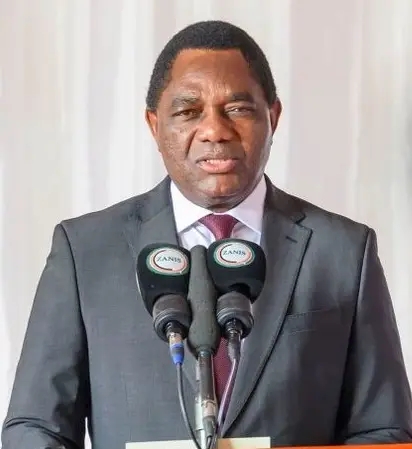
As Zambia approaches a crucial election season, President Hakainde Hichilema has been growing increasingly concerned about the disconnect between the enthusiastic crowds at political rallies – mostly paid to attend and the underlying public sentiment.
According to reports, his parallel intelligence structures were providing reassurances that did not reflect the true mood of the electorate.
Sensing the gravity of the situation, President Hichilema sought external expertise, turning to Israeli intelligence agencies, known globally for their advanced data-gathering and analysis capabilities.
The Israeli team arrived in Lusaka with state-of-the-art technology, ready to conduct a thorough and impartial assessment of the electoral landscape.
This allowed the Israelis to construct a more accurate picture of the prevailing political climate, free from the biases or blind spots that may have hampered President Hichilema’s local intelligence wings.
Following their rigorous data analysis, the Israeli intelligence team presented their findings directly to President Hichilema.
The results were striking: Brian Mundubile was leading in national popularity with about 52.7% support.
President Hichilema’s own popularity was estimated to be between 10% and 30%.
Other opposition parties collectively accounted for about 14%.
The report projected that once officially nominated and his campaign launched, Mundubile’s support could soar to 70–80%.
Additionally, the Israelis found that in Southern Province, 14 independent Members of Parliament were poised for easy victories against the United Party for National Development (UPND) candidates.
These revelations came as a shock to President Hichilema, who realized that his grasp on power was far more tenuous than public rallies or his own intelligence reports had suggested.
Faced with these stark numbers, President Hichilema reportedly asked the Israeli team for strategies to secure electoral victory, including the possibility of rigging the elections.
The Israeli experts were blunt: given the wide margins and the high level of public resentment towards President Hichilema’s leadership – reportedly measured at 86%, electoral manipulation was deemed impractical and dangerous.
They warned that any attempt to rig elections under such circumstances could lead to civil unrest or even civil war, especially considering the existence of parallel intelligence wings within the government structures.
These parallel security agencies, one motivated not by partisan preference but by duty to the country, would likely counter any illegal electoral activities.
Furthermore, the Israeli advisors pointed out that the only feasible, albeit unethical, option would be to bribe or eliminate independent candidates to reduce competition. But even this move cannot make President Hichilema win the elections.
This advice, whether acted upon or not, coincided with a subsequent wave of bribes and violence targeting independent candidates, resulting in some withdrawing from the race and, reportedly, even some assaults and deaths in Southern province.
The credibility of the Israeli intelligence findings was seemingly confirmed by Xavier Chungu, a former intelligence chief, when he said that they will be change of government this year.
His arrest shortly thereafter was widely interpreted as an attempt to suppress dissent and control the narrative.
Given Israel’s close intelligence-sharing relationship with the United States, the findings and subsequent developments reportedly triggered concern in Washington.
The United States government then issued warnings to its citizens and international community about the risk of civil unrest in Zambia due to electoral manipulation, highlighting the potential for violence and instability.
As the August elections draw nearer, the political atmosphere in remains tense.
The increased vigilance of patriotic citizens and stakeholders acts as a powerful deterrent to any illegal commands to security service chiefs or entity to rig the elections.
President Hichilema faces an uphill battle for re-election, confronted not only by a strong opposition but also by mounting internal and external pressures.
The transparency and credibility of the upcoming elections will be crucial in determining the country’s political future and maintaining national stability.