
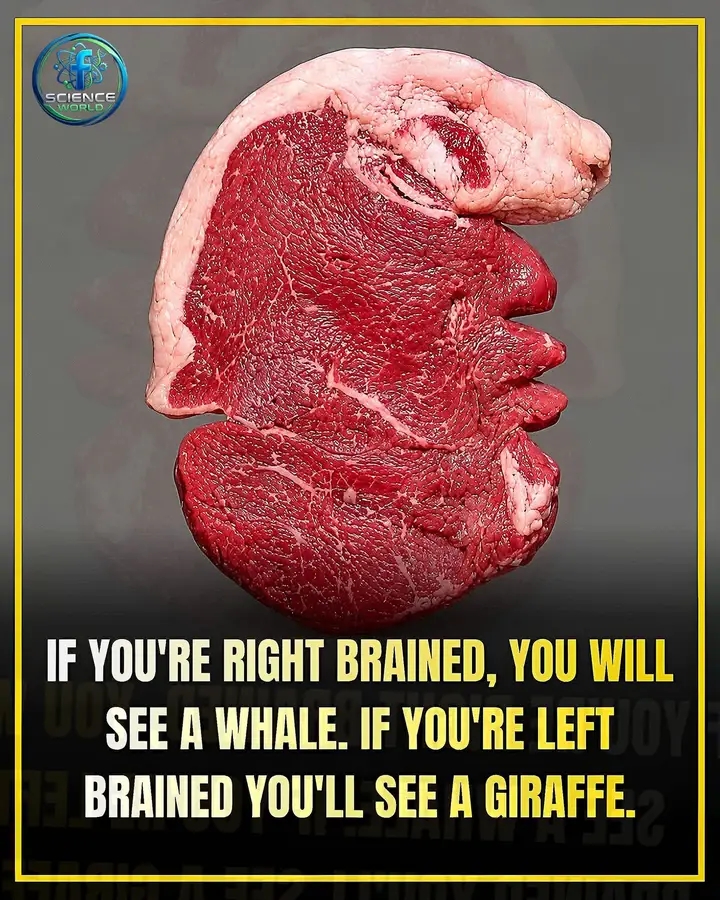
The animal you see is a result of your brain filling in the blanks rather than an actual drawing
The animal you see is a result of your brain filling in the blanks rather than an actual drawing.
Neither a whale nor a giraffe is actually present in the image. You are looking at a piece of raw steak with specific marbling and contours. The “visibility” of the animals depends entirely on how your brain interprets the light and shadow.
How to spot the “Whale”
Most people who see a whale are looking at the entire silhouette of the meat. The thick white section of fat at the top right resembles the head and blowhole of a whale breaching the surface. The rounded, darker red section at the bottom then acts as the rest of the body and tail.
How to spot the “Giraffe”
Those who see a giraffe usually focus on the right edge of the meat. The three distinct protrusions or “bumps” on the right side can look like the facial features of a giraffe. If you imagine the long vertical stretch of the meat as a neck, the top portion becomes the head looking toward the right.
This is a classic case of pareidolia. Your brain is hardwired to find recognizable patterns like faces or animals in random data. This survival mechanism helps us identify potential threats or food in nature, but in this case, it just turns a dinner choice into a viral optical illusion.
What did you see first when you looked at the image?