
GUEST ARTICLE: IT’S ALWAYS BAD GOVERNANCE TO ARREST MESSENGERS
By Kellys Kaunda
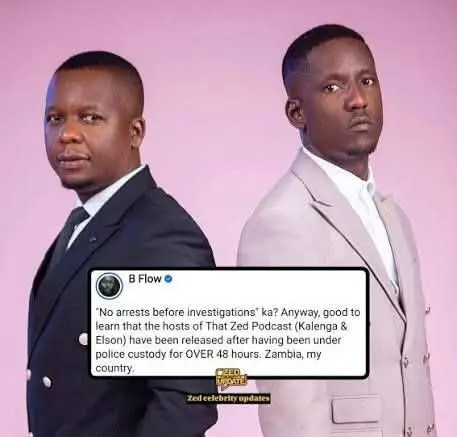
Arresting (or as corrected by Akataluka Songiso in the first comments) detaining Zed Podcast hosts is the textbook definition of “shooting the messenger”. The idea is drawn from ancient days when letters were delivered in person by messengers. If the recipient didn’t like the message, sometimes messengers were killed.
If you think this is unfair and absurd, it is precisely why we advocates of media freedom describe as unfair when government arrests Podcast hosts or indeed any media personnel who were simply performing their constitutionally-protected duties.
Here is the simplest way of understanding this principle. When you kill the messenger, you will receive no mail. And if you receive no mail, the source of vital information dries up.
If you can’t receive information, you are in danger of a lot of things including losing your own life to an enemy the messenger would have warned you about.
Killing a messenger is also equivalent to burning down a bridge. This cuts you off from the rest of the world. If you cut yourself off from the rest of the world, you are likely to lose out from the benefits that come from learning from others.
In today’s world, those that work in the media space are the modern version of messengers in ancient days. They serve as conduits through which vital information needed by the public is communicated. They are the bridge that connects communities and nations.
Arresting them because the state doesn’t like the message is as bad as in ancient days when messengers fell victims of the wrath of recipients of unpalatable news.
The state thinks it’s wiser than the messenger by determining what message he or she must broadcast. The modern messenger’s primary responsibility is to make available the medium of communication to the author of the message. What message the author relays is his or her responsibility.
In any case, history would exonerate the messenger and absolve them of the guilt that the state often assigns to them. Between the media and the state, it’s the latter and it’s agents that have often needed to be arrested than the other way around.
For instance, in terms of national security, it was President Frederick Chiluba and Levy Mwanawasa who were the guilty parties for recklessly revealing to the public State House tunnels and the Zamtrop account, respectively. There was no public interest that stood to be served by exposing infrastructure and a bank account that had extremely high security value.
Ask any journalist or media personnel, our level of patriotism and responsibility is often higher than the state and its officials. We know things far beyond what we report about because we know what is in the best interest of the public. We often see as deeply hypocritical when the state arrests any of us.
So, please, don’t kill the messenger.