
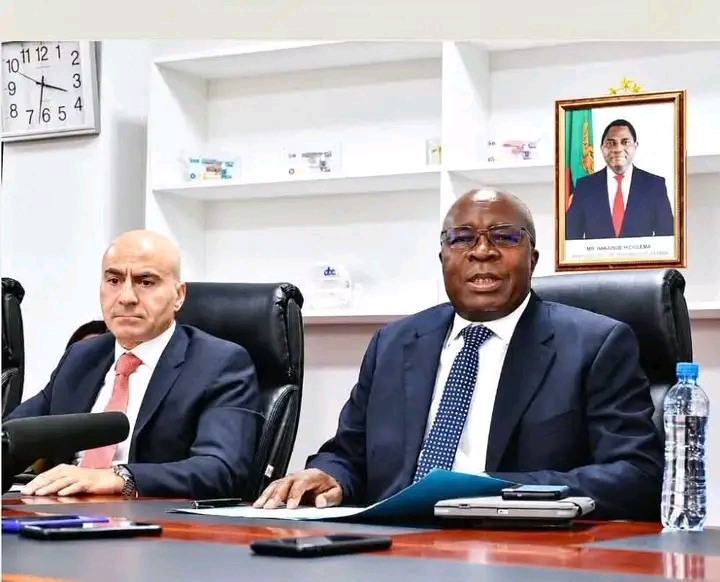
Zambia Borrows $1.47 billion in staff-level agreement with IMF
Musokotwane Borrows Again
Zambia Borrows $1.47 billion in staff-level agreement with IMF
Zambia has reached a staff-level agreement with the International Monetary Fund on a new $1.472 billion program to support its shift from economic stabilization to growth, Finance Minister Situmbeko Musokotwane said Friday.
The proposed 36-month extended credit facility, equivalent to SDR 1.076 billion, will support budget and balance-of-payments needs and safeguard debt sustainability, Musokotwane said. The agreement remains subject to approval by IMF management and the executive board and implementation of prior actions.
Musokotwane spoke at a briefing in Lusaka with Bank of Zambia Gov. Denny Kalyalya and IMF mission chief Mercedes Vera Martin.
The IMF projects Zambia’s economy will grow 5.6% in 2026, driven by agriculture, mining and exports, according to the fund. Annual inflation fell to 6.1% in September, within the government’s 6% to 8% target range, and international reserves have risen to about $6.1 billion.
Under the program, the government plans to progressively raise the primary fiscal surplus to 3% of gross domestic product by 2029 starting in 2027, through stronger revenue mobilization, improved tax compliance, rationalized exemptions and more efficient spending.
Reforms will also strengthen oversight of the Food Reserve Agency, state-owned enterprises and public-private partnerships, improve debt management and address payment and value-added tax refund arrears while protecting social spending, Musokotwane said.
The program will support President Hakainde Hichilema’s Grow Zambia agenda, which prioritizes investment, production, value addition and exports in agriculture, mining, manufacturing, tourism, energy and infrastructure.
Musokotwane said the goal is not simply to secure an IMF program but to build a stronger economy measured by jobs, stronger businesses, opportunities for young people, reliable electricity, better public services and higher household incomes.
“We have stabilized the economy. We must now grow it,” he said.
The government will translate the strategy into specific actions with measurable targets and timelines and provide regular public updates, he said.