
Why The Tanzania Formula Can’t Work in Zambia’s 2026 Elections
Why The Tanzania Formula Can’t Work in Zambia’s 2026 Elections.
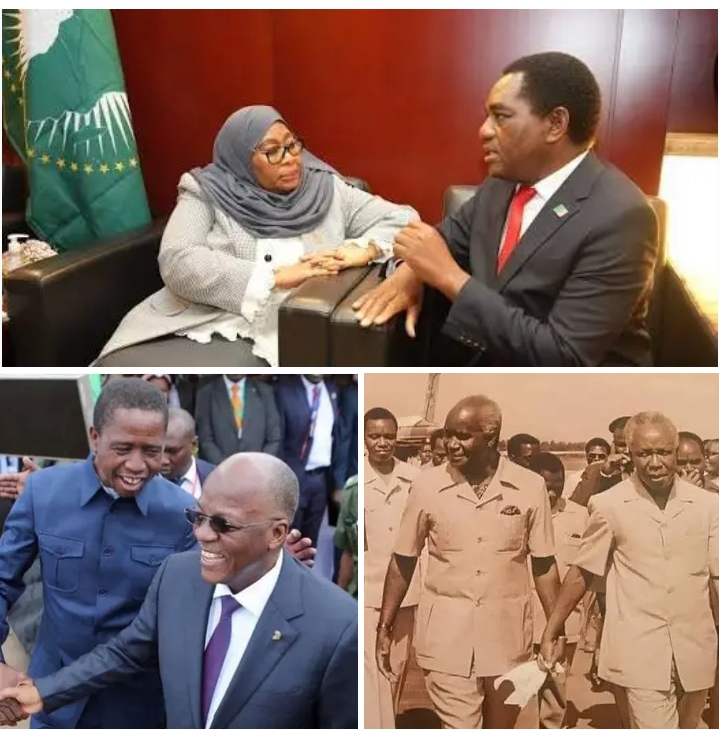
When President Hakainde Hichilema attended the inauguration of Tanzania’s President Samia Suluhu Hassan in November 2025, many observers wondered if this was a way of studying Tanzania’s ruling party model as a way to secure long‑term power in Zambia. Tanzania’s Chama Cha Mapinduzi (CCM) has ruled uninterrupted for more than sixty years, making it one of Africa’s most enduring political Parties. But Zambia’s political soil is very different, and the “Tanzania formula” cannot be transplanted here.
Tanzania’s CCM was born directly out of the independence struggle, carrying the image of a liberation movement that united the nation. Its dominance is tied to history, symbolism, and a system where the party and the state are almost inseparable. Zambia’s story, however, is one of contested independence and repeated change.
Kenneth Kaunda’s UNIP was voted out in 1991, Frederick Chiluba’s MMD was removed in 2011, and Edgar Lungu’s PF lost in 2021. If you look closely in all these transfers of power, every president tried to resist handing over power however the pressure and risk associated with going against the will of the people is to risky for any man to bear thus the handing over of power.
Zambians have shown again and again that they can peacefully remove governments through the ballot box. This culture of alternation is deeply rooted and cannot be easily erased.
Institutions also work differently. In Tanzania, the civil service is politically associated with almost everyone having a party card like it was under Kaunda, the electoral commission is controlled directly by the president, making opposition victories nearly impossible. In Zambia, even commissions appointed by ruling parties have declared opposition winners. In 2021, it was an ECZ appointed by the Patriotic Front that announced Hichilema’s victory. Similar to the case of Banda and Kaunda. This precedent proves that Zambia’s institutions, while imperfect, have the capacity to deliver real change.
Civil society is another strong barrier. In Tanzania, opposition leaders are often silenced before elections, and civic space is restricted. Zambia’s churches, civil society organizations, and digital citizens are far more active. They have stopped attempts to undermine democracy before, such as when civil society blocked Chiluba’s third‑term bid in 2001. Today, Zambia’s youth and online communities are even more vigilant, making it harder for any government to quietly manipulate the system.
Most importantly, UPND does not carry the liberation mythology that CCM enjoys. Founded in 1998 by Anderson Mazoka, it cannot claim to be the “torchbearer of independence.” Without that historic legitimacy, it cannot fuse itself to the state in the same way CCM has done in Tanzania. Zambians know their democracy is built on accountability, not on one party’s permanent rule.
Zambia’s democracy is alive, dynamic, and shaped by a history of change. The “Tanzania formula” depends on a unique mix of liberation history, party‑state fusion, and controlled institutions that Zambia does not have despite the president having so much power. Any attempt to impose it here would not secure UPND’s future it would likely trigger resistance and accelerate its downfall. Zambia’s people, civil society, and institutions are too awake to allow one‑party dominance and thus the Tanzania formula can’t be implemented in Zambia
Michael M Mulusa
The Voice