
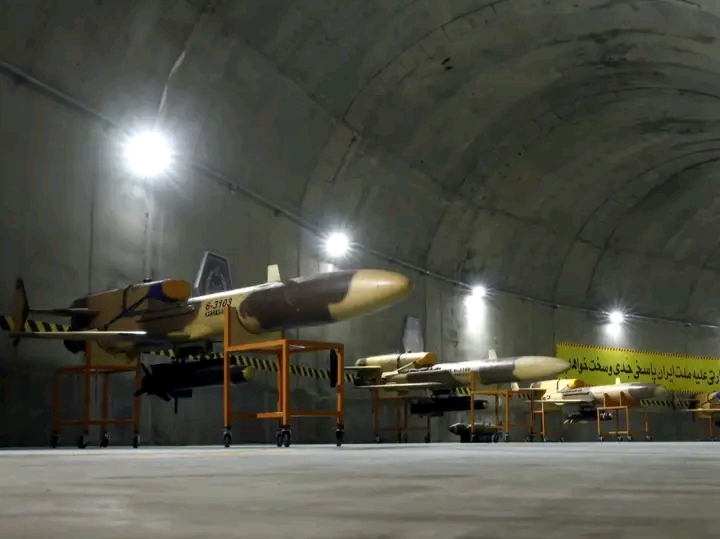
Inside Iran’s Deep Nuclear Bases: What Lies Beneath the Mountains
Iran’s deep underground strategic bases are not simple bunkers they are fully integrated military-industrial systems designed to survive airstrikes, sanctions, and prolonged conflict.
At their core are uranium enrichment halls, housing advanced centrifuges used to process nuclear material. These facilities are buried tens to over a hundred meters underground, shielded by reinforced concrete and natural rock, making conventional airstrikes largely ineffective.
Supporting these halls are multi-layered tunnel networks, built with sharp turns and segmented chambers to contain blast damage and prevent total system collapse from a single hit.
Each base includes a hardened command-and-control center, enabling Iranian leadership to maintain communications, issue military orders, and coordinate responses even during active attacks.
To ensure long-term operability, the bases are equipped with independent power generation, air filtration systems, water storage, and sealed living quarters allowing personnel to operate without surface access for extended periods.
Above ground, the sites are protected by integrated air-defense systems, camouflage, and decoy structures, complicating enemy targeting and intelligence assessments.
Crucially, Iran has designed these facilities with redundancy and dispersal in mind. Sensitive equipment can be relocated, shut down, or divided across multiple locations, ensuring that no single strike can end the program.
Iran’s underground bases are built not just to hide but to endure, adapt, and keep functioning under pressure.