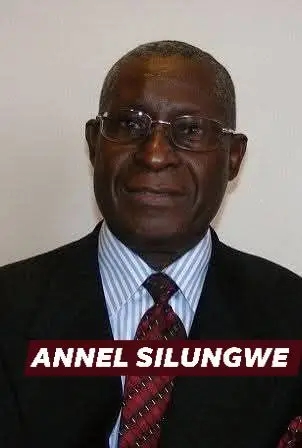
✅ ANNEL SILUNGWE : ZAMBIAS FIRST INDIGENOUS CHIEF JUSTICE
✅ CHIEF JUSTICE SILUNGWE PRESIDED ON THE INFAMOUS KAMBARANGE KAUNDA MURDER CASE
When Annel Silungwe, Zambia’s First Indigenous and best Chief Justice, Finally Slamed His Gavel for the Last Time
By Joseph Maonde
In my many year’s of studying law ,I always ecounter one name in almost all legal books.but before we come to that Zambian genius,history remembers a select group of legal minds whose intellect reshaped the foundations of justice and guided the evolution of modern jurisprudence. The enduring judicial clarity of Lord Denning, the foundational scholarship of Sir William Blackstone, the analytical precision of John Austin, the moral reasoning of John Finnis, the constitutional doctrine of A. V. Dicey, and the analytical philosophy of H. L. A. Hart continue to influence courts and legal systems across the world. Their writings and judgments remain central pillars in the development of legal thought, shaping generations of judges, advocates and scholars.
Yet legal genius is not confined to any one geography or era. It appears wherever intellect, integrity and devotion to justice converge. In Africa, and particularly Zambia, one such figure emerged in the person of Justice Annel Musenga Silungwe, SC, a jurist whose influence extended beyond national borders and into the wider Southern African legal landscape.
A Nation Bids Farewell to a Judicial Giant
On 30 June 2024, Zambia lost one of its most distinguished legal minds when Justice Annel Musenga Silungwe, SC, the country’s first indigenous Chief Justice, passed away at the age of 88. His death marked the symbolic moment when a towering judicial career came to a close when the man who had once presided over the highest court in the land finally “slammed his gavel for the last time.”
His passing represented not only the end of a life, but the conclusion of an era in Zambia’s constitutional development—an era defined by judicial transformation, independence, and the emergence of a fully Zambian-led judiciary.
The Colonial and Transitional Chief Justices
Before Silungwe
Before independence and in the early post-independence years, Zambia’s judiciary was led by expatriate Chief Justices who shaped its early institutional foundations:
Sir Diarmaid Conroy (1964–1965)
John Ramsey Blagden (1966–1969)
James John Skinner (1969)
Brian Andre Doyle (1969–1975)
These jurists oversaw the early transition of Zambia’s legal system from colonial administration into an independent judiciary. However, it was under Justice Brian Andre Doyle that the final chapter of expatriate judicial leadership came to an end.
That chapter closed definitively on 1 May 1975, when history was made: Annel Musenga Silungwe became Zambia’s first indigenous Chief Justice, marking a profound shift in the ownership, identity, and philosophy of the country’s judicial system.
From Court Interpreter to Chief Justice
Born on 10 January 1936 in Mbala, Justice Silungwe’s journey to the pinnacle of the judiciary was defined by discipline, perseverance and intellectual excellence. He began humbly as a Court Interpreter, working within the legal system before formally entering the study of law.He later travelled to London, where he studied at the Inner Temple and was called to the Bar as a Barrister-at-Law in 1966. Upon returning to Zambia, his rise was swift and exceptional: he became a Resident Magistrate in 1967 and, at just 35 years old, was appointed a Puisne Judge in 1971.
In 1975, at the height of his ascent, he was appointed Chief Justice of Zambia—a position he would hold for 17 years until 1992, becoming the longest-serving Chief Justice in the country’s history.
Understanding the Gavel
The gavel is a small wooden hammer traditionally used by judges and presiding officers to maintain order in court, signal the start and end of proceedings, and formally pronounce decisions. Although not universally used in all common law jurisdictions, it has become a powerful global symbol of judicial authority, discipline, and the finality of legal judgment.
In Justice Silungwe’s courtroom, the gavel represented more than procedure—it symbolised closure, certainty, and the authority of law over dispute. Each time he delivered judgment, the symbolic strike of justice echoed through the courtroom, marking the end of conflict and the affirmation of constitutional order.
A Legal Genius Who Defined Judicial Excellence
Justice Silungwe was widely regarded as one of Zambia’s most intellectually gifted jurists. His legal reasoning was marked by clarity, discipline and a deep understanding of constitutional principles. He combined technical mastery of law with a strong moral sense of justice, earning respect across the legal profession.He was described by many within the judiciary as a “judge’s judge”a jurist whose reasoning elevated legal discourse and set standards for judicial writing and interpretation. His judgments reflected precision, restraint, and an unwavering commitment to fairness.Beyond intellectual ability, his genius lay in his judicial temperament: calm under pressure, firm in principle, and deeply respectful of the rule of law.
His Contribution to the Zambian Legal Fraternity
Justice Silungwe played a foundational role in shaping Zambia’s modern legal profession. His leadership strengthened judicial independence at a time when constitutional institutions were still developing their identity.He mentored generations of magistrates, judges, and legal practitioners, instilling in them a culture of professionalism, integrity, and respect for the Constitution. His influence extended into legal education and judicial administration, helping to shape the ethical framework of Zambia’s legal fraternity.
In 2011, he was appointed to chair the Technical Committee on Drafting the Zambian Constitution under President Michael Chilufya Sata. Through nationwide consultations, he helped guide one of the most significant constitutional review processes in Zambia’s democratic history.
Service Beyond Zambia: Namibia and Seychelles
After retiring from Zambia’s judiciary in 1992, Justice Silungwe continued to serve the law beyond his homeland. He was appointed to the Supreme Court of Namibia, where his judicial experience contributed to the development of that country’s post-independence legal system.
He also became the first Director of the Namibia Justice Training Centre, playing a key role in judicial capacity building. In addition, he served as an acting judge in the Seychelles, further demonstrating the regional trust placed in his legal wisdom and integrity.
Few jurists in the region have had such a multi-jurisdictional judicial impact, making his career exceptional in both scope and influence.
Public Service and Judicial Independence
Before ascending to the bench, Justice Silungwe served briefly as Attorney General and Minister of Legal Affairs under President Kenneth Kaunda. Despite this political background, he maintained strict judicial independence throughout his career on the bench, earning respect across political lines.
He consistently upheld the principle that the judiciary must remain separate from political influence, and that judges serve the Constitution above all else.
Family and Personal Legacy
Behind the towering judicial figure stood a devoted family man. Justice Silungwe was married to Abigail Nanyangwe Silungwe, and their marriage spanned approximately 64 years. Together they raised six children, and his legacy continues through his grandchildren and great-grandchildren.
At the time of his passing, he was remembered not only as a jurist of exceptional standing but also as a loving husband, father, grandfather and great-grandfather whose values of humility, discipline and service shaped his family life as much as his public service.
The Final Gavel
Justice Annel Musenga Silungwe’s passing marks the end of one of the most influential judicial careers in Zambia’s history. His final gavel symbolises the close of a life dedicated to justice, constitutionalism, and the strengthening of democratic institutions.
Yet while the courtroom is now silent, his legacy remains deeply embedded in Zambia’s legal system. His contributions continue to shape judicial reasoning, constitutional development, and the professional standards of the legal fraternity.
He was not merely a Chief Justice he was a foundational figure in Zambia’s legal identity, a jurist whose influence extended beyond borders and generations.His gavel may have fallen silent, but the principles he upheld continue to speak.
The author holds a Bachelor’s Degree in Law, a Master’s Degree in Law, a Master’s Degree in Climate Change and Sustainable Development, and a Diploma in Art and Design. He is also a researcher in Constitutional Law, Humanitarian Law, Investment Law, and Modern History.