
WAS THE PRESIDENT TALKING ABOUT MOVING WATER FROM LUAPULA TO THE SOUTH?
WAS THE PRESIDENT TALKING ABOUT MOVING WATER FROM LUAPULA TO THE SOUTH?
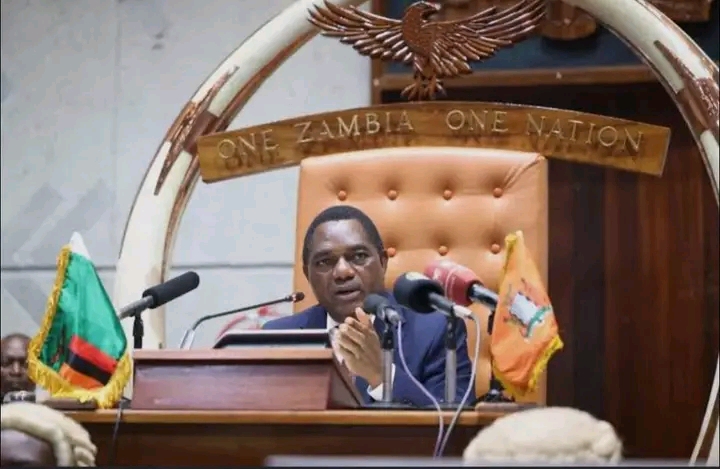
“We will have to move water where we need to move it… Right now, a lot of our water goes to the Indian Ocean and the Atlantic Ocean and we just watch it,” President Hakainde Hichilema told Parliament on Friday.
Although President Hichilema’s statement was vaguely delivered, it appeared to reinforce recent attempts by the government to build a canal to move some water from resource-rich Chambeshi and Luapula Rivers system in the Northern circuit through the Kafue River to reinforce reducing water resource availability in the Southern Zambia.
This is what the President said: “The government will continue in strengthening integrated water resource management. We will protect our water catchment areas, rivers, lakes, wetlands and ground water resources while implementing measures to mitigate and adapt to the effects of climate change.”
He added: “Madam Speaker, we will have to move water where we need to move it. And that’s what Nations do across the world. We have to do that. Right now, a lot of our water goes to the Indian Ocean, goes to the Atlantic Ocean and we just watch it. And we are happy to watch and it goes. But we can generate value from it. Some things have been very badly done for years, let us work together to correct the situation.”
As the weather pattern in Zambia continues to navigate from being drier to unpredictable rainfall patterns, the Southern part of Zambia which is the biggest consumer of water mainly through power generation and other agriculture-related activities, has been the worst hit region by these effects of climate change..
Zambia’s biggest hydroelectric generation facilities – 990MW Kafue Gorge Upper, 750MW Kafue Gorge Lower and the 1, 080MW Kariba Dam complex are all located in Southern part of the country and also are other industries like the biggest sugar production complex at Nakambala Sugar Estate is in Mazabuka.
In 2024, the government announced that it had signed a Memorandum of Understanding (MoU) with Power China International for the proposed Luapula–Kafue Water Transfer Project, alongside a comprehensive water development plan for the Kafue Catchment.
According to former Water Development and Sanitation Minister, Collins Nzovu, the MoU was expected to result in developing a canal or other ventures for transferring water from the abundant northern circuit – Luapula and Chambeshi catchments to the South via Kafue River to safeguard power generation and other industries that depend on the Kafue River basin.
But the proposed move was sharply opposed by Luapula chiefs who demanded the immediate termination of the project and MoU signed with China Power International in August 2024.
The traditional leaders cited a severe lack of transparency and consultation, further arguing that draining or altering the Luapula River would cause massive ecological destruction, loss of fish and wildlife populations, and disruptions to local livelihoods and wetlands protected under international treaties.
The Luapula River is a tributary and upper headwater system of the Congo River basin.
An internal report by Zambia’s Meteorological Department in 2024 has warned that a plan to take water from the Luapula River in the north and pump it to the hydroelectric plants on the Kafue river in the south could cause severe harm to the ecosystem.