
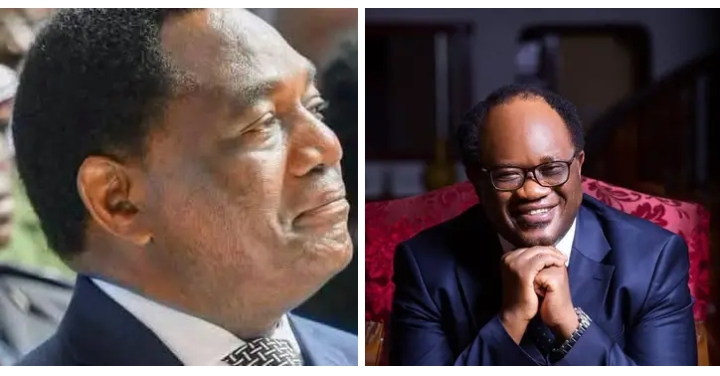
HALT HICHILEMA’S INAUGURATION UNTIL LEGAL DISPUTES ARE RESOLVED, OPPOSITION DEMANDS FROM AFRICAN UNION
Tonse-Pamodzi takes Zambia election dispute to AU
…Alliance asks Peace and Security Council to intervene and halt September 1 inauguration
THE Tonse-Pamodzi Alliance has asked the African Union (AU) to urgently intervene in Zambia’s post-election crisis citing serious and continuing breaches of the African Charter on Democracy, Elections and Governance.
Former Zambia’s Ambassador to Ethiopia and Permanent Representative to the African Union, Emmanuel Mwamba, made the appeal in a letter dated August 25, 2026 addressed to African Union Commission chairperson Mahmoud Ali Youssouf on behalf of the opposition alliance.
“The gravest of these breaches can still be arrested, but only before the inauguration scheduled for 1 September 2026 renders judicial scrutiny of the election moot,” Mr Mwamba wrote.
He said Zambia was facing a situation in which constitutional and judicial mechanisms for challenging the election result were being disabled.
Mr Mwamba specifically cited the sealing of court premises across Zambia on August 24, including the Lusaka High Court complex and the building housing the Constitutional Court, by armed military and police personnel.
He said lawyers had been instructed to leave the premises, while an unsigned memorandum had been issued to Judiciary staff communicating the closure.
Mr Mwamba said there had been no formal public explanation of the closure, including its legal basis, scope or duration.
He argued that the closure was particularly serious because it occurred on the final day of the seven-day constitutional period for challenging the declaration of the President-elect before the Constitutional Court.
Mr Mwamba said the Judiciary had itself recorded that the Constitutional Court Registry was required to remain open from 08:30 to 18:00 hours for purposes of a presidential election petition.
He said the State could not require election disputes to be pursued exclusively through legal channels while simultaneously sealing those channels.
“A State cannot demand that election disputes proceed through exclusively legal channels while physically sealing those channels, and it cannot rely on an impossibility of its own creation,” Mr Mwamba stated.
He said the situation had already affected a petition involving former Law Association of Zambia president Linda Kasonde, Brebner Changala and the LCK Freedom Foundation, which named the Electoral Commission of Zambia, the Attorney General and President Hakainde Hichilema as respondents.
Mr Mwamba said the petition was transmitted electronically to the Chief Justice after physical access to the courts had been prevented, and that the Judiciary had acknowledged receipt before the Chief Justice referred the documents to the Constitutional Court for consideration of the filing issue.
He contrasted that with a statement by the Secretary to the Cabinet Patrick Kangwa that the Judiciary had not received any petition, saying the position was contradicted by the Judiciary’s own acknowledgment.
Mr Mwamba also challenged the planned September 1 inauguration, arguing that proceeding before the Constitutional Court determined whether the petition had been properly filed could pre-empt the constitutional mechanism for challenging the election.
He further raised concerns over the reported deployment of the armed forces at polling stations, totaling centres and the National Results Centre, as well as the August 14 operation at the residence of Tonse-Pamodzi presidential candidate Brian Mundubile.
He said former Cabinet minister Mutotwe Kafwaya was killed during the operation and 11 people, including senior opposition figures, were reportedly arrested.
Mr Mwamba also questioned the conduct of the Electoral Commission of Zambia, citing its suspension of tallying and announcement of results on August 14 and the subsequent declaration of results in the early hours of August 18.
He said the Commission had declined to publish polling-station-level results in analysable form and release Records of Proceedings at Totaling Centres and GEN20 forms.
The former ambassador also referred to an analysis by Professor Nic Cheeseman of the University of Birmingham and Dr Nicole Beardsworth of the University of the Witwatersrand, which he said identified significant differences between presidential and parliamentary turnout figures in several constituencies.
Mr Mwamba said the analysis estimated that the differences could account for between 350,000 and 550,000 votes, concentrated in ruling-party strongholds.
He said the discrepancies required examination by the Constitutional Court rather than being treated as conclusive evidence of wrongdoing
Mr Mwamba also said the August 14 operation at Mr Mundubile’s residence occurred shortly after the opposition leader had met the African Union Election Observation Mission, arguing that the incident raised questions under the Charter concerning security, non-interference and cooperation with election observers.
He asked the African Union Commission to take the matter before the Peace and Security Council under Article 24 of the Charter and remain seized of the situation through the petition period and the planned inauguration.
Mr Mwamba also asked the AU to urgently engage the Zambian Government to restore full access to the courts and refrain from conducting the September 1 inauguration while the Constitutional Court considers the petition filing issue.
Mr Mwamba called for preservation of all electoral materials and audit-trail documents, including polling-station results, Records of Proceedings at Totaling Centres and GEN20 forms, as well as an independent investigation into the closure of the Judiciary and the August 14 operation in which Kafwaya was killed.
The alliance also wants the AU to call for respect for the rights of people detained in connection with the election, including access to lawyers and courts, and to consider further measures if the alleged breaches continue.
Mr Mwamba said the African Charter should not be treated as merely aspirational, arguing that Zambia’s own institutions, churches and civil society organisations were calling for regional intervention over the threat to judicial independence and the rule of law.