
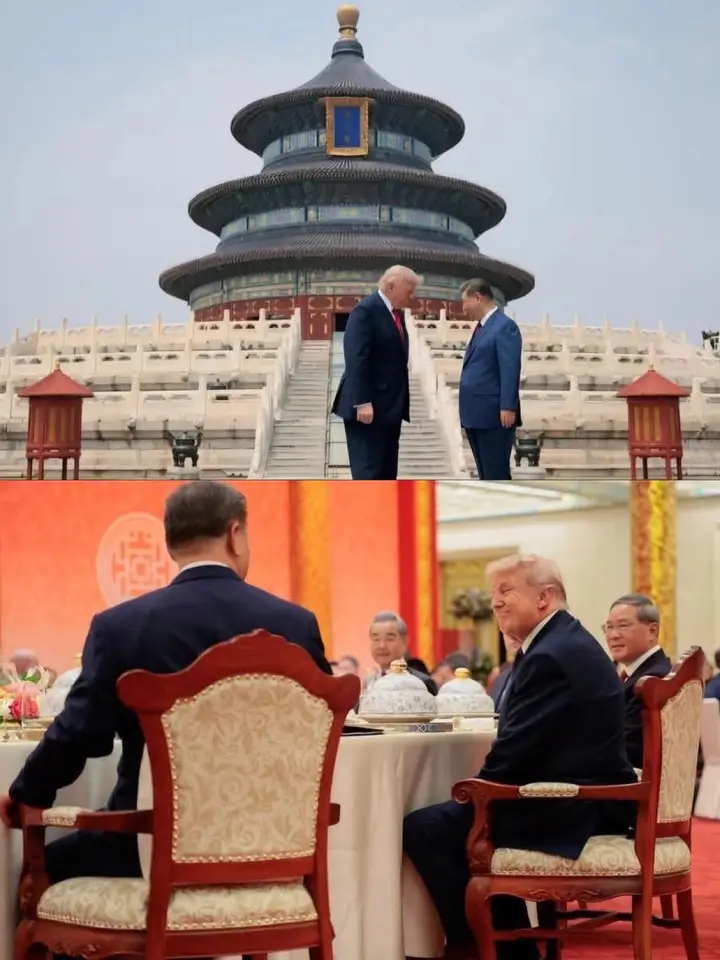
Why did Xi Jinping choose the Temple of Heaven for Donald Trump?
The answer may lie in symbolism.
The Temple of Heaven was once reserved exclusively for Chinese emperors, who prayed there for prosperity, stability, and Heaven’s blessing over the empire. Built in 1420 during the Ming Dynasty, it represented the emperor’s divine legitimacy as the “Son of Heaven.”
By hosting Trump at one of China’s most sacred historical sites, Xi Jinping appeared to send a powerful message to both Washington and the world: China is not just a rising power — it is a civilization-state with centuries of political continuity, cultural depth, and historical confidence.
The image itself carried enormous symbolism: two leaders of modern superpowers standing where emperors once performed rituals believed to determine the fate of the nation.
Even the reported balance of Chinese and Western dishes at the state dinner was interpreted by some analysts as strategic diplomacy — projecting equality, respect, and the idea that Beijing sees U.S.-China relations as a balance between two major powers rather than a hierarchy dominated by one side.
For China, optics matter — and every detail of the setting appeared carefully chosen.