
Mundubile Mapping Serious Leadership Through Action
….if you fail to plan, then you plan to fail….
By Dr Mwango Mwansa
Strip away the noise, the theatrics, and the daily churn of political headlines, and one question remains central to Zambia’s democratic moment: As the August 2026 election approaches who is ready to govern?
Measured against that standard, Brian Mundubile is not merely positioning himself as a candidate. He is presenting himself as a leader already thinking in the language of government.
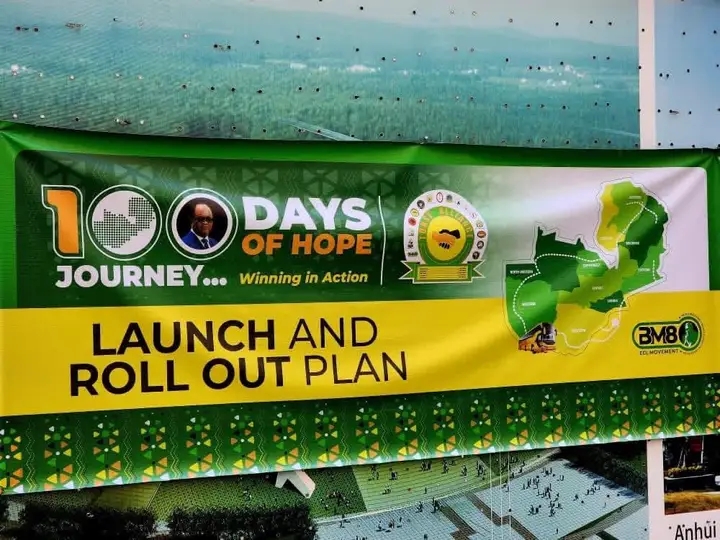
The “100 Days of Hope” is the clearest signal. Framed as a “Journey Winning in Action” and backed by a defined “Launch and Roll Out Plan,” it reflects more than ambition. It reflects readiness.
This is the vocabulary of execution, sequencing, and delivery. It suggests a leader who understands that governing is not an event, but a system of coordinated actions driven by timelines and measurable outcomes. In a political environment where promises are often open ended, this level of structure projects preparation.
Equally telling is his intervention in opposition politics. By calling for unity and extending a hand to figures other opposition leaders, Mundubile is demonstrating an understanding that leadership at the national level requires coalition building, not fragmentation. Readiness to govern is not only about ideas. It is about the ability to organise people, align interests, and build a functional political centre.
His openness to experienced leadership further reinforces this posture. By welcoming seasoned figures such as Sakwiba Sikota and Kapembwa Simbao, he signals that his approach is not experimental, but grounded. Governments are not built from scratch. They are assembled from experience, institutional memory, and tested competence. This balance between continuity and renewal is a hallmark of leaders who are prepared for office.
There is also a strategic discipline in how he is managing his campaign. While much of the political space is reactive, driven by short term narratives and headline chasing, Mundubile appears to be setting the pace. The emphasis on national reach, reinforced visually through the map of Zambia, projects a candidate thinking beyond factions and regions. This is not the posture of a campaign searching for direction. It is the posture of one defining it.
Most importantly, his approach reflects a willingness to be judged. By presenting a defined journey supported by a rollout plan, he is inviting scrutiny before power is attained. That is the clearest signal of readiness. Leaders who are not prepared tend to avoid measurement. Leaders who are ready build systems that can be evaluated.
Timing completes the picture. Serious leadership does not emerge at the last minute. It is built through early organisation, clarity of message, and disciplined positioning. By moving ahead with a structured and action oriented framework, Mundubile is not reacting to the election cycle. He is preparing for the responsibility that comes after it.
None of this removes the need for substance. Plans must still be detailed. Coalitions must still hold. Execution must still follow intent.
But readiness is never accidental. It is constructed.
And in the current political landscape, Brian Mundubile is beginning to look less like a candidate preparing to contest, and more like a leader preparing to govern.
That distinction may ultimately define the election.
About the Author
Dr Mwango Mwansa is a scholar with a multidisciplinary background that bridges medicine and political analysis. He is a practicing medical Doctor and in addition to his medical training, he is a degree holder in Political Science and International Relations, reflecting a sustained interest in governance, policy, and global affairs. He is currently pursuing a Master’s in Political Dynamics and International Affairs, with a focus on leadership systems, statecraft, and democratic development.