
Zambia Rejects UN Rapporteur’s Claims, Says Treason Not a Capital Offence
Zambia Rejects UN Rapporteur’s Claims, Says Treason Not a Capital Offence
By Edmond Mbanga Miti Jr.
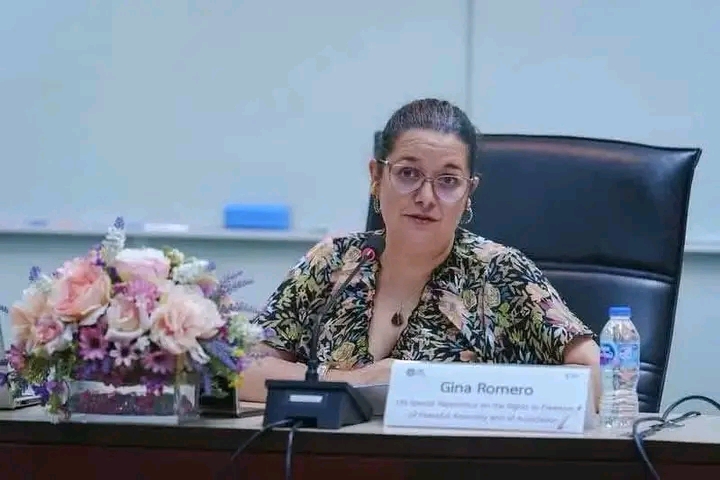
LUSAKA — The Zambian government has pushed back hard against a United Nations official’s assessment of the country’s post-election situation, accusing the Special Rapporteur on Freedom of Peaceful Assembly and of Association of getting the law wrong and overstepping her mandate.
In a press statement issued Wednesday, 3 September 2026, the Ministry of Foreign Affairs and International Cooperation responded to a news release the Special Rapporteur put out a day earlier, on 2 September, concerning developments tied to Zambia’s general election. The Rapporteur had called for authorities to free “all political detainees,” respect fundamental freedoms and restore democratic accountability.
Government’s central objection is a legal one. The Rapporteur’s release describes treason in Zambia as a “capital offence” a characterisation the Ministry says is simply untrue. Zambia scrapped the death penalty from the Penal Code in December 2022 and removed it from military law through the Defence (Amendment) Act signed in December 2023.
Parliament went on to approve accession to the Second Optional Protocol to the International Covenant on Civil and Political Rights, and Zambia formally deposited its instrument of accession with the UN Secretary-General on 19 December 2024. The Protocol took effect for Zambia on 19 March 2025.
“No offence in Zambian law today carries the death penalty,” the statement reads, adding that no one charged with treason faces execution and that this is a matter of public record rather than interpretation. The Ministry says it is especially concerned that a UN mandate holder would overlook what it calls one of the country’s most significant, internationally praised human rights reforms.
Beyond the legal point, government takes issue with the language used to describe recent events. It rejects the framing of a “post-election crackdown” and objects to individuals facing criminal proceedings being labelled “political detainees,” arguing that party membership does not exempt anyone from the law, nor does it convert a criminal suspect into a political prisoner.
The statement stresses that Zambia retains constitutional duties to protect public safety and national security, and that authorities are obliged to investigate and prosecute where there is reasonable suspicion of an offence, while affected persons remain entitled to the presumption of innocence, legal representation and a fair hearing before Zambia’s courts.
The Ministry reserves particular criticism for the Rapporteur’s description of treason charges against senior opposition figures as “concocted,” calling this a pronouncement on the merits of live court cases rather than Zambia’s independent judiciary. It argues this risks prejudicing ongoing proceedings and breaches the objectivity and restraint expected of UN Special Procedures mandate holders.
Government also contrasts the Rapporteur’s approach with that of the UN Secretary-General’s Special Envoy, who it says was present in Zambia during the events in question and personally facilitated the handover of two leaders, first into the care of the Church, then to security agencies, on the basis of government assurances that the suspects’ rights would be respected throughout due process. The Ministry describes the Special Envoy’s on-the-ground engagement as constructive, in contrast to what it calls “condemnation by news release” from the Rapporteur.
More broadly, the statement argues the Rapporteur’s release strayed beyond its mandate by making sweeping claims about alleged electoral flaws, intimidation, assaults, abductions and deaths, matters it says require independent verification and, in several cases, fall outside a mandate specifically concerned with freedom of assembly and association unless a clear link to those rights is shown.
Citing the UN Human Rights Council’s Code of Conduct for Special Procedures mandate holders, the Ministry argues the Rapporteur fell short of required standards, including cross-checking information, taking full account of the state’s own submissions, and exercising restraint and discretion in public statements. Terms like “crackdown,” “political detainees” and “concocted charges,” the statement says, are not neutral descriptions but conclusions about the motives of state institutions and the legitimacy of judicial processes.
“Zambia welcomes scrutiny and claims no immunity from criticism,” the statement says, “but scrutiny must itself meet the standards of fairness, accuracy and impartiality that the Human Rights Council has set. Independence does not dispense with verification.”
The government has called on the Special Rapporteur and the Office of the UN High Commissioner for Human Rights to publicly correct the “erroneous description” of treason as a capital offence, with the same prominence as the original release, and to distinguish more clearly between allegation and verified fact going forward
The Ministry closed by reaffirming Zambia’s commitment to constitutional democracy, political pluralism, freedom of assembly and association, the rule of law, and continued cooperation with UN human rights mechanisms.


