
When Political Parties Become Election Vehicles: A Public Concern for Zambia’s Democracy
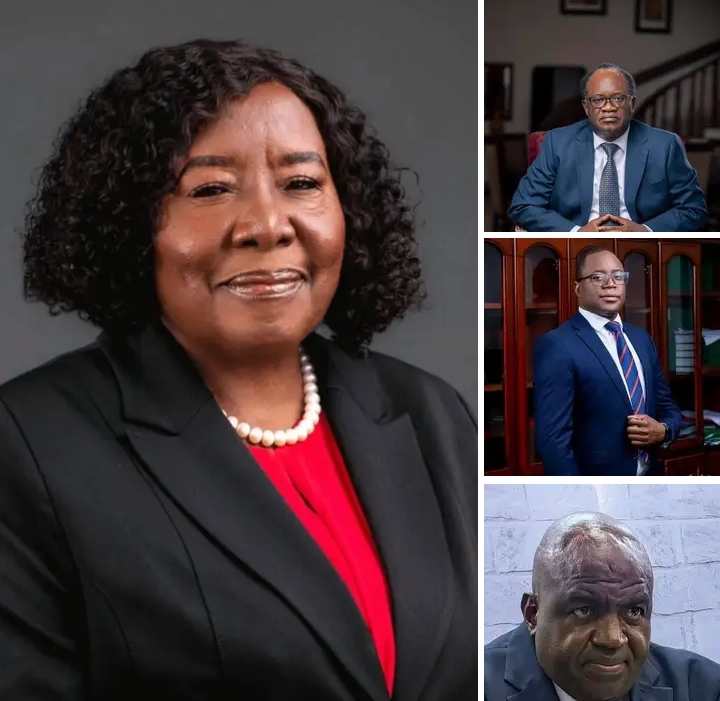
The news that the National Reconciliation Party for Unity and Prosperity (NRPUP) presidential aspirant Brian Mundubile arrived at Mulungushi International Conference Centre with his running mate Makebi Zulu to file nomination papers should force Zambia into a serious national reflection. This is not merely about one political party or one pair of candidates. It is about the architecture of our democracy, the adequacy of our constitutional requirements, and whether the path to the highest office in the land has become too light for the weight of the presidency
Under Zambia’s current constitutional and electoral framework, a presidential candidate must meet requirements such as citizenship by birth or descent, being at least 35 years old, being a registered voter, having a Grade Twelve certificate or equivalent, declaring assets and liabilities, paying prescribed fees, and being supported by at least 100 registered voters from each province.
These are important requirements. However, they largely focus on the individual candidate, not the institutional maturity, ideological clarity, governance systems, national presence, or public accountability of the political party sponsoring that candidate.
That is where the danger lies.
A political party should not be a mere bus to State House. It should not be a last-minute shelter for political ambition. It should not appear during an election year, field a presidential candidate, disappear after elections, and then return when the next election comes. A political party must be a serious national institution built around ideas, values, policy alternatives, internal democracy, and a genuine programme for national development.
The Constitution itself recognises that political parties are not casual associations. Article 60 provides that political parties have the right to disseminate information on social and economic programmes and political ideology, sponsor candidates, and conduct primary elections. It further requires parties to have national character, promote national unity, practise internal democracy, respect members’ rights, and observe the political party code of conduct.
This means a political party must be known beyond its presidential candidate. It must have a traceable leadership structure, a history of public engagement, a manifesto, a philosophy, and a record by which citizens can judge it.
When a party is formed or publicly emerges just days or weeks before nominations, citizens are denied the reasonable opportunity to ask basic democratic questions. Who founded this party? Who funds it? What does it believe in? What economic model does it advance? What is its view on education, health, mining, agriculture, debt, corruption, constitutionalism, foreign relations, national security and youth employment? Does it have provincial structures? Has it held internal elections? What values govern its leadership? Is it a genuine national movement or merely a convenience created to serve the ambitions of a few individuals?
These questions matter because the presidency is not an ordinary office. It is the command centre of the Republic. It carries responsibility over national security, defence, public finance, diplomacy, public appointments, national planning, and the general direction of the State. To treat access to that office casually is to reduce the presidency to a political experiment.
The risks are real.
First, there is a governance risk. A party with no tested internal systems may struggle to govern a country because it has not even demonstrated its ability to govern itself. Second, there is a policy risk. If a party has no known ideology or manifesto history, citizens may vote for personalities instead of programmes. Third, there is an accountability risk. When a party has no public record, citizens have no basis upon which to evaluate its consistency, seriousness or integrity.
There is also a national security risk. Political parties are not just electoral symbols; they can become channels of influence. Where their founders, funders, networks and policy interests are unknown, there is a legitimate concern that hidden interests may enter the political process without proper public scrutiny. In a world of foreign interference, illicit financing, misinformation and political manipulation, Zambia cannot afford to treat political party formation as a casual administrative exercise.
This is not an argument against democracy. It is an argument for deeper democracy. It is not an attack on freedom of association. It is a call for responsibility in the exercise of that freedom. It is not an attempt to block competition. It is a plea that competition for the presidency must be serious, transparent and anchored in national interest.
Citizens must therefore be careful. We must not be too quick to support political formations simply because familiar names have appeared on their tickets. A known individual does not automatically make an unknown party credible. A familiar face does not substitute for a tested institution. A popular candidate does not erase the need for a clear ideology, transparent leadership and a coherent manifesto.
Political chancers must not insult the intelligence of the Zambian people by assuming that citizens do not care about history, ideas and institutional credibility. Zambia is not a playground for election-season experiments. This country deserves parties that are built patiently, introduced honestly, tested publicly and judged against clear national programmes.
Going forward, Zambia may need to consider electoral and constitutional reforms that strengthen the seriousness of presidential participation without unfairly closing democratic space. Such reforms could include requiring political parties intending to sponsor presidential candidates to have existed for a reasonable minimum period before a general election; to publish their constitutions, leadership structures, sources of funding and manifestos; to demonstrate national presence; and to show evidence of internal democratic processes before sponsoring candidates for the highest office.
The law already gives citizens the right to challenge nominations within seven days of the close of nominations. But beyond court challenges, the bigger challenge must come from the public conscience. Citizens must ask harder questions. The media must interrogate political parties more deeply. Civil society must demand transparency. The Electoral Commission, Parliament and relevant institutions must reflect on whether the current framework sufficiently protects the dignity of the presidency.
The presidency of Zambia must never be reduced to a shortcut. Political parties must never be treated as emergency vehicles for personal ambition. The Republic deserves parties with memory, structure, ideology, discipline and demonstrable commitment to the national good.
In the end, democracy is not only about allowing people to stand for office. It is also about ensuring that citizens have enough information, time and institutional evidence to make informed choices. A nation that votes without scrutinising is a nation that risks surrendering its future to convenience, excitement and political improvisation..
Zambia must remain open to new political ideas. But new ideas must come with honesty, structure, transparency and seriousness. The presidency is too important to be approached casually. The people of Zambia deserve better.
Dr. Martin Mushumba
Public Policy and Education Quality Assurance Expert