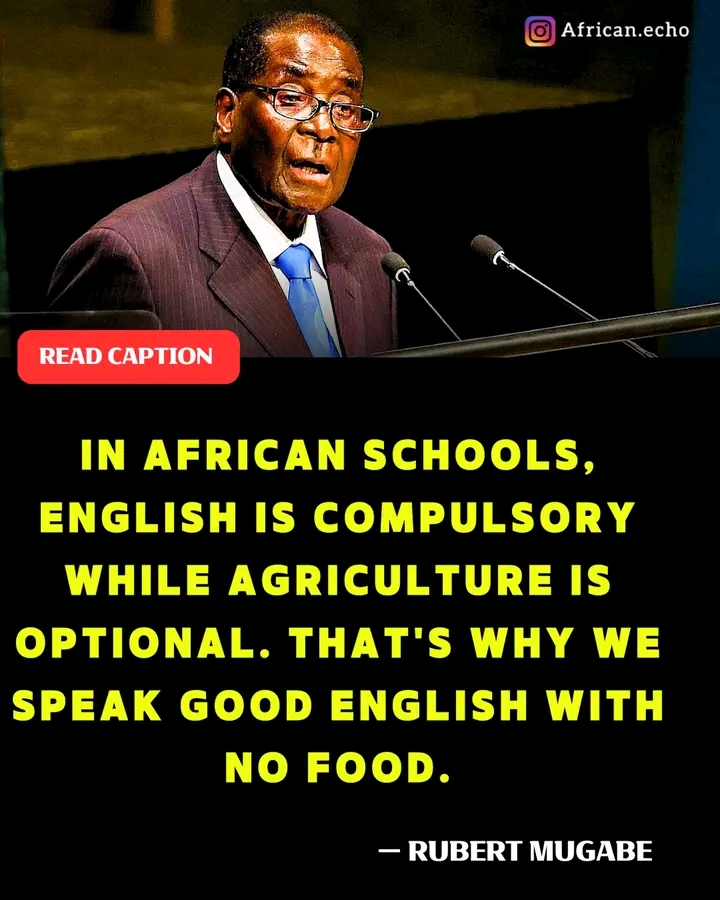
WE LEARN ENGLISH BY FORCE—BUT FOOD BY CHOICE. THAT’S THE PROBLEM.
In many African classrooms, English is compulsory. Agriculture—the skill that feeds nations—is optional.
That single policy choice says more about our priorities than any political speech ever could.
We train children to speak flawlessly, to write essays that impress examiners, to debate ideas in a language imported through colonial rule. Yet we treat farming, food systems, soil knowledge, and food security like hobbies—electives you can ignore.
The result?
A generation that can argue eloquently about development… while importing what it eats.
Graduates fluent in grammar but disconnected from land, production, and survival.
Certificates everywhere. Food scarcity everywhere too.
This is not an attack on English. Language matters. Communication matters.
But when a society makes language mandatory and food knowledge optional, it reveals a deeper crisis: we value appearance over substance, prestige over survival.
Colonial education systems were never designed to make Africa self-sufficient. They were designed to make Africa administrable. That structure largely remains unchanged—decades after independence.
Real development doesn’t start with accents.
It starts with food.
With land literacy.
With teaching children how to grow, preserve, distribute, and protect what keeps them alive.
Until agriculture is treated with the same seriousness as English, we will keep producing graduates who can explain hunger perfectly—without knowing how to end it.
The uncomfortable question is this:
Who benefits when Africans speak well… but cannot feed themselves?
Follow @african.echo for more powerful African history and untold stories.
Support the movement by buying our debut book “20 African Wonder Women That Changed History.”
Sources:
UNESCO reports on postcolonial education systems in Africa; World Bank analyses on skills mismatch, agriculture neglect, and food insecurity in developing economies.
WE LEARN ENGLISH BY FORCE—BUT FOOD BY CHOICE. THAT’S THE PROBLEM