
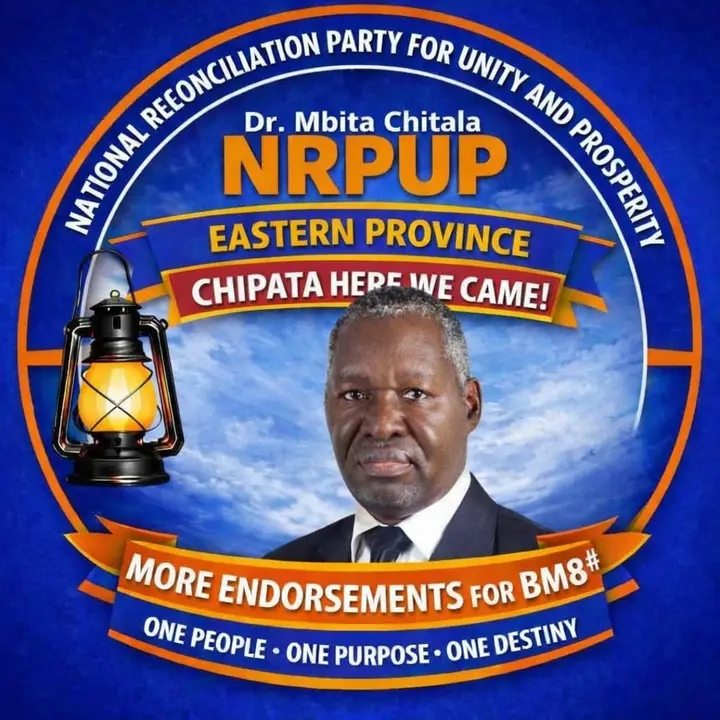
Veteran politician Dr. Mbita Chitala has officially endorsed Brian Mundubile for the Republican presidency
Veteran politician Dr. Mbita Chitala, the man who famously crafted the Manifesto and Constitution of the MMD in his political boardroo with Bob Sichinga, has at last made a public statement and, to many people’s surprise, has officially endorsed Brian Mundubile for the Republican presidency. This endorsement evokes strong memories of 1991, a year when UNIP under Kenneth Kaunda was widely seen as extremely dictatorial, a state of affairs that some now compare to Hakainde Hichilema and the UPND in Zambia today. Back in 1991, Kaunda and UNIP implemented a wide range of political and statecraft mechanisms designed to weaken and cripple the emerging opposition MMD, which at the time was not fully established or registered as an opposition party in the way parties are today.
Those maneuvers were intended to stifle dissent and block the rise of new political actors, much as critics claim is happening in the present. Today’s endorsement by Dr, Chitala brings that historical parallel into sharp relief, because it suggests that the political dynamics of 1991 and the emergence of an opposition force then resemble the current rise of Brian Mundubile and his supporters. The comparison underscores how, despite attempts to control or marginalize challengers, veteran politicians remember how new movements can still emerge. Dr. Mbita’s public backing of Mundubile therefore serves as a reminder that the Tanzanian model being promoted by some observers does not necessarily fit Zambia’s political history. Historically, Zambia has senior political figures who will plainly state that the appearance of Brian Mundubile is not an unprecedented phenomenon, since a similar emergence occurred in 1991, exactly 35 years ago
Veteran politician Dr. Mbita Chitala, the man who famously crafted the Manifesto and Constitution of the MMD in his political boardroom with Bob Sichinga, has at last made a public statement and, to many people’s surprise, has officially endorsed Brian Mundubile for the Republican presidency. This endorsement from such a respected and long-standing figure in the political landscape carries weight because Dr. Chitala’s name is associated with foundational moments in the formation of modern opposition politics. His decision to back Mundubile has therefore drawn significant attention, not only because of his personal stature but also because of the symbolic continuity it suggests between past and present political movements.
This endorsement evokes strong memories of 1991, a year when UNIP under Kenneth Kaunda was widely seen as extremely dictatorial, a state of affairs that some now compare to Hakainde Hichilema and the UPND in Zambia today. The recollection of that period is vivid for many who lived through it, and the parallels being drawn highlight anxieties about concentrated power and limitations on political pluralism. Observers who recall the tactics of the early 1990s see echoes of those tactics in current political rhetoric and maneuvers, which is why Dr. Chitala’s public support for a new challenger resonates so strongly.
Back in 1991, Kaunda and UNIP implemented a wide range of political and statecraft mechanisms designed to weaken and cripple the emerging opposition MMD, which at the time was not fully established or registered as an opposition party in the way parties are today. Those measures included various administrative, legal and political strategies intended to frustrate the organization and mobilization of opponents. The MMD of that era faced structural obstacles and deliberate constraints as it sought to organize and present itself as a viable alternative, and those obstacles are often cited by historians and participants as deliberate efforts to limit competition.
Those maneuvers were intended to stifle dissent and block the rise of new political actors, much as critics claim is happening in the present. The intent then, as critics argue now, was to curtail the space available for dissenting voices and to prevent emerging leaders from gaining traction. This historical example is frequently invoked when assessing current political tensions, because it provides a past instance in which the ruling establishment used diverse tactics to maintain dominance and obstruct challengers.
Today’s endorsement by Dr. Chitala brings that historical parallel into sharp relief, because it suggests that the political dynamics of 1991 and the emergence of an opposition force then resemble the current rise of Brian Mundubile and his supporters. By publicly supporting Mundubile, Dr. Chitala is effectively linking the present moment to that earlier era of political contestation, reminding observers that the emergence of credible opposition movements has precedents. His endorsement implies continuity in the patterns of political challenge and response, highlighting that newcomers can galvanize support despite efforts to suppress them.
The comparison underscores how, despite attempts to control or marginalize challengers, veteran politicians remember how new movements can still emerge. Those with long memories of political struggle are often quick to spot similarities between different periods, and Dr. Chitala’s actions indicate he sees Mundubile’s rise as part of that recurring pattern. His backing therefore serves not only as a vote of confidence in a candidate but also as an assertion that political renewal is possible even under constraining conditions.
Dr. Mbita’s public backing of Mundubile therefore serves as a reminder that the Tanzanian model being promoted by some observers does not necessarily fit Zambia’s political history.
By invoking the 1991 experience through his endorsement, he signals that external analogies may be misleading and that Zambia’s own political trajectory has distinct features and precedents. This reminder challenges simplistic comparisons and encourages attention to the specific historical and institutional context of Zambia.
Historically, Zambia has senior political figures who will plainly state that the appearance of Brian Mundubile is not an unprecedented phenomenon, since a similar emergence occurred in 1991, exactly 35 years ago. That perspective, now expressed again through Dr. Chitala’s endorsement, reinforces the view among experienced politicians that patterns of opposition emergence repeat over time. The reference to the 35-year interval emphasizes the cyclical nature of political change and the continuity of certain dynamics in Zambia’s political life.