
OPP LEARNS FROM 2026 DEFEAT, EYES FIVE-YEAR MOBILISATION FOR 2031
OPP LEARNS FROM 2026 DEFEAT, EYES FIVE-YEAR MOBILISATION FOR 2031
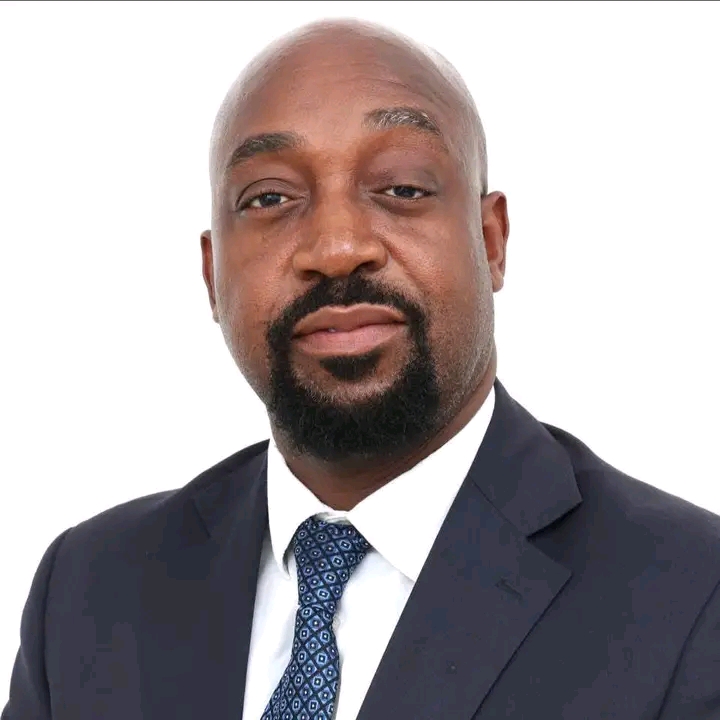
Organized People’s Party (OPP) president Eng. Dr. Brian Mushimba says the party’s poor preparation for the 2026 elections has taught it the importance of sustained political organisation ahead of the 2031 polls.
Dr. Mushimba said the OPP had initially been conceived as a special-purpose vehicle intended to unite opposition parties and had therefore not anticipated running the campaign it eventually undertook.
He said the party only realised late that it would have to contest the election, leaving it with insufficient time to build structures and mobilise voters.
“If there is one lesson we have learnt from that experience, it is that political organisation cannot be built overnight,” Dr. Mushimba said.
He said the OPP now had an opportunity to spend the next five years building a stronger political organisation through sustained engagement with communities.
“We have five years ahead of us. Five years of mobilisation, planning and conversations,” he said.
Dr. Mushimba said the party intended to make community engagement a continuous activity rather than an election-time exercise, including participating in funerals, church services and family celebrations.
“We are going to live in communities with people and make that engagement a daily occurrence,” he said.
He expressed confidence that consistent engagement could position the OPP as a credible alternative by the next general election.
“If we do that consistently for the next five years – if we live with people, mobilise with people, talk to people and, most importantly, listen to people – we see no reason why, by 2031, the OPP cannot emerge as a very strong, organised and ready-to-govern political party,” Dr. Mushimba said.
He also said the party had learnt important lessons from its efforts to facilitate opposition unity, particularly its engagement with the Patriotic Front (PF).
According to Dr. Mushimba, the PF’s estimated 1.8 million votes represented a significant voting bloc, but could not independently guarantee an electoral victory.
“But we also understood that you cannot win an election with 1.8 million votes alone,” he said.
He said the proposed opposition strategy had been to retain the PF’s loyal support while introducing new faces and voices to broaden the coalition and appeal to undecided voters.
“We talked about bringing people such as John Sangwa, Dolika Banda into the mix, as well as people who had not necessarily been part of mainstream politics but were credible, independent and respected. The idea was to retain the 1.8 million votes and then build a broader coalition around them. That is how you win.”
Dr. Mushimba further argued that Zambia needed to take presidential leadership more seriously by demanding experience, expertise and character from those seeking the highest office.
“The presidency is not child’s play,” he said.
He likened governing Zambia to piloting an aircraft carrying millions of people, arguing that leadership of a modern state required substantial preparation and an understanding of complex economic, legal and international issues.
“You need a foundation. You need experience, training, education, expertise and above all, character,” Dr. Mushimba said.
“Look at the complexities involved in running a modern state; geopolitics, debt restructuring, mining ownership, agricultural transformation, negotiations with the IMF and World Bank, relationships with multinational corporations and multilateral institutions, international agreements, legal reforms and economic policy. This is not child’s play.”
He said the OPP would use the next five years to strengthen its structures, engage citizens and prepare itself for the responsibility of governing Zambia.
“I believe the OPP and I believe I personally, as a presidential candidate, met that standard,” he said.