
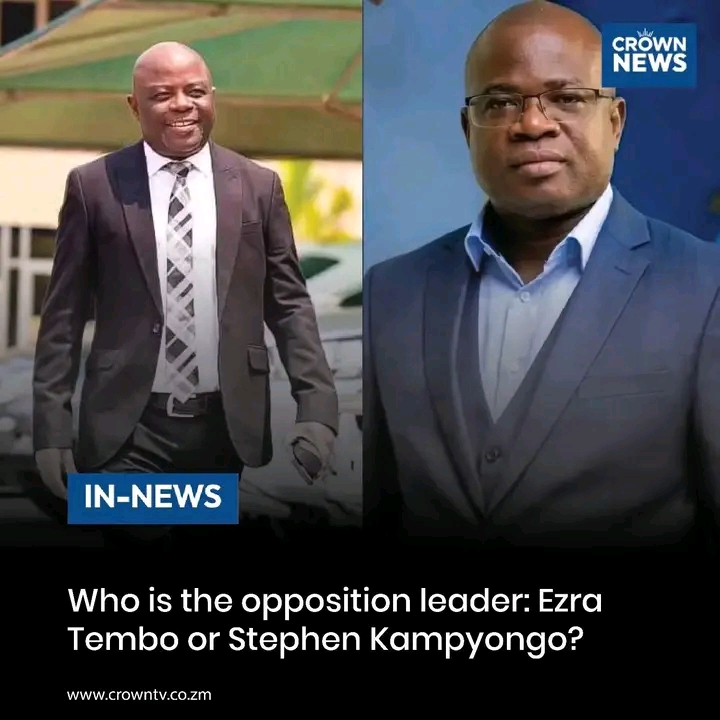
NRPUP MPS ELECT STEVEN KAMPYONGO BUT UPND’s EZRA CLAIMS HE IS THE LEADER
NRPUP Fractures Over Leader of the Opposition Post: Kampyongo vs.
Ezra Tembo
By: Joy Mwinuka
A power struggle has emerged within the National Reconciliation Party for Unity and Prosperity (NRPUP) over who holds the legitimate title of Leader of the Opposition in the National Assembly.
The division highlights a direct clash between party MPs and the national leadership, raising constitutional questions about parliamentary autonomy versus party structures.
Two Conflicting Claims:
•The MPs’ Choice (Sept 27 Caucus): NRPUP Members of Parliament allegedly held a caucus meeting at Palmwood
Lodge in Chudleigh where they elected Shiwang’andu MP Stephen Kampyongo.
The legislators argue their decision is backed by Article 74(2) of the Constitution, which empowers the opposition party with the largest number of seats to elect its leader from among its MPs.
•The Party Leadership’s Choice (Sept 3 Meeting): The NRPUP secretariat have fiercely rejected the election, maintaining that party president Ezra Tembo is the “duly settled” leader.
The party states that 34 MPs already resolved to back Tembo during a September 3 meeting at the same venue, a decision they claim cannot be unilaterally overturned.
What Happens Next?
The secretariat has officially urged the Office of the Speaker, the media and the public to disregard the appointment of
Kampyongo, confirming that a nomination letter for Ezra Tembo has already been submitted to the National Assembly. Meanwhile, the MPs maintain they possess the ultimate constitutional mandate to choose their parliamentary leader from within the house.
Who is the leader of the opposition? Based on the current dispute, there are two conflicting claimants: Stephen Kampyongo (backed by the majority of NRPUP Members of Parliament under Article 74(2) of the Constitution) and Ezra Tembo (backed by the party’s central leadership and secretariat). The official recognition ultimately rests on the determination of the National Assembly and the Office of the Speaker.