
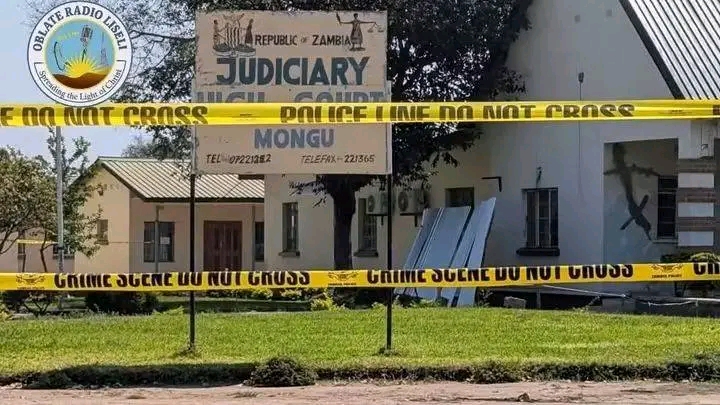
LAZ Demands Answers After Zambia Shuts Its Courts Today
LAZ Demands Answers After Zambia Shuts Its Courts Today
The Law Association of Zambia has raised the alarm over the closure of Zambian courts today, the 24th of August, and the presence of heavily armed military personnel around court premises in Lusaka, including tape marked Crime Scene sealing off some buildings.
In a press statement, LAZ says it has not received any formal public explanation for the closure. Nobody has said why the courts were shut, which areas are affected, how long it will last, or what arrangements exist for people who still need access to justice. The only document LAZ has seen is an unsigned memorandum dated today addressed to judiciary staff, and beyond that nothing has been shared with lawyers, litigants or the public about the reasons for the closure or the legal basis for deploying military personnel at court premises.
LAZ says this matters most for people who need urgent judicial action right now, people with pending criminal cases, bail applications, and habeas corpus applications. The Constitution requires that anyone arrested or detained be brought before a court without undue delay. A closure like this cannot be allowed to leave those people stuck with nowhere to turn.
The timing carries extra weight because the Constitution gives a losing presidential candidate seven days from the declaration of a winner to petition the Constitutional Court to nullify the result. LAZ points out that shutting the courts during this window creates a real risk that someone trying to exercise that right could be blocked simply by not being able to reach a court registry or file their papers in time.
LAZ says it recognises that genuine security concerns can sometimes call for temporary measures to protect judges, staff and the public. But it insists any such measures have to be lawful, proportionate, and carried out in a way that still respects the independence of the judiciary and keeps the courts accessible. The statement quotes the Constitution directly on this point, that sovereign authority belongs to the people of Zambia, that government power is separated across the executive, legislature and judiciary, and that the judiciary’s autonomy is protected from interference in the exercise of its functions.
LAZ has laid out six specific demands. Restore access to the courts as soon as it is safe to do so. Set up alternative arrangements immediately for filing urgent matters while the closure continues. Give priority to cases involving personal liberty and to matters with strict constitutional or statutory deadlines. Make sure nobody loses a legal right because of a missed deadline caused by the closure. Tell the public clearly what is happening, why, where, and for how long. And explain the legal basis for the military presence at court premises, as far as that can be shared without compromising security.
LAZ says it is now engaging directly with the Chief Justice and the Attorney General over the closure and what it means for the country, and has promised to keep monitoring the situation and update its members and the public as things develop.
UKANI Release