
IF WE ARE DISCUSSING CONSTITUTIONAL REFORM, LET US DISCUSS THE WHOLE SYSTEM
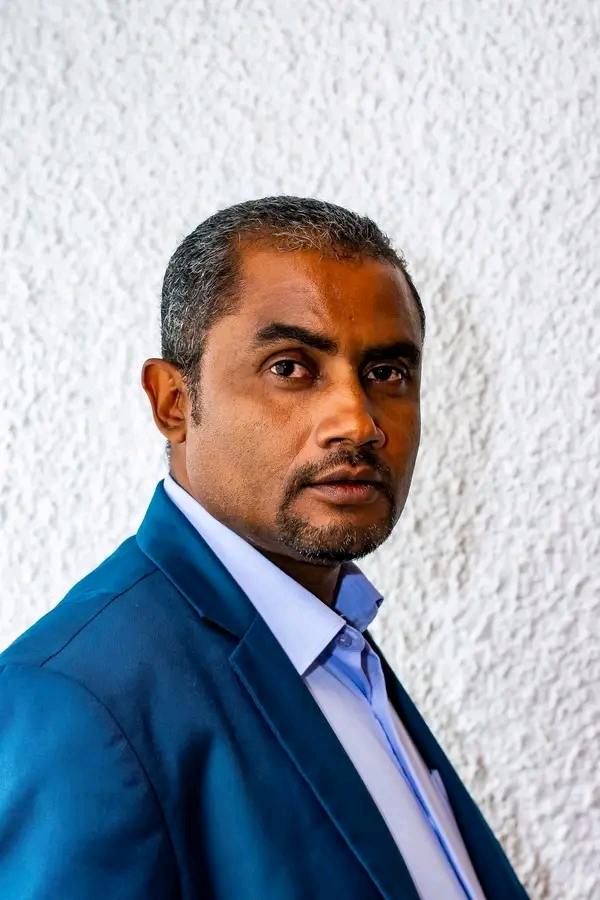
By Augustine Mwewa
Bahati Independent Candidate – 2026
Zambia has just come through a general election, and I believe this is an important moment for the country to reflect—not only on the election itself, but also on the kind of democratic and constitutional system we want for the future
I am therefore surprised that, so soon after an election, much of the emerging interest in constitutional reform appears to be centred on the question of presidential term limits.
There is nothing wrong with discussing presidential tenure. It is a legitimate constitutional question.
But if we are going to open the Constitution for discussion, why limit the conversation to how long a President can remain in office?
Why don’t we also discuss how much power the President should have in the first place?
That, in my view, is an equally important question.
LET US LOOK AT THE CONCENTRATION OF PRESIDENTIAL POWER
A mature democracy should continuously examine the balance of power between the Executive, Parliament, the Judiciary, constitutional bodies and local government.
If there are concerns that five years may not be enough for a President to implement long-term programmes, that can be debated.
But we should also ask whether the presidency currently carries too much influence over areas that should have stronger institutional checks and balances.
Should more powers be exercised independently by Parliament and other constitutional institutions?
Should appointments to key public institutions have stronger parliamentary scrutiny?
Should oversight institutions have greater independence?
Should local government have greater authority and resources to make decisions affecting communities?
Should Parliament have stronger mechanisms to scrutinise government expenditure and policy?
These questions are just as important as presidential tenure.
THE ISSUE SHOULD NOT BE WHO OCCUPIES STATE HOUSE
Constitutional reform should not be designed around the personality of the President in office.
The person occupying State House today will eventually leave.
The Constitution, however, will remain.
Therefore, the question should be:
What system would we want even if a President we strongly disagreed with were in State House?
That is the test we should apply to constitutional reforms.
A power that appears harmless when exercised by a leader we support may become problematic when exercised by a leader we disagree with.
That is why strong institutions and checks and balances matter.
SHOULD PRESIDENTIAL POWERS BE REDUCED?
This is a conversation Zambia should be willing to have.
Reducing presidential powers does not necessarily mean weakening the presidency.
It can mean strengthening the institutions around the presidency.
For example, we could examine whether Parliament should have a stronger role in scrutinising certain appointments, whether oversight bodies should have greater institutional independence, whether Parliament should have stronger control over public finances, and whether local authorities should have greater decision-making powers.
The objective would be to create a system where institutions are strong enough to function effectively regardless of who is President.
LET US STRENGTHEN PARLIAMENT
If presidential powers are to be reconsidered, Parliament must also be strengthened.
A Parliament should not simply be a place where numbers determine every outcome.
We need Members of Parliament who understand legislation, budgets, national policy and the needs of their constituencies.
We need MPs who can disagree respectfully, question government decisions and propose alternatives.
We need Parliamentarians who can say:
“I support this proposal because it is good for Zambia,”
and equally:
“I cannot support this proposal because I believe it is not in the public interest.”
That is the kind of independent and sober-minded Parliament Zambia needs.
LET US ALSO DISCUSS ELECTORAL REPRESENTATION
A broader constitutional debate should also examine whether our electoral system provides the best representation of the Zambian people.
One option worthy of serious study is a mixed electoral system that combines constituency representation with proportional representation.
This is not about giving one political party an advantage.
It is about asking whether different voices and political perspectives are adequately represented in Parliament.
Such a proposal would need careful examination of accountability, constituency representation, party lists, gender representation, smaller parties and the relationship between MPs and voters.
It should be studied objectively rather than adopted simply because it benefits one side of politics.
LET US DISCUSS THE CALIBRE OF PARLIAMENT
Constitutional reform alone cannot create a strong democracy.
We also need people capable of occupying the institutions we create.
The country needs MPs who can debate ideas rather than simply repeat political slogans.
We need Parliamentarians who are not merely vuvuzelas for their political parties, but representatives capable of independent thought and constructive engagement.
Government supporters should be able to question government.
Opposition MPs should be able to acknowledge good government programmes.
Politics should not prevent us from recognising good ideas simply because they come from the other side.
WHAT ABOUT DEVELOPMENT?
This conversation is taking place immediately after an election.
Millions of Zambians have voted, and many of them are now waiting to see their everyday concerns addressed.
They want better roads.
They want functioning health facilities.
They want quality education.
They want employment and business opportunities.
They want reliable electricity and clean water.
Farmers want productive agriculture and dependable markets.
Young people want opportunities to build their future.
Therefore, constitutional reform should not become a distraction from development.
We can reform the Constitution while continuing to deliver development.
The two are not mutually exclusive.
THE PRESIDENTIAL TERM SHOULD ALSO BE DISCUSSED OBJECTIVELY
If there are people who believe that the current presidential term and term-limit arrangements should change, let them make the case.
We should ask:
Why should they change?
What problem would the proposed change solve?
What safeguards would be necessary?
What would be the consequences for future Presidents?
What do citizens think?
What other constitutional changes should accompany such a proposal?
The United States, for example, has a four-year presidential term and a two-election limit, allowing an individual to serve up to eight years through election. That is one constitutional model, but Zambia does not have to copy it.
Our discussion should be based on our own history, institutions and national circumstances.
LET US THINK BEYOND 2031
The Constitution should not be written for President Hakainde Hichilema, nor for any President who comes after him.
It should be written for Zambia.
If we change presidential tenure today, that same rule will apply to future Presidents whose political views we may support—or strongly oppose.
That is why constitutional reform requires sober thinking.
We should not ask only:
“What is good for the President we have today?”
We should ask:
“What system will protect Zambia under every President we may have tomorrow?”
THIS IS THE CONVERSATION I WOULD LIKE TO SEE
If Zambia is going to embark on constitutional reform, let us make it comprehensive.
Let us discuss:
Presidential term limits.
The powers of the presidency.
Checks and balances.
The independence of constitutional institutions.
The powers and effectiveness of Parliament.
Mixed electoral representation and proportional representation.
The calibre and accountability of MPs.
Decentralisation and local government.
Electoral reforms.
Protection of citizens’ rights.
And the relationship between constitutional governance and national development.
That would be a much bigger and more meaningful national conversation than focusing on one constitutional provision.
Zambia has an opportunity to strengthen its democracy for generations.
Let us therefore approach constitutional reform without fear, without personalities and without political hostility.
Let us ask not how to design the Constitution for today’s political circumstances, but how to build institutions that will protect Zambia regardless of who holds power tomorrow.
That, to me, is the constitutional conversation worth having.
Augustine Mwewa
Bahati Independent Candidate – 2026