
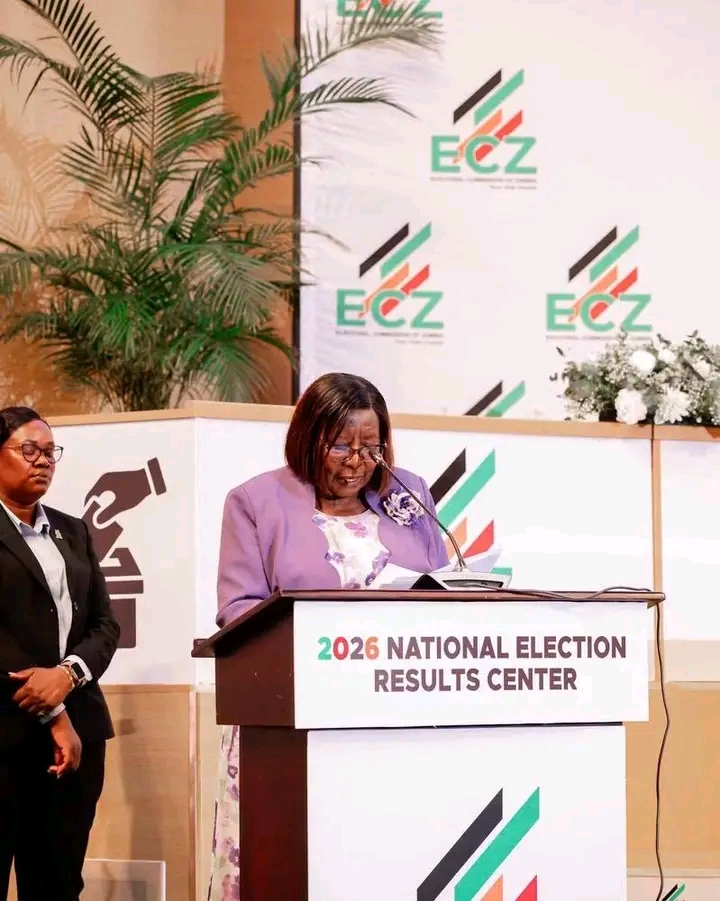
ECZ & HICHILEMA COOKING SOUTHERN PROVINCE FIGURES: ECZ Are Announcing Fictitious Results Which Show Inflated Figures From Southern Province Giving The Region A Near 90% Turnout Despite Recorded Apathy – Tonse Alliance
By Brian Matambo | Media Director – Tonse Pamodzi Alliance
ECZ & HICHILEMA COOKING SOUTHERN PROVINCE FIGURES: ECZ Are Announcing Fictitious Results Which Show Inflated Figures From Southern Province Giving The Region A Near 90% Turnout Despite Recorded Apathy
AN OBSERVATION THAT THE ECZ AND THE NATION MUST TAKE SERIOUSLY
There is a legitimate and important question arising from the voter-turnout figures announced by the Electoral Commission of Zambia. This is not an allegation that the figures are fraudulent. It is a call for verification, transparency and reconciliation.
The ECZ’s own consolidated report for the 27 constituencies announced so far records 1,024,450 registered voters and 474,922 total votes cast, giving a weighted turnout of 46.36%.
Against that national sample, the turnout figures emerging from parts of Southern Province stand out dramatically.
Look at the actual numbers.
Dundumwezi, Southern Province
• Registered voters: 33,059
• Total votes cast: 22,249
• Non-voters implied by the figures: 10,810
• Reported turnout: 67.30%
Magoye East, Southern Province
• Registered voters: 23,942
• Total votes cast: 20,066
• Non-voters implied by the figures: 3,876
• Reported turnout: 83.81%
Kalomo South, Southern Province
• Registered voters: 26,919
• Total votes cast: 24,075
• Non-voters implied by the figures: 2,844
• Reported turnout: 89.43%
Taken together, these three constituencies had:
83,920 registered voters and 66,390 votes cast. That produces a combined turnout of approximately 79.11%. That is an extraordinary figure when compared with the 46.36% weighted turnout across all 27 constituencies announced so far.
But the comparison becomes even more interesting when we remove those three Southern constituencies from the calculation.
The remaining 24 constituencies have approximately:
940,530 registered voters and 408,532 votes cast, which gives a turnout of approximately 43.44%.
So, based on the ECZ’s own figures, the three reported Southern constituencies are recording 79.11% turnout, while the other 24 constituencies are recording approximately 43.44%. That is a difference of almost 36 percentage points. And this is not just about one constituency.
Kalomo South is reporting 89.43% turnout. That means that according to the official figures, nearly 9 out of every 10 registered voters in that constituency voted. Magoye East reports 83.81% – more than 8 out of every 10. Dundumwezi reports 67.30%. Now compare that with some of the other constituencies already announce
• Chongwe East: 55,100 registered; 9,017 votes cast – 16.36%
• Mansa Central: 58,900 registered; 16,658 votes cast – 28.28%
• Senga Hill: 30,462 registered; 10,944 votes cast – 35.93%
• Kasempa: 28,089 registered; 11,316 votes cast – 40.29%
• Kalungwishi: 30,720 registered; 14,842 votes cast – 48.31%
• Minimum: 23,100 registered; 13,014 votes cast – 56.34%
• Luongo: 15,798 registered; 10,105 votes cast – 63.96%
• Dundumwezi: 33,059 registered; 22,249 votes cast – 67.30%
• Magoye East: 23,942 registered; 20,066 votes cast – 83.81%
• Kalomo South: 26,919 registered; 24,075 votes cast – 89.43%
This is the issue.
We physically observed the election. There were photographs, reports from monitors and observations from people on the ground showing what appeared to be relatively low voter activity in parts of Southern Province.
Yet the official figures now tell us that in some of those same areas, more than 80% of registered voters turned out. Those two things need to be reconciled.
Perhaps there is a perfectly legitimate explanation. Perhaps voter participation was concentrated at particular times of the day. Perhaps the photographs and observations captured only certain polling stations or certain periods.
Perhaps the underlying polling-station results will completely validate the figures.
Fine. Then let us see the evidence. Because the ECZ has the information necessary to answer the question.
For Kalomo South, for example, the Commission says there were 26,919 registered voters and 24,075 votes cast. That means only 2,844 registered voters did not vote, according to the announced figures.
For Magoye East, only 3,876 of the 23,942 registered voters are implied not to have voted.
These are not small numbers being discussed. They represent exceptionally high levels of participation.
Therefore, the question is not whether Southern Province is allowed to have high turnout.
Of course it is.
The question is whether the announced numbers are supported by the underlying polling-station evidence.
The ECZ should therefore publish or facilitate verification of the polling-station-level figures for these constituencies.
Political parties should compare the announced totals with their GEN 20 polling-station results and voter records.
Election observers should compare the official numbers against their field observations.
And the media should be allowed to scrutinise the numbers rather than simply repeating them.
If the numbers are correct, verification will strengthen them.
If there is an error, verification will expose it.
Either way, the country benefits.
We should not be afraid of questions during an election. A credible electoral process is not one where nobody asks questions; it is one where every reasonable question can be answered with evidence.
So the call is simple:
ECZ, please reconcile these figures. Political parties, check your polling-station records. Election observers, compare your observations with the official returns. And Zambians, pay attention to the numbers.
Because when one group of constituencies is reporting turnout approaching 90%, while the overall 27-constituency weighted turnout stands at 46.36%, that is sufficiently unusual to deserve scrutiny.
This is not an accusation. It is a demand for verification.
And in an election of this magnitude, verification is not optional. It is the foundation of public confidence.