
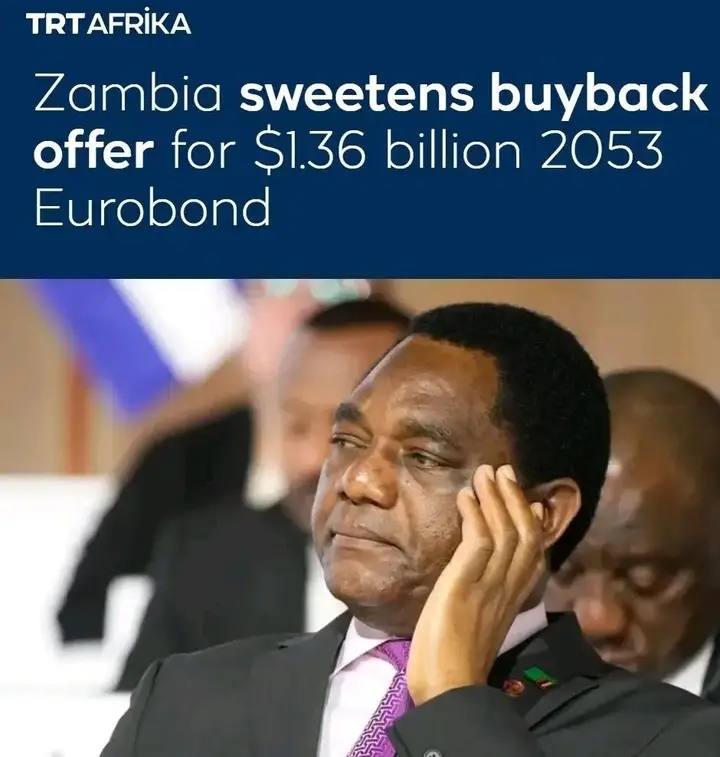
DIGGING A HOLE TO COVER A HOLE: Buyback $1.36 billion Eurobond using a loan from the African Development Bank and domestic debt!
By Given Mutinta
PRESIDENT HICHILEMA’S EUROBOND BUYBACK STRATEGY
In 2025, Zambia undertook a significant restructuring of its foreign debt, extending payment obligations on its Eurobonds until 2053.
Recently, however, the government has aimed to buy back a portion—$1.36 billion—of this restructured $3 billion Eurobond, seeking financing through a $600 million loan from the African Development Bank (AfDB) and additional domestic debt arranged by Green Co, a power trading company.
Although bondholders have endorsed this landmark buyback, this strategy raises critical concerns regarding its financial prudence and long-term impact on Zambia’s economy.
At first glance, repurchasing debt might seem beneficial—reducing outstanding liabilities can improve fiscal metrics and investor confidence.
Yet, Zambia’s intention to buy back a large portion of its Eurobonds using new loans simply swaps one form of debt for another, without eliminating the underlying repayment burden.
The critical caveat is that the payment period for the Eurobonds remains unchanged, extended to 2053, which means the country is not shortening its obligation horizon or easing immediate fiscal pressures.
Borrowing $600 million from the AfDB and accruing fresh domestic loans to finance the buyback entails increased total indebtedness and interest costs.
The new loans will add their own obligations and may carry stricter repayment terms or higher interest rates than the restructured Eurobonds.
Especially problematic is that the buyback is funded through debt rather than fiscal surpluses or reserves, essentially recycling debt instead of resolving it.
This maneuver risks exacerbating Zambia’s vulnerability to external shocks and fiscal imbalances.
The involvement of Green Co, a power trader, in arranging debt implies complexity in public-private financial arrangements, which can obscure transparency and debt sustainability assessments.
Furthermore, relying on debt-financed buybacks will undermine Zambia’s credibility with creditors and investors who expect sustainable debt management, potentially restricting future access to favorable financing.
Therefore, Zambia’s Eurobond buyback, while operationally impressive for securing bondholder backing and reducing nominal exposure, doe,s not fundamentally alleviate its long-term debt burden.
By financing the repurchase through new loans, the country will have higher cumulative debt costs and ongoing repayment challenges.
In essence, this strategy postpones the core issues of fiscal imbalance rather than resolving them, highlighting the critical need for comprehensive economic reforms and prudent debt management to secure Zambia’s financial future.