
A DIGNIFIED BURIAL AMID A LEGACY OF PERSECUTION AND DESECRATION
By Given Mutinta
A DIGNIFIED BURIAL AMID A LEGACY OF PERSECUTION AND DESECRATION
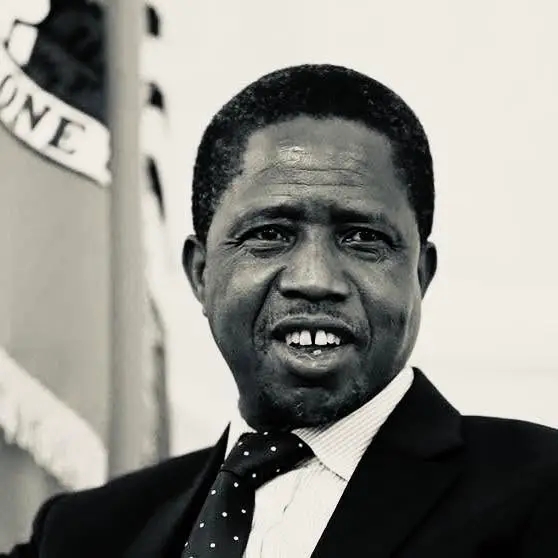
President Hakainde Hichilema has for the thirteen time insisted that the late former President Edgar Lungu should receive a dignified and befitting burial with military honours, a striking paradox.
He made this statement at the funeral of King Mpezeni, which contrasts sharply with how Lungu was treated during his lifetime and after his death, undermining the very dignity that President Hichilema is now affording.
Throughout Lungu’s final days and beyond, President Hichilema restricted Lungu’s access to the public and hindered his pursuit of specialized cancer treatment overseas.
These measures alone indicate a state of conflict rather than respect.
Adding to this, when Lungu’s family expressed his wish that President Hichilema not be near his body after death, he controversially took legal action to challenge that request.
He also imposed a humiliating or unholy private forty minutes alone with Lungu’s body, which was met with resistance, delaying the repatriation of Lungu’s body.
Moreover, President Hichilema sent an emissary in Chabinga to bribe judges in South Africa to secure custody of the body against the family’s wishes.
The most upsetting detail is the postmortem examination: despite a court order to return the body, no family consent, and a pending court case, it was subjected to a five-hour autopsy, which was an invasive and disrespectful act, especially given the lack of family consent and pending court matter.
This planned pattern of treatment is nothing more than persecution rather than reverence.
How then can President Hichilema genuinely claim to grant Lungu a dignified burial with military honours when his prior actions desecrated both his person and legacy?
This dichotomy in President Hichilema’s behaviour demonstrates cantankerous political hypocrisy.
The call to show Lungu honour after death starkly contrasts with prior hostility, implying that such ceremonial gestures serve more as political theatre than as true respect.
A dignified send-off, if sincere, should resonate with the respect shown to Lungu while alive, or at the very least, not contradict it.
Using state rites and honours to overwrite evil truths or mend political narratives reveals the fraught relationship between President Hichilema’s power and memory.
His insistence on honouring Lungu, whom he persecuted and desecrated, demonstrates that he is unaware that the true measure of respect is consistent human dignity—embraced in life and honoured in death.
Therefore, while President Hichilema’s declaration of a respectful, military-style burial aims to project honour, it cannot fully erase or compensate for the indignities and legal confrontations that marred Lungu’s final days and afterlife.
This paradox demonstrates that President Hichilema is incapable of aligning his words and actions in order to maintain genuine dignity.
The best President Hichilema can do is stay away from Lungu’s body, as requested by the late, and have a sense of shame to be the last person to talk about a dignified send-off for him.