
The Rally That Promised a Vision, but Delivered a Twerk
The Rally That Promised a Vision, but Delivered a Twerk.
By Linda Banks
The past three days in West Sussex have been nothing short of relentless. The sun has scorched the rolling countryside with unusual determination, baking the ancient stone villages and turning every stroll into an exercise in endurance. Yet today, almost mercifully, the weather relented. A cool breeze finally swept across the South Downs, replacing the suffocating heat with the kind of gentle afternoon that reminds you why Sussex is so effortlessly beautiful
It was a welcome change.
Like many working mothers, my day had already been full, way before lunchtime. I had conducted classes, answered emails between appointments, squeezed in work wherever I could, and then seamlessly exchanged one role for another. By late afternoon, I was no longer wearing my professional hat but my favourite one,that of Mum.
My daughter and her fellow Latin scholars had gathered for one final dinner before each embarks on a new chapter at university. Their farewell celebration was fittingly held at a charming Greek restaurant, an appropriate setting for students whose academic lives have revolved around the classical world. There was something wonderfully poetic about it, young people who had spent years immersed in the language of Cicero and Virgil saying their goodbyes over food inspired by another cradle of Western civilisation.
The restaurant was an hour’s drive away, so after dropping her off, I found myself with time to spare.
Rather than rush home, I wandered into a nearby park. The evening air was calm. Children played in the distance, elderly couples walked hand in hand, and birds seemed blissfully unaware of the political storms unfolding thousands of miles away in Zambia.
I opened my laptop.
From a peaceful corner of West Sussex, I began following what had been billed as one of the most significant political events of Zambia’s election season, the official launch of the United Party for National Development’s campaign for another five year mandate.
Expectations had been high.
Earlier, the announcement by Honourable Milupi had suggested that the President would use the occasion to unveil a roadmap for the country’s next five years, a vision that many expected would outline priorities, policies and aspirations for a second term.
Instead, much of the public conversation that followed centred elsewhere. It sadly focused on the usual mockery of opponents, embellished wins and occasional scolding of some unruly attendees.
The rally itself drew a very large crowd. Regardless of political persuasion, attendance was undeniably impressive. Yet size alone rarely tells the whole story. Questions circulated about the logistics of transporting supporters from different districts, while videos from the event appeared to show moments of frustration, overcrowding and isolated scuffles among attendees. As with many large political gatherings, different observers interpreted what they saw differently.
Then came one of the day’s more unexpected moments.
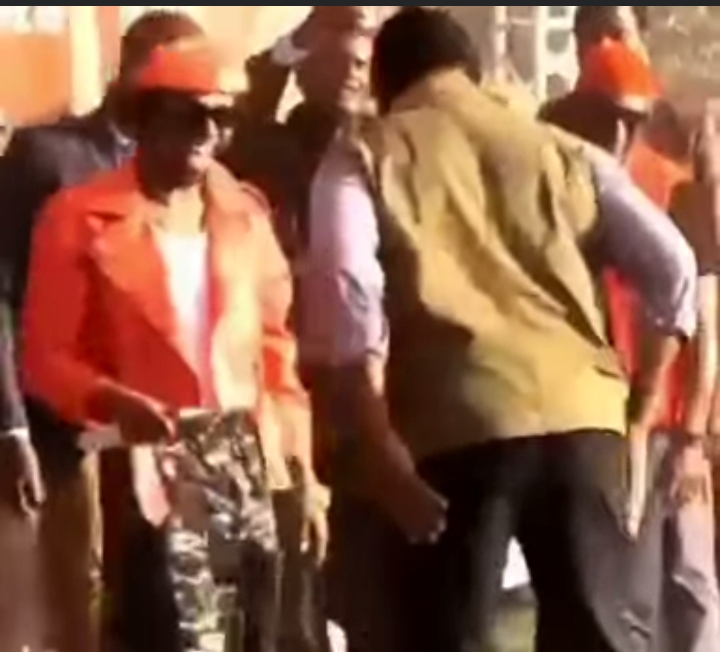
In an apparent effort to energise the audience, the President joined in the music and danced in a manner that quickly became one of the most discussed images of the rally. Social media, as it inevitably does, seized upon the clip. By the following morning, memes had spread widely, with captions that playfully reimagined the title “Commander-in-Chief.” Such is the nature of modern politics, a few seconds of video can eclipse hours of speeches.
For supporters, it was an attempt to connect with the crowd.
For critics, it became symbolic of misplaced priorities.
Politics, after all, has become inseparable from the internet’s unforgiving sense of humour.
Yet what struck me even more than the dancing was what followed.
Technical difficulties repeatedly interrupted proceedings. The sound system struggled throughout the event, speeches became difficult to hear, and momentum evaporated as organisers scrambled to resolve the problems. Ironically, for an administration often associated with substantial investment in media strategy and digital communication, it was the most basic element of a political rally, the ability for people to clearly hear their President, that appeared to falter.
At one point, visible frustration appeared to emerge from the stage as organisers attempted to restore order. Eventually, the programme ended earlier than many had anticipated after further technical interruptions.
Sometimes, politics writes its own symbolism.
A campaign launch intended to project confidence instead found itself remembered, at least in part, for repeated interruptions beyond the speaker’s control.
Equally notable was the tone of sections of the President’s address. Rather than dwelling extensively on the detailed vision that many expected for the years ahead, attention turned to political rivals whose growing popularity has become impossible to ignore.
Referring to two opposition figures as “those two boys” was a phrase that immediately drew attention and invited contrasting interpretations. Supporters may have viewed it as political banter. Critics considered it dismissive. Either way, the remark ensured that the opposition remained central to the day’s headlines.
It was a curious paradox.
An event designed to showcase one campaign inadvertently devoted precious moments to acknowledging competitors who, despite only recently joining forces, have become an increasingly prominent feature of Zambia’s political conversation.
Whether intentional or not, politics has a way of amplifying those it seeks to diminish.
As dusk settled over the Sussex countryside, I closed my laptop and looked across the quiet park. The laughter of children echoed through the trees. My daughter was still inside the restaurant, celebrating the future with friends whose paths would soon scatter across universities and continents.
Their evening was about beginnings.
The political broadcast I had just watched had also been intended as a beginning,a launch, a fresh chapter, a renewed promise.
Yet I found myself reflecting on a simple truth.
Campaigns are remembered not only for the crowds they gather, the songs they play or the dances that trend online. They are remembered for the ideas they leave behind.
Long after the music fades, the loudspeakers fall silent and the social media memes disappear, voters are left with one enduring question:
What exactly is the plan?
Because when the music stops, that is the only conversation that truly matters.