
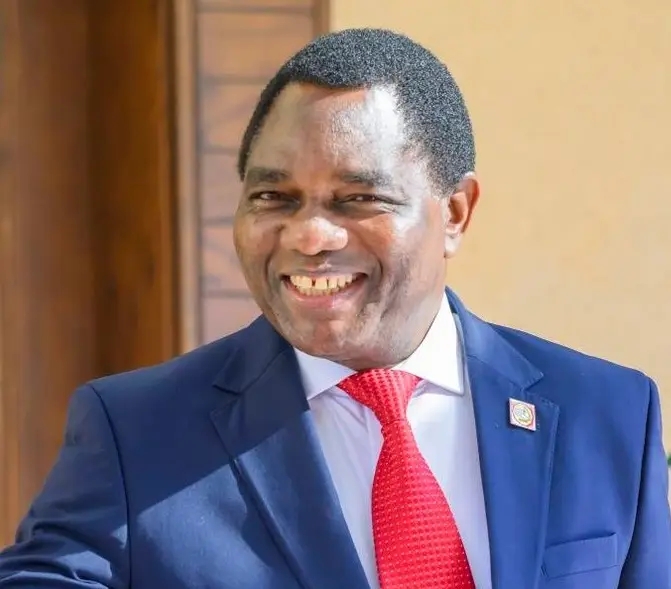
PRESIDENT HICHILEMA’S TRIBALISM EXPOSED
By Given Mutinta
PRESIDENT HICHILEMA’S TRIBALISM EXPOSED
Zambia has ten provinces which are Central, Copperbelt, Eastern, Luapula, Lusaka, Muchinga, Northern, North Western, Southern, and Western.
At the apex of provincial police command are the Commissioners.
According to available information, there are ten commissioner positions, one for each province:
1. Copperbelt – Mwala Yuyi (Lozi, Western Province)
2. Lusaka – Ronald Zaambo (Tonga, Southern Province)
3. Eastern – Robertson Mweemba (Tonga, Southern Province)
4. Northern – Simunji Mulonda (Lozi, Western Province)
5. Luapula – Creto Kaanza (Tonga, Southrn Province) 6. Southern – Moono Namalongo (Tonga, Southern Province)
7. Central – Yobe Luhana (Luvale, North-Western Province)
8. Western – Ray Hamoonga (Tonga, Southern Province)
9. Northwestern – Brightion Siwale (Namwanga, Northern Province)
10. Muchinga – Dennis Moola (Tonga, Southern Province)
However, a closer look at the origin of individuals holding these positions reveals a stark imbalance.
The number of commissioners originating from Southern, North Western, and Western provinces is 9.
The percentage of commissioners from these three provinces combined is 9 over 10 (100%) is 90%.
This means that while these three provinces constitute only 30% of Zambia’s provinces, they account for 90% of its provincial police commissioners.
Further, Southern Province alone where President Hakainde Hichilema comes from accounts for 6 out of the 10 positions. The percentage of commissioners from Southern Province is 6 over 10 (100%) which is 60%.
This implies that one single province, Southern Province, contributes 60% of the provincial police commissioners, despite representing only 10% of the total provinces.
The remaining two provinces, North Western and Western, together contribute 3 commissioners (9 total 3) is 6. This means they account for 30% of the commissioners, contributing to the 90% figure.
The remaining seven provinces; Central, Copperbelt, Eastern, Luapula, Lusaka, Muchinga, and Northern collectively have only one provincial police commissioner. This represents a mere 10% of the leadership positions originating from 70% of the country’s provinces.
Such a pronounced statistical skew suggests a potential regional bias in appointments to senior positions within the Zambia Police Service.
This bias points to inequity, preferential treatment, marginalization and a lack of diversity in leadership.
In a country striving for national unity and development, visible disparities in representation within key national institutions like the police are divisive.
It raises questions about the fairness of the recruitment and promotion systems.