
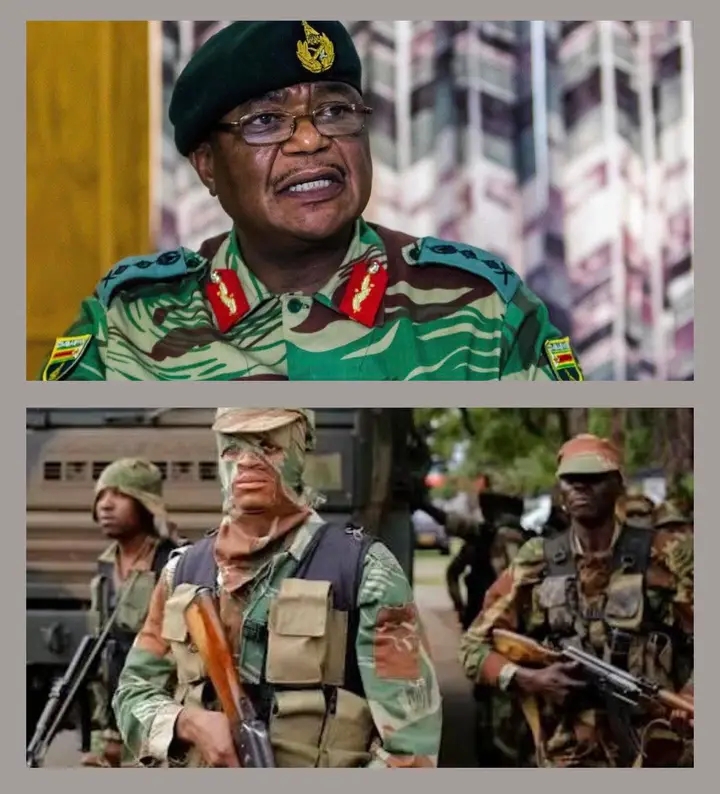
Zimbabwe Constitutional Amendment Bill No. 3 to reduce military influence in civilian governance
By Hopewell Chin’ono
The Parliamentary Committee examining Constitutional Amendment Bill No. 3 has recommended the adoption of a constitutional amendment designed to reduce military influence in civilian governance, in what will become one of the most significant changes to Zimbabwe’s political system since independence.
The Committee said the proposed amendment to Section 212 of the Constitution will create clearer boundaries for the Defence Forces and help prevent undue military involvement in politics.
The recommendation comes against the backdrop of Zimbabwe’s long history of military influence over political power. The military played a decisive role during the liberation struggle, the removal of ZANU founding president Ndabaningi Sithole from leadership, and the 2017 coup that forced Robert Mugabe from office.
If the amendment is passed, it would signal an attempt to strengthen civilian control over the military and reduce the possibility of future military interventions in politics on paper.
The proposal also carries major implications for President Emmerson Mnangagwa. If he completes his term or dies in office, he would become the first leader of ZANUPF not to be removed through direct military intervention.
The CAB3 Committee concluded that limiting military influence in civilian governance would strengthen democracy and national stability, and recommended that the amendment be adopted.
In essence, this amendment appears less about democratic reform and more about power. Mnangagwa rose to power through the 2017 military intervention, an operation masterminded by the very man he is now seeking to block from succeeding him, General Constantino Chiwenga, his current Vice President.
Having witnessed first-hand the decisive role the military can play in determining political outcomes, Mnangagwa appears determined to reduce its influence and ensure that no future military intervention can shape Zimbabwe’s succession politics in the way it did in 2017.
By recommending constitutional changes that limit the military’s role in civilian affairs, CAB3 is meant to clip the wings of an institution that has historically acted as the ultimate kingmaker in Zimbabwean politics.
If this amendment passes, it will mark the beginning of a deliberate effort to shift power away from the barracks and into constitutional institutions, making it harder for the military to determine who rules Zimbabwe in the future.
Ironically, if Constitutional Amendment Bill No. 3 becomes law, the military may be the only institution with the power to stop it. With Parliament, the judiciary, and other key institutions increasingly brought under executive influence, Mnangagwa would enjoy unprecedented control over the political system.
The irony is that a Bill partly designed to clip the wings of the military could leave the military as the last remaining force capable of challenging executive power.
The military’s influence on political outcomes was not confined to internal ZANUPF succession battles. In 2008, after Morgan Tsvangirai outpolled Robert Mugabe in the first round of the presidential election, senior military figures publicly declared that they would not salute or recognise a leader who had not participated in the liberation struggle.
What followed was a campaign of violence that left hundreds dead, thousands displaced, and ultimately forced Tsvangirai to withdraw from the run-off election. The events of 2008 reinforced the perception that in Zimbabwe, political power has often depended not only on the ballot box but also on the position taken by the military establishment.
You can read the full Parliamentary report on Constitutional Amendment Bill No. 3 on my Telegram channel via the link below.
👇🏿👇🏿
https://t.me/informationhubzimbabwe