
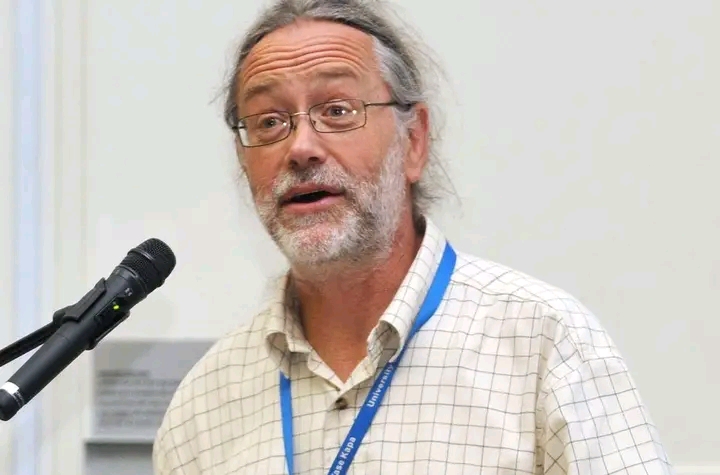
Zambia’s democratic slide hits home as Stellenbosch scholar silenced
By Jeremy Seekings
The Zambian government’s targeting of Stellenbosch-based historian Sishuwa Sishuwa shows that the country’s democratic backsliding has direct implications for academic freedom in South Africa and beyond, writes Jeremy Seekings.
Many Zambians, as well as observers of Zambian politics, have been alarmed by the rapid descent into autocratic abuse of power by the country’s president, Hakainde Hichilema (HH).
The erosion of democracy in Zambia has direct implications for universities and academic freedom across the region, including here in South Africa.
Earlier this month, the Zambian government revoked the passport of historian Sishuwa Sishuwa, who is a senior lecturer in the History Department at the University of Stellenbosch.
Zambia held a general election in August. Nobody was surprised that Hichilema and his party, the United Party for National Development (UPND), abused incumbency to favour themselves in the election campaigns. As scholars have documented, this is commonplace across the region.
Opposition parties and candidates were impeded, with several rallies and other events being prohibited. It has been reported that the ruling party benefited from a massive donation from Canadian mining company First Quantum Minerals. There can be little doubt that the ruling party also enjoyed substantial support from other donors. The result was that the UPND was able to flood the country with campaign vehicles, organisers and material.
Move towards repression
Few people were surprised that HH and the UPND won. Opinion polls pointed to their re-election, although probably by a modest margin. While some of the government’s policy reforms appeared to be popular, continued economic hardship appeared to have dented HH’s popularity and support for the UPND across much of the country.
But the turn to blatant repression came as a surprise to many. First, the count was suspended for much of the day after the election, perhaps because initial results from some constituencies suggested that the opposition had performed better than HH and his government had anticipated.
The European Union observer mission found “serious incidents and procedural irregularities during the counting and tabulation”. Then, when the presidential election results were announced, HH won more votes than indicated in the parallel tabulation conducted by the non-partisan Christian Churches Monitoring Group. The vote for HH in some constituencies appeared to have been inflated.
The government shut down the courts to prevent the opposition from lodging a formal petition objecting to the results. The police and military raided and detained opposition leaders, killing one former government minister.
Then, earlier this month, the government revoked the passports of six Zambians, including Dr Sishuwa of Stellenbosch University.
Dr Sishuwa had been one of the first scholars of Zambian politics to note HH’s descent into autocracy. His passport was ostensibly revoked without prior notification “for security reasons in the interest of national security”. But there can be little doubt that the real reason was Dr Sishuwa’s trenchant criticism of HH and his government.
Dr Sishuwa completed his PhD at Oxford, taught at the University of Zambia (UNZA) and held a post-doctoral fellowship at the University of Cape Town before being appointed at Stellenbosch in 2023. His doctoral thesis was published internationally as Party Politics and Populism in Zambia: Michael Sata and Political Change, 1955-2014 in 2024. He has published a series of articles on the political history of Zambia.
Earlier this year, he spent six months in the USA as a Visiting Scholar at Harvard University. Dr Sishuwa is currently completing his second book manuscript, on the role of the military in politics in Southern Africa.
Repressed before
Ironically, Dr Sishuwa had been the victim of repression under the previous government, ousted by HH and the UPND in the 2021 election. In early 2021, prior to the election, Dr Sishuwa had to rapidly leave Zambia when it was revealed that the then government, headed by Edgar Lungu, was about to charge him with sedition as a result of a critical opinion piece he published in the Mail & Guardian. In response, academics from Southern Africa and further afield published an open letter in defence of Dr Sishuwa.
The repeated harassment of Dr Sishuwa underscores the sad truth that African despots, regardless of partisan affiliation and their electoral credentials, do not take kindly to criticism by scholars.
Scholars from around the world have once again rallied behind Dr Sishuwa. A petition – available on (inter alia) the Democracy in Africa website – attracted more than one thousand signatures within twenty-four hours. It now stands at more than 1 600 signatories.
Amnesty International has condemned the move as an arbitrary use of administrative powers to silence critics. The Journal of Southern African Studies has condemned the Zambian government’s persecution of Dr Sishuwa (who serves on the journal’s editorial board), while the African Studies Association in the USA published a statement expressing its concern over the Zambian government’s abuse of its power to harass dissenting voices.
The signatories of the petition have declared that, “as historians and social scientists… we are extremely concerned about the use of authoritarian measures to silence legitimate and constitutionally protected critical voices”.
No specific evidence has been provided publicly to explain how Dr Sishuwa, who is a respected historian, represents a threat to national security. The petition remains open for others to sign in protest against the Zambian government’s repression of Dr Sishuwa and others.
– Jeremy Seekings is Professor of Political Studies and Sociology and Acting Director of the Institute for Democracy, Citizenship and Public Policy in Africa, at the University of Cape Town, and a Visiting Professor at Princeton University.
Source: https://www.news24.com/giftedarticle/AwJhFeKc8H7uUwvm51G4