
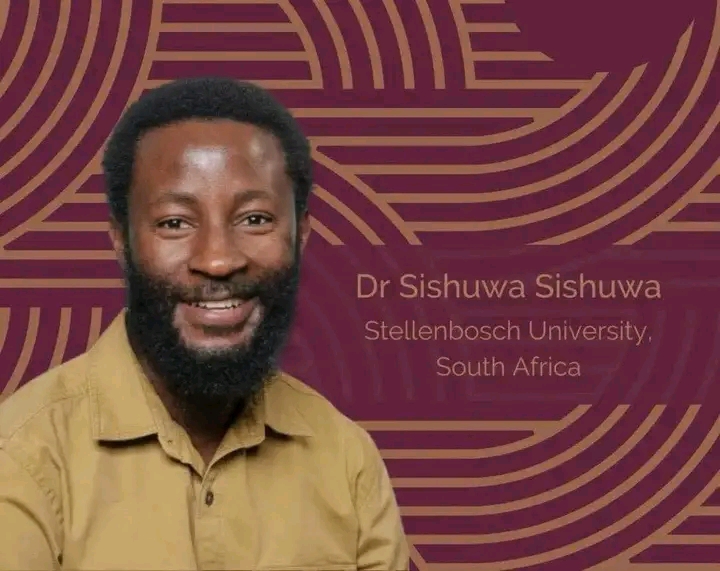
WHY THE CANCELLATION OF DR SISHUWA’S PASSPORT IS UNLAWFUL: YOU CANNOT ANSWER A SCHOLAR’S PEN WITH A BUREAUCRATIC AXE
By Thandiwe Ketiš Ngoma
There are moments when the actions of a government become bigger than the individual being targeted. They become a test of the character of the State itself. The reported cancellation of the passport of historian and academic Dr Sishuwa Sishuwa is one of those moments. The Zambian Government cancelled his passport through Government Gazette Notice No. 1421 of 2026, citing “security reasons in the interest of national security.” Yet the notice does not publicly set out the specific security grounds relating to Dr Sishuwa individually. That lack of explanation deserves serious public scrutiny, particularly when the decision affects a citizen’s freedom of movement.
And that should concern every Zambian who believes that citizenship comes with rights, dignity and constitutional protection. Dr Sishuwa is not a soldier carrying a weapon against the State. He is a scholar carrying something far more powerful in a democracy: an idea. His weapon is research. His ammunition is evidence. His battlefield is intellectual debate, and his contribution is scholarship, analysis and criticism.
If the UPND Government disagrees with what Dr Sishuwa writes, says or concludes about Zambia, then the response should be simple and honourable: answer him. Debate him. Challenge his evidence. Refute his conclusions. If his analysis is wrong, prove it wrong. If his historical interpretation is defective, produce the historical evidence that demonstrates where he is mistaken. If his conclusions are unsupported, expose the weaknesses in his methodology. If his data is inaccurate, bring better data. If his theory is flawed, construct a stronger theory.
That is what intellectual confidence looks like. That is what democratic maturity looks like. And that is what a government that genuinely believes in the strength of its own arguments should be prepared to do.
Instead, when administrative power enters the arena of intellectual disagreement, the issue becomes much bigger than one scholar and one passport. You cannot answer a scholar’s pen with a bureaucratic axe. You cannot defeat an argument by taking away the passport of the person who made it. You cannot make an uncomfortable idea disappear simply because the person who articulated it has become inconvenient to those in power. And you certainly cannot expect a nation to believe that cancelling a scholar’s travel document is a substitute for winning an intellectual argument.
This is where the matter becomes deeply disturbing. A government does not demonstrate strength by intimidating its critics; it demonstrates strength by tolerating criticism. It does not demonstrate confidence by surrounding itself with people who agree with everything it says; it demonstrates confidence by allowing those who disagree to speak, write, research, question and challenge.
A government does not become stronger when the voices of intellectuals become quieter. Democracy becomes weaker.
The marketplace of ideas requires oxygen. It requires disagreement, uncomfortable questions and scholars who are willing to examine power rather than worship it. It requires journalists who are willing to investigate and citizens who are willing to ask, “Why?” Most importantly, it requires people who are prepared to tell those in authority things they may desperately not want to hear. That is not a weakness of democracy. That is the price of democracy.
You cannot have the applause of democracy while demanding the silence of authoritarianism. You cannot campaign on democratic values and then treat criticism as an act of disloyalty. You cannot invoke the Constitution when it protects you and become irritated by constitutional freedoms when they protect someone who disagrees with you. That is not how democracy works.
The Government has no valid reasons for the passport cancellation. Yes, it has invoked national security. But national security cannot simply become a magic phrase that ends every question. Where a citizen’s fundamental rights are affected, the public deserves transparency, legality and due process. This is particularly true in the case of Dr Sishuwa, whose passport cancelled is problematic for three reasons.
First, the decision was made on a vague premise. The government justified the action to revoke Dr Sishuwa’s passport on vague and unspecified claims of “national security interest”. This broad ground does not exist under Zambian law, specifically the Passport Act, No. 28 of 2016, which permits for the cancellation of a person’s passport on specified grounds. These include loss of citizenship; deportation to Zambia at the expense of the government due to the holder’s misconduct; obtaining a passport through fraud or misrepresentation; travel-related passport fraud or forgery; use of passport to commit an offence in another country and which would constitute an offence in Zambia and upon which one is convicted in that country; and conviction for drug trafficking, money laundering, smuggling, trafficking in persons, acts of terrorism or any other international crime. The rest are death; the existence of a court order restricting the holder’s movement; a warrant of arrest issued against the holder and there is a risk of the holder absconding; and the need to examine the passport for a period not exceeding fourteen days. None of these grounds apply to Dr Sishuwa, one of Zambia’s keenest observers who has produced numerous opinion pieces on democratic erosion and violations of different rights, including the right to public assembly, free speech, media freedom, and association
I therefore challenge the government to either provide clear and specific reasons for its action or reverse the cancelation of Dr Sishuwa’s passport. Criticism of the government or its officials is not a lawful ground for the cancellation of one’s passport. In addition, merely invoking broad national security concerns cannot, without a lawful ground under the Act, justify cancellation of a passport. The same principle was affirmed by the Supreme Court of Zambia in Cuthbert Mambwe Nyirongo v Attorney-General (SCZ Judgment No. 10 of 1991), which held that a citizen’s right to a passport could not be withdrawn in the absence of an applicable law authorising the restriction, notwithstanding the Government’s reliance on undisclosed “national security” material.
Second, the decision to revoke Dr Sishuwa’s passport was arbitrarily done and violates procedural fairness or due process. Section 12 (2) of the Passport Act requires the holder to be informed of the cancellation and given the reasons within fourteen days, while section 18 provides a right of appeal within thirty days of service of the decision. I understand that Dr Sishuwa has not been personally notified or served with any reason (s) for the cancelation of his passport. This raises a serious question of compliance with the cited law and may impede the statutory right of appeal. Although the Act does not expressly require a hearing before cancellation, the absence of an opportunity to make representations also raises concerns of procedural fairness and natural justice. Further, the same legal provision vests the power to cancel a passport in the Chief Passports and Citizenship Officer, not the Registrar General who, according to the government-issued gazette notice, revoked Dr Sishuwa’s travel document. A cancellation made by the Registrar General is therefore without apparent statutory authority.
Third, the cancellation of Dr Sishuwa’s passport impedes his constitutional and international right to freedom of movement, which enables him to undertake travel for research, academic visits, conference attendance, and other reasons. Article 22 of the Constitution of Zambia provides that, except in accordance with written law, a citizen shall not be deprived of freedom of movement, including the right to leave Zambia and to return to Zambia. Any restriction must therefore have a lawful basis and satisfy the constitutional limitations applicable to restrictions on movement. Article 12 of the International Covenant on Civil and Political Rights, to which Zambia is a State party, similarly protects the right to leave any country, including one’s own, and provides that restrictions are permissible only where they are provided by law, necessary for a legitimate purpose such as national security, and consistent with the other rights recognised in the Covenant. It also protects against arbitrary deprivation of the right to enter one’s own country. National security may therefore be a legitimate objective in principle, but it is not a substitute for statutory authority. A cancellation that is not authorised by the Passport Act, or that is imposed arbitrarily or without the safeguards required by law, cannot be justified simply by invoking national security.
Taken together, these and other considerations create the impression that Dr Sishuwa, a prominent critic of the government who was also threatened with arrest for sedition by the previous administration, is, again, being harassed for expressing political opinion deemed as unacceptable by those in authority. Amnesty International has described the passport cancellations as an arbitrary use of administrative powers against critics and has called for the affected passports to be restored. It has also argued that political criticism or opposition to the government is not itself a stated ground for passport cancellation.
That criticism deserves to be answered by the Government with facts and legal justification, not contempt. Because the real danger is not merely what happens to one passport. The deeper danger lies in the message such an action can send to an entire generation.
Imagine being a young Zambian student sitting in a university lecture hall. You are studying political science. You are studying history. You are researching governance and learning about constitutionalism. Then you watch a respected academic face administrative consequences after becoming a prominent critic of those in power. What lesson do you take from that? Do you learn to question, or do you learn to remain silent? Do you learn to investigate, or do you learn to look over your shoulder? Do you learn that scholarship can challenge power, or do you learn that power can punish scholarship?
That is the question before Zambia.
A democracy that cannot tolerate criticism risks becoming an echo chamber, and an echo chamber is not a democracy. A healthy democracy does not require everyone to agree with the government. It requires citizens to have the freedom to disagree, and it requires those in power to have the confidence to answer disagreement with reason, evidence and argument.
The irony is that governments come and go. Presidents come and go. Political parties rise and fall. Ministers leave office. But ideas survive governments. History survives presidents. Scholarship survives political administrations. And the written record of how a government treated its critics can outlive the government itself.
So, to those in authority, I say this: Do not be afraid of Dr Sishuwa’s pen. If you believe he is wrong, prove him wrong. If you believe his scholarship is defective, dismantle his arguments. If you believe his interpretation of Zambia is misguided, give Zambians a better interpretation. If you believe his facts are wrong, give the country better facts. But do not use the machinery of government to avoid the intellectual battlefield.
Because the moment a government abandons argument and reaches for administrative punishment, it changes the nature of the contest. It is no longer scholar versus scholar. It becomes citizen versus State. And that is a contest in which the State carries enormous power while the citizen carries little more than his or her voice. That power must therefore be exercised with extraordinary restraint.
Dr Sishuwa does not need to be protected from criticism. He needs the freedom to receive criticism. And the Government does not need protection from his ideas. Its ideas need to be strong enough to withstand them.
This is bigger than Dr Sishuwa. It is bigger than the UPND. It is bigger than President Hakainde Hichilema. It is about the Zambia we are building and the democratic culture we leave behind.
Do we want a country where scholars can challenge presidents without fear? Do we want a country where criticism is answered with evidence rather than intimidation? Do we want a country where the passport of a citizen is not transformed into an administrative weapon in the face of political disagreement? Or do we want a country where those who speak too loudly against power are gradually taught to whisper?
I choose a Zambia where ideas are fought with ideas.
A Zambia where scholarship is not punished for being uncomfortable. A Zambia where criticism is not treated as treason. A Zambia where the Government understands that it serves the citizen, not the other way around.
So, to the Government of Zambia: Step into the public square. Bring your evidence. Bring your arguments. Bring your scholars. Bring your lawyers. Bring your facts. And debate Dr Sishuwa.
But leave the bureaucratic axe at home.
Because you cannot answer a scholar’s pen with a bureaucratic axe. And you cannot build a confident democracy by teaching its intellectuals to be afraid.
Hand back the passport. Let the scholar speak. Let the Government answer. And let the ideas stand or fall on their merits.
That is democracy. That is intellectual freedom. And that is the Zambia worth fighting for.