
PAIN LANDS STRAIGHT ON PRAISE SINGERS.
But sometimes, the bigger lesson is not about the individual involved.
It is about Decision Infrastructure.
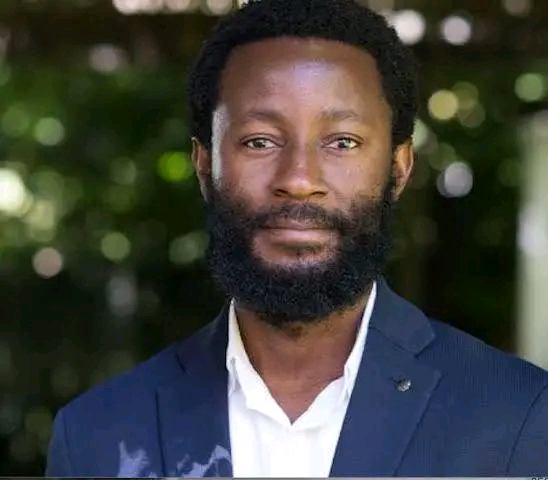
Dr Sishuwa Sishuwa has reportedly returned safely to South Africa after the South African government issued him a travel document through its diplomatic mission in London, following the cancellation of his Zambian passport.
Zambia’s Government Gazette Notice No. 1421 of 2026 cancelled the passports of six Zambians, citing security reasons in the interest of national security. The affected individuals include Sishuwa Sishuwa, Emmanuel Mwamba, Emmanuel Jay Banda, Binwell Mpundu, Kaizer Zulu and Lillian Mutambo.
The interesting part is what happens after the decision.
A Decision Infrastructure lens asks:
1. What problem was the decision supposed to solve?
If national security was the justification, the public deserves clarity about the specific legal and security basis for such an extraordinary administrative action.
2. What secondary consequences were considered?
A passport is not merely a travel booklet. Cancelling it can affect mobility, identification and access to ordinary institutional processes. The Gazette itself states that the cancelled documents are no longer valid for identification, travel or official purposes.
3. What happens when another institution absorbs the consequence?
Sishuwa was stranded outside Zambia. South Africa stepped in and issued a travel document that enabled him to return there.
That creates an important institutional question:
Did the original decision actually eliminate the problem—or simply transfer the problem to another jurisdiction?
This is where Decision Infrastructure becomes useful.
Every consequential decision should be tested through:
DECISION → LEGAL BASIS → OBJECTIVE → SECOND-ORDER EFFECTS → STAKEHOLDER RESPONSE → INSTITUTIONAL COST → REVERSIBILITY
Because a government can have the administrative power to make a decision.
But having the power to make a decision is not the same as having designed the decision well.
Amnesty International has challenged the passport cancellations, arguing that political criticism is not itself a stated ground for passport cancellation under Zambia’s passport and citizenship legislation. That is an allegation and legal interpretation that may ultimately require determination through the appropriate institutions.
And that is the bigger lesson.
Good governance is not simply about making decisions.
It is about building decision systems that can answer:
– Why was this decision made?
– What evidence supports it?
– What law authorises it?
– Who bears the consequences?
– What happens next?
– Can the decision be challenged?
– Can it be reversed?
– What institutional precedent does it create?
Because eventually, every decision produces consequences.
And sometimes the most revealing consequence is not what happens to the person targeted by the decision.
It is what the decision forces everyone else to do.
Better Decisions. Stronger Futures.