
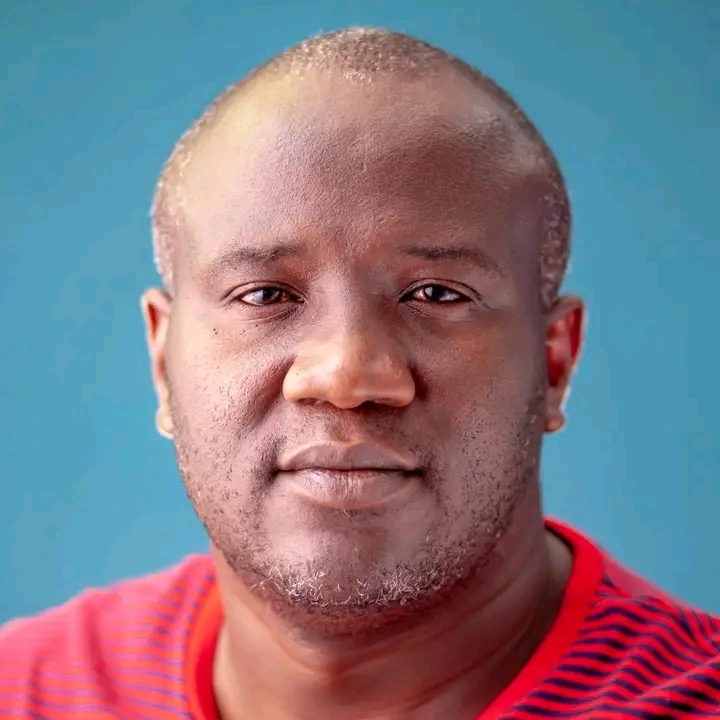
SIMUUWE FIRES BACK AT CHAVULA: “YOU CANNOT HIDE BEHIND MEDIA OWNERSHIP AFTER TAKING POLITICAL POSITIONS — WE WILL TREAT YOU AS AN OPPONENT”
FOR IMMEDIATE RELEASE
SIMUUWE FIRES BACK AT CHAVULA: “YOU CANNOT HIDE BEHIND MEDIA OWNERSHIP AFTER TAKING POLITICAL POSITIONS — WE WILL TREAT YOU AS AN OPPONENT”
Lusaka, August 8, 2026 – The United Party for National Development (UPND) has taken a swipe at political statements attributed to Hot FM proprietor Oscar Chavula, particularly his assertions concerning President Hakainde Hichilema and the prospects of the 2026 General Elections
Let me make one thing clear; if Mr. Chavula wishes to enter active politics, he is welcome to do so. However, once he chooses to make political pronouncements and openly takes political positions, we will engage him as a political opponent and not merely as a media proprietor or shareholder
We are equally aware of the political links involving Japhen Mwakalombe, who is associated with the NRPUP, and the increasingly political character of some of the discourse surrounding Hot FM. If individuals choose to participate actively in politics, they should be prepared to be held to the same political scrutiny as everyone else.
There is absolutely nothing wrong with being a politician. What becomes problematic is attempting to occupy both spaces simultaneously and then expecting political statements to be treated purely as independent media commentary.
The UPND has been in Government for more than four years and nine months, and during this period, the Government has not shut down Hot FM or any other media house for expressing views critical of the Government.
Indeed, Hot FM has consistently provided significant airtime to opposition voices, and the UPND has not complained simply because opposition politicians have been given a platform. We believe media houses have a right to determine their editorial content within the confines of the law.
However, if a media organisation deliberately uses its platform to advance partisan political interests, political actors and citizens equally have a right to raise concerns through the appropriate institutions. Where necessary, the UPND will use lawful channels, including engaging the Independent Broadcasting Authority (IBA) within the provisions of the law.
It is important to remind Mr. Chavula and others that Zambia has a history of political interference and intimidation of the media. During the previous PF administration, which has now been rebranded as the NRPUP, there were instances where cadres were unleashed on radio stations, disrupting broadcasts and intimidating journalists.
That is not the approach of the UPND Government. President Hakainde Hichilema has repeatedly made it clear that journalists and media institutions must be allowed to operate freely and professionally. The President has also demonstrated this commitment by resisting attempts to portray his administration as hostile to the media simply because it disagrees with some of the narratives being advanced.
No media house operates in a vacuum. Media freedom comes with responsibility, and all broadcasters are expected to operate within Zambia’s laws and regulatory framework.
President Hichilema has also supported the principle of self-regulation of the media, rather than relying on statutory control of journalism. The establishment of an independent media self-regulatory mechanism is an important step towards strengthening professional standards while safeguarding freedom of expression and a free press.
We therefore find it unfortunate when attempts are made to create a narrative that the UPND Government is hostile to journalists or media institutions simply because the Government challenges what it considers inaccurate or politically motivated reporting.
The media is an important pillar of democracy, and the UPND respects its role. But media freedom cannot mean immunity from scrutiny, just as political speech cannot mean immunity from political accountability.
Finally, Mr. Chavula’s assertion that President Hakainde Hichilema will lose the 2026 elections is not a media analysis; it is a political position. By taking such a definitive political position, he has effectively entered the political arena. If Mr. Chavula wants to join politics, he is welcome. We will meet him there, as a political opponent, not as a media owner.
The UPND remains confident in the Zambian people and will continue to focus on presenting its record, defending its achievements and engaging citizens on the future of the country.
MARK SIMUUWE
UPND MEDIA DIRECTOR