
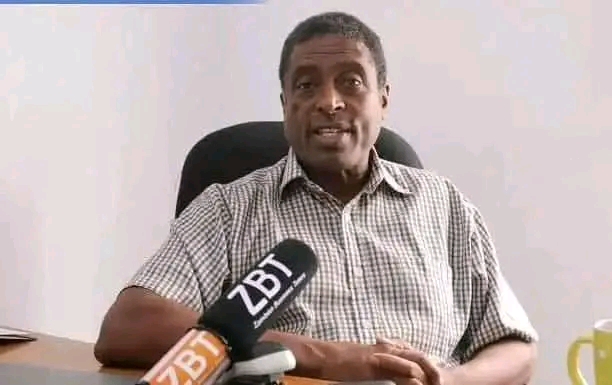
REMOVING STREET VENDORS WILL MAKE UPND UNPOPULAR, POSSIBLE CIVIL UNREST WARNS DODIA.
REMOVING STREET VENDORS WILL MAKE UPND UNPOPULAR, POSSIBLE CIVIL UNREST WARNS DODIA.
Renowned economist Yusuf Dodia has warned that the United Party for National Development (UPND) risks losing public support if Government continues removing street vendors without providing adequate alternative trading spaces.
Mr Dodia says local authorities across the country should first ensure that there are enough markets to accommodate all affected traders before carrying out street-vending clearance exercises.
He says removing vendors from the streets without providing viable alternatives could make the UPND and President Hakainde Hichilema increasingly unpopular.
Speaking on Conversations with Hope on Capital FM, monitored by Zambian Watch, Mr Dodia questioned whether the ongoing street-vending clearance exercise was limited to Lusaka or was also being implemented in other cities such as Ndola and Kitwe.
Mr Dodia acknowledged that clearing streets was important for maintaining order, but said authorities needed a comprehensive strategy to ensure that affected traders had somewhere to conduct their businesses.
“If you are saying that street vendors must be removed from the streets, what is the alternative for them? Taking this move now without an alternative will only make the UPND and President Hakainde Hichilema unpopular,” he warned.
He challenged suggestions that vendors could simply move into existing markets, arguing that the available trading spaces were insufficient to accommodate the large number of people who had been operating from the streets.
Mr Dodia said it would have been more prudent to first establish adequate alternative trading spaces before removing vendors from the streets.
“It would therefore have been more prudent and wiser to prepare adequate alternative trading spaces before removing people from the streets,” he said.
He warned that removing people’s sources of income without providing alternatives could have serious social consequences, particularly because many of the affected traders depend on their businesses to support their families.
“These are people who are feeding families. They need to eat every day. One of the immediate risks is an increase in crime,” Mr Dodia said.
He further warned that growing economic desperation could potentially lead to social unrest, citing housebreakings, theft, street robberies and break-ins at business premises as some of the possible consequences.
Mr Dodia, however, said properly structured markets could provide a sustainable solution if traders were organised according to the products they sell.
“That is the idea behind creating clusters,” he explained.
He said specialised markets could make it easier for customers to find particular products while also giving traders a sustainable place to conduct their businesses.
“If I want to buy salaula, for example, I know that I need to go to the salaula market,” Mr Dodia said.
He also questioned how long the current street-vending clearance exercise would last, noting that similar exercises had been conducted in the past only for vendors to eventually return to the streets.
-Zambian Watch.