
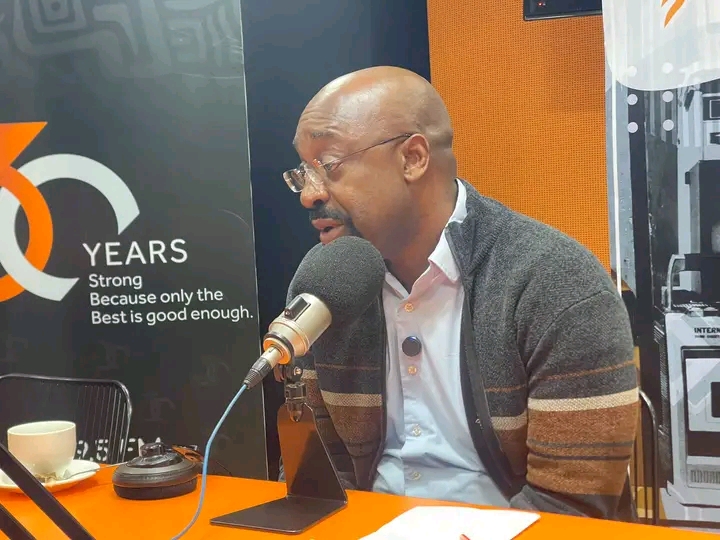
RECONSIDER HANDS-OFF APPROACH TO STRATEGIC PROJECTS, MUSHIMBA URGES GOVERNMENT
ORGANIZED People’s Party (OPP) president Brian Mushimba has urged Government to reconsider its hands-off approach to strategic projects, arguing that the private sector should not be left to carry the entire burden of developing critical infrastructure.
Dr Mushimba said Government’s responsibility should go beyond regulation and creating an enabling environment, particularly in a country where a large proportion of citizens continue to struggle economically.
“I believe Government needs to reconsider this approach, particularly because Zambia is a poor country and we cannot continue placing an excessive burden on citizens who are already struggling,” he said.
Speaking on Radio Phoenix’s Let the People Talk programme, Dr Mushimba said Government had continued to create favourable conditions for investors and mine owners while ordinary citizens were being left behind.
“We do a very good job of taking care of investors and mine owners,” he said.
He said the situation had contributed to a widening gap between the rich and poor, noting that more than 60 percent of Zambians were still living in poverty.
Dr Mushimba said OPP had proposed that Government use the country’s resources to provide seed capital for strategic projects, arguing that this could reduce the costs eventually passed on to citizens.
“Our proposal as OPP, even during the campaign, was that Zambia has sufficient resources to enable Government to start investing directly in its people and in strategic projects,” he said.
He identified the mining sector as one of the areas Government could exploit to raise resources for such investments, saying Zambia could not afford to ignore the sector given its contribution to foreign earnings.
“The bulk of Zambia’s foreign earnings currently comes from mining and we cannot run away from that reality,” Dr Mushimba said.
He said growing global demand for copper, cobalt and manganese, driven by electric vehicles, climate change and the energy transition, presented Zambia with an opportunity to launch what he termed a second phase of industrialisation.
Dr Mushimba proposed the establishment of a Minerals Revenue Authority to strengthen accountability in the mining sector and ensure the country received what was due from minerals extracted locally.
“One of our proposals was the establishment of a Minerals Revenue Authority that would oversee the mining sector and ensure proper accounting for mineral production and revenues,” he said.
He further proposed that Government consider taking a portion of extraordinary mining profits through a transparent framework, rather than relying on endless negotiations with mining companies.
“We are not saying mining companies should not make profits,” he said.
Dr Mushimba said mining companies should recover their costs, service loans and provide reasonable returns to shareholders, but Government should determine how much of exceptional profits should accrue to the country.
“These are Zambia’s minerals. They belong to the country, and the people of Zambia should benefit meaningfully from the wealth being generated from them,” he said.
He said additional mineral revenues could provide seed capital for power generation, infrastructure, manufacturing and other strategic investments.
“If we properly account for our minerals, the additional revenues could provide the seed capital required to invest in strategic industries and other national development projects,” Dr Mushimba said.
He said the approach would enable Zambia to move beyond exporting raw materials and use its mineral wealth to finance industrialisation and address poverty.