
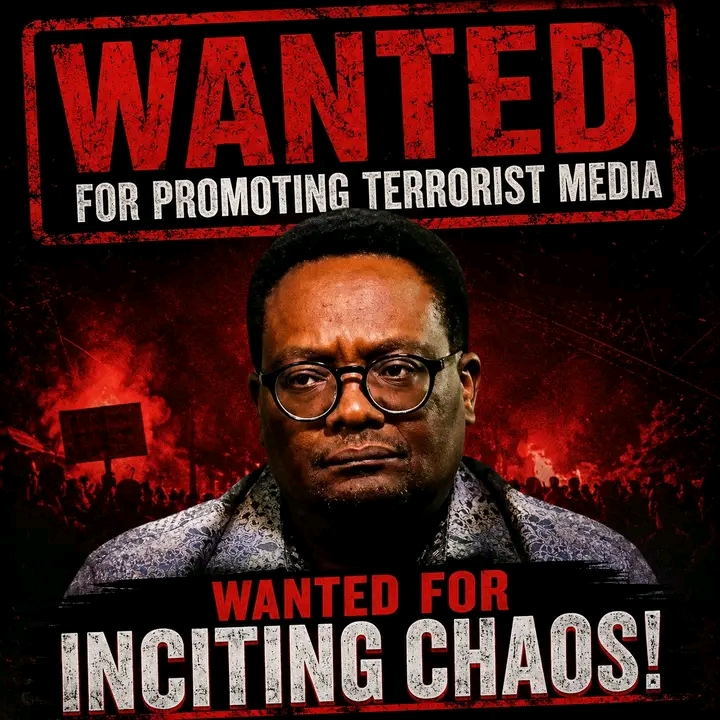
PHANTOM MILITIA: A CASE OF EMMANUEL MWAMBA
Mwamba has become one of the most dangerous amplifiers of the opposition interpretation AKA PHANTOM MILITIA.
And that influence matters because in the age of Facebook politics, a communicator does not need a television station, a newspaper or a political rally to reach thousands of people. A post can become a political event. A photograph can become evidence in the court of public opinion. An allegation can travel through multiple countries before investigators have even finished asking questions.
MWAMBA, a political menace, and recurring villain in political narrative. Conveniently found everywhere President Hakainde Hichilema’s government is accused of wrongdoing and, according to critics, remarkably difficult to independently verify.
His PHANTOM MILITIA has become one of the most potent symbols in the political messaging surrounding the broader opposition movement: a narrative capable of transforming normal political tension into a national emergency, legal proceedings into persecution and every heavy police deployment into evidence of dictatorship.
According to MWAMBA’s PHANTOM MILITIA;
-Its not simply an investigation, but persecution.
-Its not merely a prosecution, but dictatorship.
-Not simply political disagreement, but national collapse.
The result is a political ecosystem in which the loudest narrative often arrives before the facts do AND International media attention can further amplify the effect. When domestic political allegations are repeated by foreign platforms, they acquire a new level of visibility. But repetition should not automatically be confused with verification.
A population repeatedly told that the state is collapsing may eventually begin behaving as though it already has.
A political movement repeatedly told that normal institutions are illegitimate may increasingly seek alternatives outside those institutions.
This is how political polarization feeds itself.
And suddenly everyone is asking about a militia.
“The Phantom Militia”
Perhaps the most important question is not whether the phrase is politically effective. Clearly, it is.
But political influence carries responsibility.
AND Mwamba remains a powerful communicator precisely because he understands the mechanics of modern political conflict. He recognizes that attention is power, outrage is engagement and controversy is distribution.
Meanwhile, Brian Mundubile, Makebi Zulu and other Phantom MILITIA-associated actors have found themselves at the centre of serious legal and political cases while government-aligned voices insist that criminal allegations must be investigated regardless of political affiliation.