
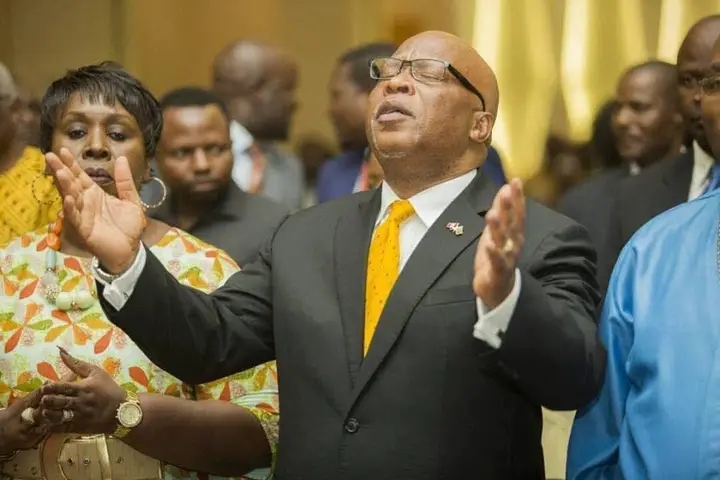
Nevers Mumba The Preacher Who Failed His Own Sermons
Nevers Mumba The Preacher Who Failed His Own Sermons
By Chitundu
Not by age but by capacity is wisdom acquired, Plautus
The Roman playwright Plautus captured a truth that exposes many public figures across generations. Wisdom is not measured by age, position, or longevity in public life. It is measured by capacity, consistency, judgment, and moral discipline. A man may occupy high office for decades and still fail the basic test of wisdom if his conduct repeatedly contradicts the principles he claims to uphold.
This lens is unavoidable when examining the public life of Dr Nevers Sekwila Mumba, a man who has presented himself both as a preacher of moral truth and a political actor in the highest levels of state power. In theory, this combination should produce a leader of rare integrity. In practice, it has produced one of the most contested moral images in Zambia’s political history.
From the outset, Dr Mumba built his public identity on moral authority. As a pastor he spoke with certainty about truth, righteousness, accountability, and divine standards for leadership. When he transitioned into politics, that moral voice did not disappear. Instead, it became the foundation of his political branding. The expectation was simple. A man who preaches accountability should embody accountability. A man who condemns compromise should resist compromising his own principles.
Yet it is precisely at this intersection between preaching and politics that his credibility has been repeatedly tested.
One of the most persistent criticisms levelled against him is the gap between moral language and political conduct. Over the years, Dr Mumba has been associated with legal and administrative controversies that have followed him through different stages of his public service. While interpretations of these matters vary, and while he has often disputed the political motivation behind some of them, the reality is that they remain part of the public record and continue to shape perceptions of inconsistency between his sermons and his conduct.
This is where the accusation of hypocrisy, often raised by critics, gains its political weight. It is not merely about legal outcomes. It is about the expectation that a moral preacher should demonstrate higher personal accountability than the average politician. When that expectation appears unmet, trust is eroded more sharply than it would be for ordinary political figures.
Equally significant is his political trajectory, which has been marked by shifting alliances, party movements, and strategic repositioning over time. In a democratic system, political flexibility is not in itself a fault. However, when a leader frequently changes platforms while maintaining a strong moral tone, observers begin to question whether principle is guiding action or whether survival and relevance are the dominant motivations.
This perception becomes even more pronounced because Dr Mumba does not operate as a conventional politician. He carries the added weight of pastoral authority. In Zambia’s deeply religious society, that authority amplifies both influence and scrutiny. When a pastor speaks in political language, the public does not only hear a politician. They hear a moral voice. And when that voice appears to shift positions or align with convenience, the sense of contradiction becomes more severe.
Critics argue that this is where the disconnect becomes most visible. The same voice that once preached steadfastness is now associated with political adaptability. The same moral framework that condemned compromise is now viewed through the lens of political negotiation. Whether fair or not, this tension has become central to how his public image is understood.
Beyond conduct and consistency lies the question of legacy. Political leaders are ultimately judged by what they build. Institutions, reforms, policies, and long term national impact define historical memory. After decades in public life, Dr Mumba’s record remains the subject of debate, with supporters pointing to service in high office and diplomacy, while critics argue that his career has been more visible for controversy and repositioning than for transformative national outcomes.
This absence of a clearly defined legacy strengthens the argument of those who question whether moral authority alone can sustain long term political credibility.
At the heart of this critique is a deeper issue about role modelling. A true role model is not defined by public declarations but by private consistency made public. Leadership demands that words and actions reinforce each other under pressure, not drift apart when circumstances change. Where that alignment weakens, authority weakens with it.
The burden is heavier for those who choose to be both preacher and politician. Society does not easily separate the two roles. It expects spiritual consistency to elevate political conduct, not contradict it. When the opposite appears to happen, disappointment is not just political. It becomes moral.
None of this denies Dr Mumba’s service in national life. He has held high office, represented the country abroad, and remained an active participant in Zambia’s democratic process. But public life is not judged by participation alone. It is judged by coherence between message and behaviour.
Plautus’ warning therefore remains relevant. Wisdom is not a function of age or position but of capacity. The real question is not how long Dr Nevers Mumba has served in public life, but whether his conduct has demonstrated the capacity for consistent moral judgment that his sermons once demanded of others.
In the end, the most difficult test for any preacher is not how powerfully he speaks, but whether his life can withstand the weight of his own words. https://zambianwhistleblower.com/
John 8:32 “And you will know the truth, and the truth will set you free.”
Get in touch with us on WhatsApp +263789364451
#zambianwhistleblower #zwb
©️ Zambian Whistleblower