
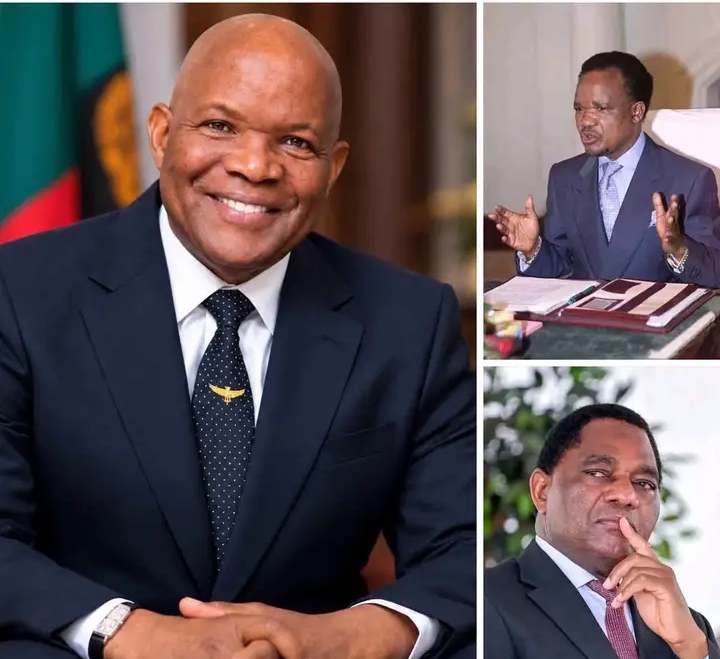
M’MEMBE WARNS OF ‘COUP IN INSTALMENTS’ AND CALLS FOR DEFENCE OF CONSTITUTIONALISM
LUSAKA, 23 September 2026
Socialist Party (SP) President Dr Fred M’membe has warned that Zambia must remain vigilant against what he described as a “coup in instalments”, arguing that constitutional changes undertaken gradually could weaken democratic safeguards and ultimately threaten constitutionalism.
Dr M’membe said what he termed a constitutional coup did not necessarily involve military intervention or the seizure of State House by force, but could instead occur through a series of legally enacted constitutional amendments that, in his view, gradually transfer power away from citizens and institutions.
He pointed to the Constitution of Zambia (Amendment) Bill No. 7 of 2025, which was published on 23 May 2025, and subsequently enacted as the Constitution of Zambia (Amendment) Act No. 13 of 2025 on 18 December 2025.
Parliament’s records show that the legislation increased constituency-based seats in the National Assembly from 156 to 226 and introduced 40 proportional-representation seats for women, youths and persons with disabilities. The amendment also removed the two-term limit for mayors and council chairpersons and provided for Members of Parliament to sit on councils.
Dr M’membe argued that the removal of local government term limits should be viewed as part of a broader debate on constitutional term limits. He questioned whether the same principle could eventually be applied to the presidency and called on President Hakainde Hichilema to publicly state whether he would seek or support a third presidential term.
He also revisited the controversy surrounding Bill No. 7, arguing that the constitutional amendment process demonstrated the importance of consultation and respect for institutions. Parliamentary records show that the Bill was published on 23 May 2025, introduced in the National Assembly on 25 June 2025, and later subjected to consultations involving various stakeholders before Parliament proceeded with its consideration. Parliament recorded that some stakeholders opposed the Bill and called for its withdrawal, while others supported it with proposed amendments.
Dr M’membe further referred to the Constitutional Court proceedings surrounding Bill No. 7, maintaining that the controversy demonstrated the need for constitutional processes to command broad public confidence. The Constitutional Court judgment itself noted that Bill No. 7 had been gazetted on 23 May 2025 and tabled in Parliament on 25 June 2025.
Reflecting on the 2001 third-term debate under former President Frederick Chiluba, Dr M’membe said Zambia had previously demonstrated that constitutional safeguards could be defended when political parties, churches, professional bodies, civil society and ordinary citizens worked together.
He recalled his involvement in the campaign against the proposed third-term bid, saying that the Oasis Forum was built through sustained engagement among different organisations and individuals who eventually came together to defend constitutional term limits.
According to Dr M’membe, the lesson from 2001 was that constitutional democracy could not be defended by one institution alone. He therefore called on the Law Association of Zambia, the Zambia Conference of Catholic Bishops, the Council of Churches in Zambia, the Evangelical Fellowship of Zambia and the Non-Governmental Organisations Coordinating Council to once again engage collectively on constitutional matters.
He said the Socialist Party was prepared to participate in any broad constitutional defence initiative but would not seek to control, brand or turn such an initiative into a party campaign, insisting that the Constitution belonged to the Zambian people.
Dr M’membe also challenged Members of Parliament across political parties to publicly state their positions on any future proposal relating to presidential term limits before such proposals reached Parliament.
He said constitutionalism should not be presented as being in conflict with national development, arguing that sustainable development required strong democratic institutions, predictable constitutional rules and respect for the rule of law.
Dr M’membe concluded by urging Zambians to remember the experience of 2001 and remain alert to developments affecting the Constitution, saying that the defence of constitutional democracy was a responsibility shared by political parties, civil society, churches, Parliament and ordinary citizens.