
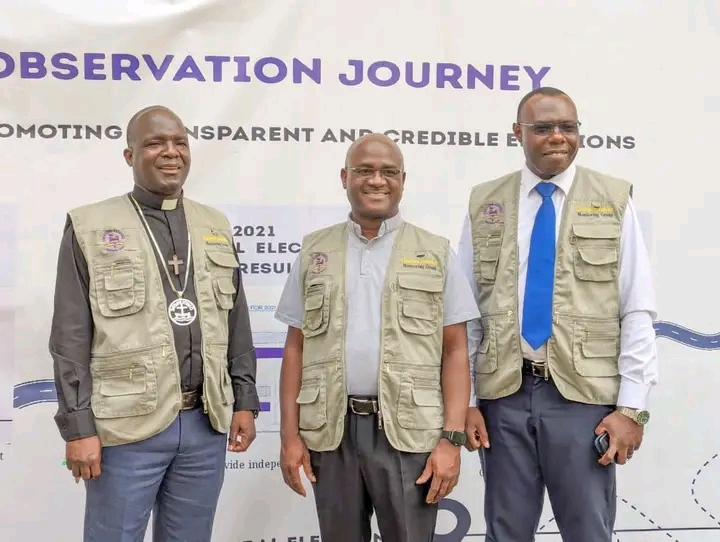
JOINT PASTORAL STATEMENT OF THE THREE CHURCH MOTHER BODIES
JOINT PASTORAL STATEMENT OF THE THREE CHURCH MOTHER BODIES
COUNCIL OF CHURCHES IN ZAMBIA (CCZ), EVANGELICAL FELLOWSHIP OF ZAMBIA (EFZ) AND ZAMBIA CONFERENCE OF CATHOLIC BISHOPS (ZCCB)
“LOVING OUR NEIGHBOUR – EVEN IN CYBERSPACE”
A Call to Peace, Responsibility, Respect and Responsible Use of Social Media
To the Church and the People of Zambia
We, the three Church Mother Bodies—the Council of Churches in Zambia (CCZ), the Evangelical Fellowship of Zambia (EFZ), and the Zambia Conference of Catholic Bishops (ZCCB)—greet the people of Zambia in the precious name of our Lord and Savior Jesus Christ, the Prince of Peace.
As Zambia reflects on the 2026 General Elections, we reaffirm our commitment to peace, national unity, human dignity, justice, reconciliation and democratic values. We call upon all Zambians to embrace tolerance, respect and unity, recognizing that elections should never divide us or undermine our shared responsibility to build a peaceful and prosperous Zambia.
Our three Church Mother Bodies have publicly committed ourselves, together with political leaders and other stakeholders, to promoting peace through the Peace Pledge. We now call upon every Zambian to translate that commitment from a signed pledge into daily conduct—in our homes, communities, churches, political spaces and, increasingly, on social media and other digital platforms.
1. OUR CONCERN ABOUT THE USE OF SOCIAL MEDIA
We recognize that social media has become an important platform for communication, civic participation, information sharing and public debate. It can be a powerful tool for educating citizens, holding leaders accountable, amplifying the voices of young people and strengthening democracy.
However, we are increasingly concerned by the manner in which some social media platforms are being used to spread propaganda, misinformation, disinformation, insults, ridicule, personal attacks, inflammatory messages and content intended to provoke anger and hostility.
We are particularly concerned about content that seeks to divide Zambians along political, regional, ethnic, generational or other lines.
Of even greater concern is the deliberate involvement and use of children in political communication, including the production and circulation of videos and messages in which children are encouraged or permitted to insult, ridicule or demean political leaders, public officials and other adults.
Children should not be made instruments of political hostility.
Our children are the future of Zambia. We must not socialise them into hatred, insults and intolerance. We must instead teach them truth, respect, responsibility, dialogue, compassion and peaceful coexistence.
2. LOVING OUR NEIGHBOUR IN CYBERSPACE
The Word of God gives us a simple but profound command:
“Love your neighbour as yourself.” – Mark 12:31
This command applies everywhere—including Facebook, WhatsApp, TikTok, X, YouTube and every other digital platform.
The Apostle Paul reminds us:
“Let no corrupting talk come out of your mouths, but only such as is good for building up.” – Ephesians 4:29
This is equally applicable to what we type, post, record, share and forward.
3. FREEDOM OF EXPRESSION MUST BE ACCOMPANIED BY RESPONSIBILITY
We affirm the importance of freedom of expression and the right of citizens to participate in public affairs and hold leaders accountable.
However, freedom of expression should never become a licence for hatred, humiliation, incitement, deliberate misinformation or the destruction of another person’s dignity.
We can disagree without being enemies.
We can criticise policies without insulting people.
We can challenge leaders without dehumanising them.
We can defend our political parties without attacking those who support another party.
Democracy requires disagreement, but peace requires discipline in how we disagree.
We therefore call upon all citizens to exercise their freedoms responsibly and to verify information before sharing it.
4. OUR ZAMBIAN VALUES OF RESPECT
Zambia has traditionally been known as a nation where respect for elders, parents, leaders, teachers and fellow citizens is highly valued.
Our cultural traditions have taught us that disagreement does not require disrespect.
We are therefore deeply concerned when children are encouraged to insult the President, political leaders, elders or other adults.
It is contrary to the values we wish to pass to future generations to teach children that political disagreement gives them permission to insult adults.
At the same time, we emphasise that respect for leaders does not mean that leaders are beyond accountability or legitimate criticism. Leaders, like all citizens, are accountable to God, the law and the people they serve.
Our message is therefore not “do not question leaders.”
Our message is:
“Question with respect. Criticise with truth. Disagree without hatred. Participate without violence.”
This is the Zambia we want to leave to our children.
7. A SPECIAL APPEAL TO THE CHURCH AND OUR CLERGY
We call upon all bishops, pastors, priests, reverends, ministers, evangelists, chaplains and church leaders across Zambia to make peacebuilding and responsible communication part of their pastoral ministry.
We urge clergy to:
1. Read this Joint Pastoral Statement during church services and congregational gatherings.
2. Preach regularly on the biblical call to peace, love, truth and reconciliation.
3. Encourage members to use social media responsibly.
4. Remind congregants that Christian conduct applies equally online and offline.
5. Discourage political insults and inflammatory speech within congregations.
6. Encourage respectful participation in the electoral process.
7. Pray for political leaders, candidates, citizens and the nation.
8. Protect children from political manipulation and online abuse.
9. Encourage members to verify information before sharing it.
10. Remind each other that our first identity is not political—it is human—and for believers, we are first and foremost people created in the image of God.
We especially call upon clergy to read this statement to their congregations every Sunday and to use it as a pastoral moment to challenge every member of the Church to become an ambassador of peace both in person and online.
9. OUR APPEAL TO ZAMBIA
We therefore call upon all political parties, candidates, citizens, churches, civil society organisations, traditional leaders, the media, parents, young people and every person of goodwill to join us in protecting the peace of our beloved nation.
Let us refuse to allow social media to become a battlefield.
Let us refuse to allow propaganda to replace truth.
Let us refuse to allow insults to replace dialogue.
Let us refuse to allow political differences to destroy our common humanity.
Let us refuse to use our children as instruments of political hostility.
Instead, let us use our voices, our platforms and our influence to build, heal, reconcile and unite.
ZAMBIA IS BIGGER THAN OUR POLITICAL DIFFERENCES.
The elections will come and go. Political campaigns will end. Leaders and governments will change.
But Zambia will remain.
Our children will inherit the country we shape today.
Let us therefore leave them a Zambia characterized by peace rather than hatred; dialogue rather than insults; truth rather than propaganda; respect rather than humiliation; and unity rather than division.
LOVING OUR NEIGHBOUR DOES NOT STOP WHEN WE PICK UP OUR PHONE.
LET US LOVE OUR NEIGHBOUR—EVEN IN CYBERSPACE.
May God bless Zambia.
May God bless our children.
May God grant wisdom to our political leaders.
May God strengthen the Church in her ministry of peace and reconciliation.
Issued jointly by:
COUNCIL OF CHURCHES IN ZAMBIA (CCZ)
EVANGELICAL FELLOWSHIP OF ZAMBIA (EFZ)
ZAMBIA CONFERENCE OF CATHOLIC BISHOPS (ZCCB)
Lusaka, Zambia
23rd August 2026
Signed by:
Rev. Canon James Phiri — CCZ
Reverend Allan Kasungami — EFZ
Father Francis Mukosa — ZCCB