
ITS ILLEGAL, INVALID, QUASH IT! LINDA KASONDE TELLS CONCOURT
ITS ILLEGAL, INVALID, QUASH IT! LINDA KASONDE TELLS CONCOURT
BY NEWSBREAKERS
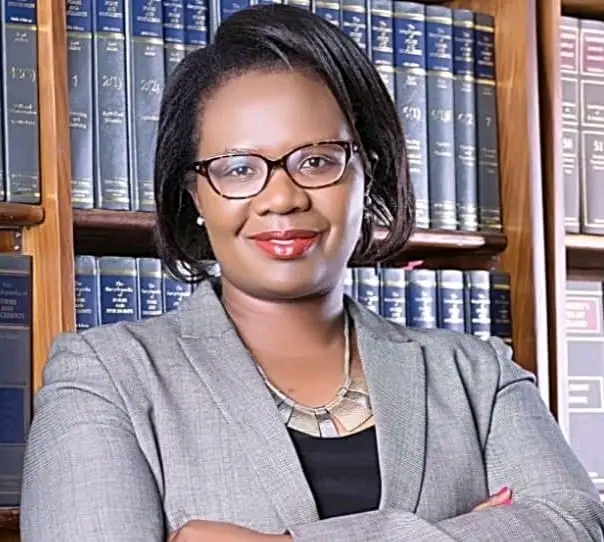
LCK Freedom Foundation chairperson Linda Kasonde insists they are not challenging the 1991 Constitution, but rather the amendment act no 13 of 2025 which was faulty by conception.
And the Constitutional Court has reserved judgment to a date to be announced.
Ms Kasonde argued before a full bench of nine Constitutional Court Judges that it was not too late to cure an illegality caused by the process of amendment when it failed to meet the prescribed criteria according to the Munir Zulu and Celestine Mukandila vs Attorney General Judgment of 2025.
She said an Act is recognised as being valid until its declared invalid, and that was the situation with the current law, which she said could be cured by the Constitutional court declaration.
She said the insistence to stick to Article 79 of the constitution cannot stand all because they find it convenient for them, when they say ballots have already been printed.
This was after Attorney General Kabesha Mulilo, Solicitor General Marshall Muchende and the chief deputy state advocate Mwiya Monde all pleaded with the Constitutional Court to dismiss the petition that it was late as the act No 13 of 2025 was already part of the constitution.
They argued that the petition was late before court as the constitutional could not invalidate itself.
They said because it was already part of law, and that it bore a huge inconvenience with all women, youth and disabled communities already waiting to be a part of the proportional representation in parliament, they asked the Court to throw it out.
But Ms Kasonde argued that the drafters of the amended Act No. 13 of 2025 should have known that it was late that they could not benefit from having pursued an unconstitutional amendment process which resulted in an illegality.
She cited the Law Association of Zambia (LAZ) case against the Attorney General when they sued ministers and their deputies for failing to leave office after dissolution of government about 10years ago, which case they won as the court held that each of the ministers had overstayed their welcome and therefore ordered to refund all monies paid while in office, as an example of the powers and jurisdiction the court help within itself.
“Justice is not about convenience, it’s about the law, and on this case, it about the Constitution.
“There are no sacred cows, everyone not the legislature, not the executive but everyone is bound by the constitution,” she said.
She charged that the petitioner not only produced extensive evidence, but also the failure by the respondents when they acted to enact a faulty constitution.
She has pleaded with the Constitutional Court, to use its powers used before to defend the constitution, adding that “Constitutional rights cannot and do not expire, this the Court has the power and can repeal unconstitutional laws”.
Mr Kabesha had earlier submitted that it was too late to petition the courts over an act which was already a law, and that some people refused to be part of the amendment process but have decided to run before court for a cure.
He said the petition was entirely without merit basically for three principle reason with the constitution as 1) prohibits any challenges to this legality, 2) Parliament enacted and 3) the basic structure doctrine has no constitutional foundation in Zambia.
He said the constitution prohibits any challenge to its validity or legality, and that Parliament enacted art 13 of 2025, and it fulfilled all the requirements in line with art 75 of the constitution.
And Solicitor General Muchende argued that there was not enough public participation, since there was no grounds to base it on.
He said the countries such as Zambia practiced constitutional democracy where by the rule of the people was reduced to representation.
The LCK Freedom Foundation filed a Petition in the Constitutional Court of Zambia challenging the constitutionality of the process leading to the enactment of the Constitution of Zambia (Amendment) Act, No. 13 of 2025.
The Petition is filed under Article 128 of the Constitution, which states that the Constitution belongs to the people, and the people alone have the authority to determine how it is changed.
Ms Kasonde argued that the Government’s approach to constitutional amendment was unconstitutional and that any future process must be people-driven, transparent, and led by an independent body of experts.
Constitutional Court President Lady Justice Margrate Munalula on behalf of the Bench OF NINE JUDGES reserved ruling to a date to be communicated.