IF A PRODUCT IS DEFECTIVE, IS THE SELLER ALWAYS TO BLAME?
Picture this:
You buy a brand-new bicycle. After riding it around for more than a year, you march back to the shop pushing it by hand.
“Bwana, this bicycle is broken. Give me a new one.”
The shopkeeper spins the wheel, scratches his head and says, “Yes… it’s definitely broken.”
So, case closed?
Not quite.
The real question is not whether the bicycle is broken today. The real question is who broke it and when?
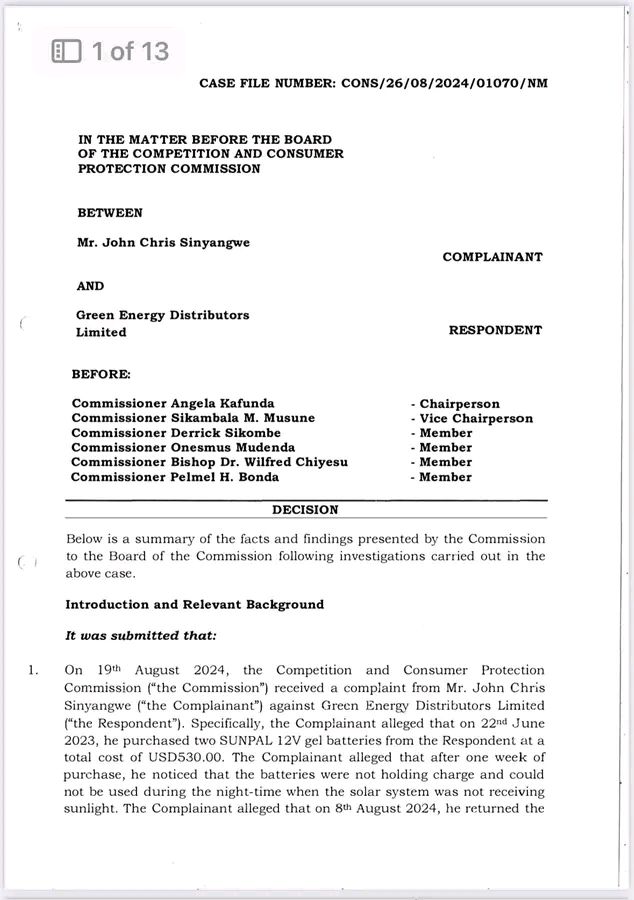
That, in simple terms, is exactly what the Competition and Consumer Protection Commission (CCPC) had to decide in this battery case.
A customer bought two solar batteries. He said they stopped holding charge just one week after buying them. But there was one small problem, he only returned them fourteen months later, after the one-year warranty had already expired.
The batteries were tested. First by the seller. Then by experts at UNZA. Everyone agreed on one thing: the batteries were no longer doing their job. They were as useful as a torch with dead cells during load shedding.
But the experts also found something important. Batteries can die for many reasons: overcharging, undercharging, deep discharging, using the wrong charger, or simply being mistreated over time. In other words, the tests could prove the batteries were dead, but they could not identify the killer
And that made all the difference.
The CCPC said, “We cannot simply assume the seller supplied defective batteries. After fourteen months, there are too many possible explanations, and there is no evidence proving the batteries were already faulty when they were sold.”
So, the complaint failed.
WHAT DOES THIS MEAN FOR ORDINARY ZAMBIANS?
Consumer protection is powerful, but it is not magic. The law protects buyers, yes, but it also requires evidence. If something goes wrong, don’t keep quiet until the warranty has packed its bags and left the country. Report the problem early while the evidence is still fresh.
Moral of the story?
A broken product does not automatically make a guilty seller. In law, timing matters, evidence matters, and waiting too long can turn a strong complaint into a weak one. Even the best lawyer cannot charge a dead battery, or resurrect missing evidence.
Disclaimer:
My commentary on this decision is no more a legal critique than a campfire tale is a treatise on thermodynamics. It is, rather, a dramatized retelling, a lively reenactment if you will, of the judicial clash, unburdened by the solemn drudgery of analysis and delivered with the unapologetic zest of a storyteller who knows a good duel when he sees one.