
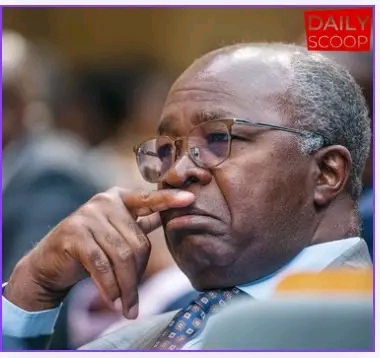
MWAMBA CRITICISES MUSOKOTWANE’S REAPPOINTMENT AS FINANCE MINISTER:
Former Zambian diplomat Emmanuel Mwamba has criticised President Hakainde Hichilema’s decision to reappoint Situmbeko Musokotwane as Minister of Finance and National Planning, arguing that the move represents continuity in economic policy rather than a shift in direction.
Musokotwane was retained in the finance portfolio following President Hichilema’s inauguration for a second term, making him one of the ministers to continue serving in the new Cabinet.
However, in a statement issued in Lusaka on Tuesday, Mr Mwamba questioned what he described as Musokotwane’s record on public borrowing, mining taxation and domestic revenue mobilisation during his previous tenures as finance minister.
Mr Mwamba said Musokotwane’s first term at the Ministry of Finance, between 2008 and 2011, was characterised by policies that, in his view, favoured mining companies at the expense of Government revenue.
He particularly criticised the abolition of the windfall tax introduced under former Finance Minister Ng’andu Magande.
“Sadly, he brings more of the same,” Mr Mwamba said. “When he became Minister of Finance in 2008, he abolished Ngandu Magande’s Windfall Tax, a profit-sharing mechanism that was earning Zambia $600 million a year.”
Mr Mwamba further claimed that Zambia’s external debt increased from approximately $500 million when Musokotwane assumed office in 2008 to $3.8 billion by the time he left Government in 2011.
He also criticised Musokotwane’s second tenure as Finance Minister, which began in 2021 under President Hichilema.
According to Mr Mwamba, Government reversed a policy that had made mineral royalties non-deductible for tax purposes and later reduced the mineral royalty tax rate from six per cent to three per cent.
He argued that the changes reduced the taxable income of mining companies and weakened Government revenue from the mining sector.
“Zambia, which had begun to earn an average of $1 billion a year since 2019, began to earn only about $250-300 million per year from direct taxes from the mines,” Mr Mwamba claimed.
He said Zambia was consequently failing to benefit adequately from the sustained rise in international copper prices.
Mr Mwamba further predicted that Government would continue relying on borrowing to finance its economic programmes under Musokotwane’s leadership.
“So he will rely on more borrowing! As he did in 2008 and now 2021, he will do the same,” he said.
He also raised concerns about the country’s debt levels, claiming that external debt had increased from $11.9 billion in 2021 to $17 billion in 2026, while domestic debt rose from K178 billion to K252 billion over the same period.
Mr Mwamba accused the Government of shifting the debt burden into the future through debt restructuring and additional borrowing.
“He will reschedule more debts to a future government and openly steal the economic future of young people by saddling them with rescheduled debts and fresh loans payable in their future,” he said.
Musokotwane’s reappointment comes as the Hichilema administration begins its second-term programme, with the President warning newly appointed ministers that their performance will be closely monitored and that those who fail to deliver could be removed.