
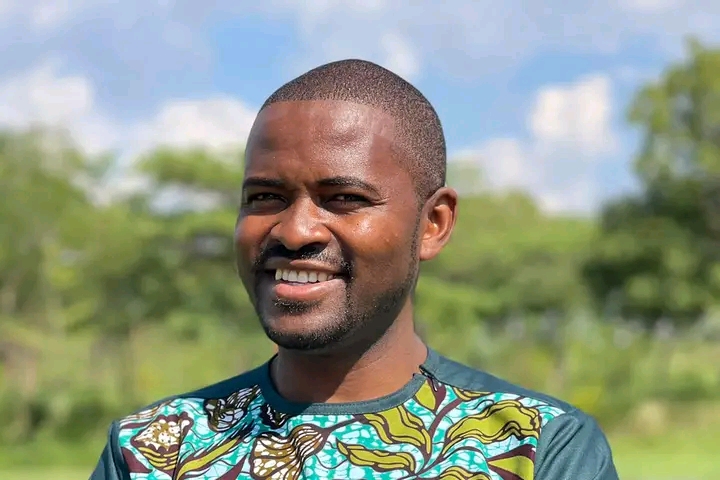
Zimba calls on HH and BM to heal Zambia after divisive 2026 election
Political scientist and NRPUP Tonse Pamodzi Alliance member Chris Zumani Zimba has called on President Hakainde Hichilema and Brian Mundubile to put aside their political differences and lead a national reconciliation process following what he describes as a deeply divisive and hostile 2026 presidential election.
Lusaka, 21 August – Zimba says Zambia now needs political leaders to rise above partisan interests and prioritise national unity, peace and reconciliation, arguing that the country cannot afford to remain politically polarised after an election that has left sections of the population deeply divided.
In a statement outlining 12 reasons why Mr Hichilema and Mr Mundubile should work towards healing the country, Zimba said his earlier proposal for an inclusive government of national unity was made in good faith and was informed by his academic background in political science and conflict resolution.
He said political scientists are trained to analyse societal conflicts, facilitate stakeholder mediation and develop practical approaches to dispute settlement, adding that his proposal should therefore be viewed as an attempt to contribute to national healing rather than as a partisan political position.
According to Zimba, the August 2026 presidential election will remain controversial and divisive for a number of reasons, including concerns surrounding the electoral process and the conduct of the Electoral Commission of Zambia (ECZ).
He argued that when a country becomes politically fractured, leaders have a responsibility to place national interests ahead of their personal and partisan considerations.
Zimba proposed an arrangement in which Mr Hichilema could work with Mr Mundubile in a broader national unity framework, saying such cooperation could send a powerful message of reconciliation across the country.
He suggested that the two politicians could jointly tour provinces that have historically been politically divided and appear together on public platforms as political rivals who had chosen reconciliation over confrontation.
“Such political interventions are not designed to make HH or BM happy, but to unite and heal the divided nation,” Zimba said.
He argued that following a highly contested election, the winner should be willing to work with the loser while the losing side should accept the electoral outcome and support efforts aimed at maintaining peace.
Zimba acknowledged that such an approach would not necessarily satisfy either political camp, but said similar principles of political reconciliation, peacebuilding and conflict resolution have been used in divided societies elsewhere in the world.
He further acknowledged that, regardless of disagreements surrounding the election, the ECZ had declared Mr Hichilema the winner.
Zimba, who said he was speaking from the perspective of the NRPUP Tonse Pamodzi Alliance, conceded that the alliance had lost the election and described Mr Hichilema as the country’s legally declared president for the next five years.
He said this was a difficult reality for supporters of the opposition alliance to accept but argued that accepting the declared outcome was necessary if political actors genuinely wanted to protect Zambia’s peace.
Zimba also called on President Hichilema to demonstrate what he described as political tolerance and national leadership by reaching out to Mr Mundubile, the Tonse Pamodzi Alliance and the wider opposition.
He said Mr Hichilema had an opportunity to establish a legacy of reconciliation by behaving like a statesman capable of bringing opposing political camps together.
Zimba further appealed to the President to discourage what he described as harassment, insults and threats against Tonse Pamodzi supporters allegedly being carried out by some UPND members.
He said the President should act primarily as the head of state rather than as a partisan political leader, particularly at a time when tensions remain high.
At the same time, Zimba said Mr Mundubile also had a responsibility to contribute to national healing by accepting the election result and publicly calling on his supporters to remain peaceful.
He cited former President Michael Sata’s response to the 2008 presidential election as an example of how a defeated political leader could help preserve national calm by accepting an electoral loss and urging supporters to maintain peace.
Zimba said the same principle should apply to both the governing UPND and the opposition Tonse Pamodzi Alliance if Zambia’s political stability and national unity were to be preserved.
However, while calling for reconciliation, Zimba maintained that his alliance had entered the election determined to win and believed it had built significant political momentum during the campaign.
He said the NRPUP Tonse Pamodzi Alliance had emerged as a significant opposition force despite earlier claims that the
opposition was politically weakened.
Zimba alleged that the alliance subsequently encountered serious obstacles during the campaign, including instances where its rallies were allegedly blocked in parts of Copperbelt, North-Western and Western provinces.
He also said the alliance had avoided campaigning in parts of Southern Province because of security and political concerns.
The political scientist further alleged that efforts by the NRPUP Tonse Pamodzi Alliance to mobilise financial support through online fundraising were disrupted, and claimed that more than K7 million intended to support polling agents was seized.
He said the alleged financial difficulties weakened the alliance’s ability to prepare adequately for election day.
Zimba also questioned aspects of the vote-counting and results-announcement process, saying the alliance remained dissatisfied with how the election was conducted.
He alleged that while the opposition had prepared for what it regarded as a competitive democratic election, the ruling party benefited from the advantages of incumbency and state power.
However, despite these criticisms, Zimba drew a distinction between his political assessment of the election and the legal position arising from the ECZ declaration.
He argued that while he personally believed there were serious shortcomings in the competitiveness and transparency of the electoral process, the declared winner remained Mr Hichilema unless and until a competent legal process determined otherwise.
“Legally and politically, the winner is only HH here because he was declared so by ECZ based on the mathematical evidence of the voter numbers,” he said.
Zimba said any political party or alliance that believed the election had been conducted improperly should pursue the matter through the appropriate legal channels.
He nevertheless urged all political actors to recognise the current political reality and avoid actions that could deepen divisions.
He concluded by calling on Zambians to pray for both Mr Hichilema and Mr Mundubile during what he described as a difficult period, saying the country’s future should ultimately take precedence over political rivalry.
The statement comes as Zambia begins a new political chapter following the 2026 presidential election, with calls for reconciliation likely to remain central to efforts to rebuild trust between supporters of the governing party and the opposition.
-Nkanionline 2026