
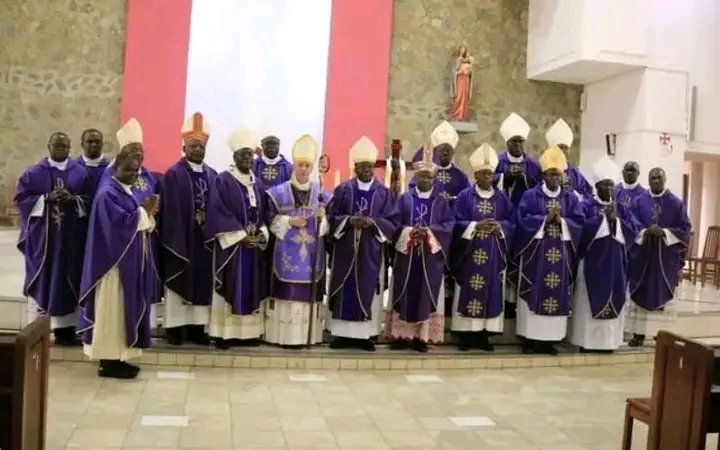
Catholic bishops call for dialogue, justice
…ZCCB raise concern over political polarisation, arrests and electoral credibility
By Staff Reporter
THE Zambia Conference of Catholic Bishops (ZCCB) has called for urgent national dialogue, reconciliation and healing amid growing political polarisation, fears over personal security and concerns about the rule of law and democratic institutions.
The bishops have also raised concern over the narrowing of space for freedom of expression, the treatment of independent media and civil society, arrests of opposition political actors, intimidation, political violence and concerns surrounding the credibility and transparency of the 2026 General Elections.
“The present moment requires not silence or resignation, but responsible action directed towards peace, justice, reconciliation and the common good,” the bishops said in a pastoral statement issued yesterday after an extraordinary plenary meeting held on Tuesday.
Eight bishops met on September 29 to deliberate on the situation in Zambia, saying they had listened to the concerns, fears and hopes of citizens before reflecting on the issues in the light of the Gospel and the social teaching of the Catholic Church.
The bishops said their intervention was not intended to deepen political divisions or take sides in partisan struggles, but to contribute to the protection of human dignity, justice, truth, peace and national unity.
They said increasing political polarisation was weakening dialogue and cooperation while making it difficult for citizens to place the common good above partisan interests.
The ZCCB also expressed concern over the manipulation of ethnic identities and tribal sentiments for political purposes, warning that such tendencies threatened the spirit of ‘One Zambia, One Nation’ and could create divisions and mistrust among citizens.
The bishops said many citizens were experiencing fear relating to personal security, freedom of expression, employment and the consequences of expressing political opinions
They also raised concern about a narrowing of the space for freedom of expression, including concerns over the treatment of independent media, civil society and dissenting voices.
“A healthy democracy requires room for responsible disagreement, scrutiny and peaceful participation,” the bishops said.
The ZCCB also questioned the credibility and transparency of electoral processes, especially concerns raised over the conduct and management of the 2026 General Elections.
The bishops said public confidence in elections was essential to the legitimacy and stability of democratic institutions.
They also expressed concern over restrictions affecting access to justice and perceptions that the independence of institutions of governance and the rule of law were being weakened.
The bishops said they were also concerned about difficulties faced by opposition parties and political actors, including reports of harassment, restrictions and arrests.
“Democracy requires space for alternative political voices and peaceful political participation,” they said.
The bishops also cited intimidation, political violence and cadreism as factors discouraging citizens from participating freely and peacefully in public life.
They raised concern over debates surrounding constitutional provisions relating to presidential terms of office, especially where such debates give rise to anxiety about constitutional safeguards and democratic continuity.
The ZCCB also expressed concern over reports of arbitrary arrests and detention, the presence of military personnel in civilian spaces and reports of excessive or unlawful use of force, including the loss of civilian lives.
“Every human life is sacred and must be protected,” the bishops said.
The bishops said the developments could weaken trust between citizens and institutions and deepen divisions in society.
They called for a renewed commitment to constitutionalism, the rule of law and the independence of institutions established to serve the people.
“Public institutions must be instruments of justice and service rather than sources of fear,” they said.
The ZCCB also called on political leaders and actors to place the common good above partisan interests and reject inflammatory language, tribalism, violence and political intolerance.
They urged citizens to resist provocation and reject hatred, tribalism and violence, while exercising their rights and responsibilities peacefully and responsibly.
The bishops called for protection of freedom of expression and association, as well as the legitimate space required by the media, civil society and citizens to participate in national affairs.
They called for the protection of due process and access to justice and an end to arbitrary arrests, intimidation and political violence.
Among the measures proposed by the bishops is a sustained process of national dialogue, reconciliation and healing bringing together people and institutions across political, ethnic, religious and social differences.
They also called for strengthening the independence, credibility and effectiveness of institutions that safeguard democracy, constitutionalism, justice and the rule of law.
The ZCCB said electoral processes should be reviewed and strengthened where necessary to ensure citizens had confidence that their votes were protected and electoral outcomes managed transparently and credibly.
The bishops also called for intensified civic and constitutional education, especially among young people, and stronger peace-building and reconciliation initiatives at national, provincial, diocesan, community and grassroots levels.
They urged greater protection for responsible journalism and the legitimate work of civil society, as well as pastoral, humanitarian and legal support for people and families affected by violence, arbitrary detention, intimidation or other forms of injustice.
The bishops said their statement was intended to give hope rather than deepen fear, assuring citizens that the Church heard their concerns and would continue accompanying the nation through prayer, listening, dialogue and follow-up action.
“We call upon all people of good will to work together so that Zambia may remain a home for all her children, a nation in which human dignity is respected, justice is accessible, differences can be expressed peacefully, and power is exercised as service,” the bishops said.
They also urged Zambians to choose dialogue over confrontation, reconciliation over revenge, truth over falsehood, justice over impunity and solidarity over division.
For the Catholic community, the bishops declared October a special month for Holy Rosary prayers and urged clergy, religious and lay faithful to gather in numbers to pray for peace in Zambia.
The statement was issued at Kapingila House yesterday, on the memorial of St Jerome, and signed by ZCCB president Archbishop Ignatius Chama, vice-president Bishop Charles Kasonde, Bishop George Lungu, Bishop Clement Mulenga, Bishop Patrick Chisanga, Bishop Edwin Mulandu, Bishop Raphael Mweempwa and Auxiliary Bishop Gabriel Msipu Phiri.