
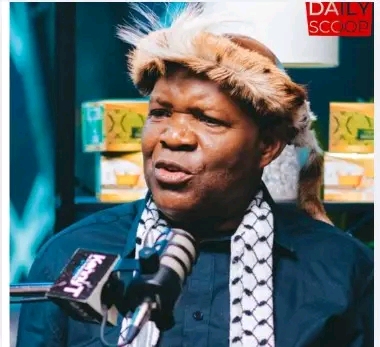
M’MEMBE CHALLENGES BASIS FOR CHIEF MUKUNI’S PROPOSED PARAMOUNT CHIEFTAINCY STATUS
M’MEMBE CHALLENGES BASIS FOR CHIEF MUKUNI’S PROPOSED PARAMOUNT CHIEFTAINCY STATUS:
SOCIALIST Party president Fred M’membe has questioned the constitutional and historical basis of efforts to have Chief Mukuni recognised as a Paramount Chief, arguing that the modern system of ranking traditional leaders was largely shaped by colonial administration rather than indigenous tradition.
Mr M’membe said the debate surrounding the proposed elevation of Chief Mukuni raises broader questions about the relationship between Zambia’s traditional institutions, colonial-era structures and the constitutional protection of chieftaincy.
He traced the formal grading of traditional leaders into categories such as Paramount Chiefs, senior chiefs, chiefs and sub-chiefs to colonial legislation enacted in 1936, including the Native Authorities Ordinance No. 9 and the Barotse Native Authorities Ordinance No. 25.
According to Mr M’membe, Zambian communities had established systems of traditional authority, councils and customary courts long before the colonial administration introduced the formal hierarchy.
He argued that the colonial administration effectively placed a ranking system over existing traditional institutions as part of its system of indirect rule.
Mr M’Mbe’s argument also centres on Article 165 of the Constitution, which provides that the institution of chieftaincy and traditional institutions shall exist in accordance with the culture, customs and traditions of the people to whom they apply.
The same article states that Parliament shall not enact legislation conferring on a person or authority the right to recognise or withdraw recognition of a chief, or legislation that derogates from the honour and dignity of the institution of chieftaincy.
Mr M’membe pointed to the Constitutional Court’s 2019 decision in Mulubisha v Attorney-General, in which sections 3, 4, 5, 6 and 7 of the Chiefs Act were declared inconsistent with Article 165 and ordered to be expunged from the statute book. The case was brought by Chief Mwene Mutondo Mulubisha of the Nkoya people.
He said the ruling was significant because the impugned provisions had provided statutory mechanisms relating to the recognition and removal of chiefs.
Mr M’membe therefore questioned whether the State or Parliament can lawfully create or confer a new traditional ranking where such recognition is not grounded in the customs and traditions of the communities concerned.
However, a subsequent Constitutional Court judgment observed that the Mulubisha case had a narrower focus on presidential recognition of chiefs and did not determine issues relating to traditional institutions, Paramount Chiefs or the Litunga.
The Socialist Party leader also raised concerns about the political perception that could arise if Chief Mukuni were elevated following his reported support for President Hakainde Hichilema’s re-election.
Mr M’membe said he was not alleging an agreement between the two parties, but argued that such circumstances could create public perceptions that traditional titles were being influenced by political considerations.
He further warned that opening the door to state-recognised rankings could potentially lead to similar demands from other traditional communities, including the Lamba, Lunda, Kaonde, Luvale, Nkoya, Namwanga, Tonga and Mambwe.
According to Mr M’membe, such disputes could increasingly shift attention towards competing claims over traditional rankings rather than the substantive role traditional leaders should play in national development.
His broader argument, he said, was not that traditional leaders should simply receive higher titles, but that chiefs and other community leaders should have a meaningful role in governance and economic decision-making.
Mr M’membe said traditional leaders, religious leaders and other community figures should be involved in addressing issues affecting their communities rather than having their authority measured primarily through titles conferred by the State.
He also linked the question of traditional authority to the socioeconomic challenges facing rural communities.
Mr M’membe pointed to Muchinga, Western, Northern, Luapula and Eastern provinces, arguing that areas with strong traditional institutions continue to face significant levels of poverty.
He said this should prompt a broader discussion about how traditional leadership can contribute to economic development, community empowerment and improved livelihoods.
The debate over Chief Mukuni’s proposed status therefore extends beyond the question of a title, touching on constitutional interpretation, customary authority, the legacy of colonial administration and the role traditional leaders should play in modern Zambia.
For Mr M’membe, the central issue is whether Zambia’s traditional institutions should be strengthened through titles and formal rankings or through greater participation in governance, development and decision-making at community level.