
By Given Mutinta
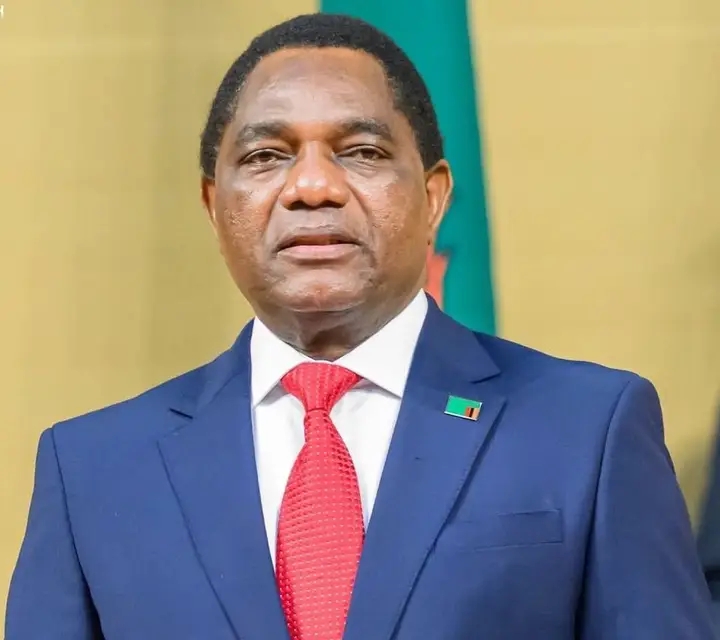
PRESISIDENT HICHILEMA’S FRAGILE ECONOMIC GAINS
The allure of tangible socio-economic progress in any country is undeniable.
President Hakainde Hichilema’s administration has set ambitious goals, such as increasing foreign reserves to US$6.2 billion and extending free education, though the quality remains questionable.
The government has also recruited over 50,000 teachers with low salaries and increased the number of vulnerable beneficiary households in social transfers to over 1.3 million, despite issues of significant corruption.
Additionally, over 20,000 poorly compensated health workers have been recruited, and the Constituency Development Fund (CDF) has risen to K40 million, yet it is also plagued by corruption.
The administration has initiated a debt restructuring process, which has not alleviated the rising cost of living, and while annual inflation has decreased to 6%, the financial situation for the impoverished population remains largely unchanged.
These initiatives, when viewed in isolation, paint a picture of a nation on the rise.
However, the true measure of a nation’s well-being and the sustainability of its progress are inextricably linked to the fundamental principles enshrined in its constitution, particularly those safeguarding individual freedoms.
When a government, such as President Hichilema’s, disregards these constitutional tenets, when the very framework designed to protect citizens’ rights is undermined, any statistical economic achievements trumpeted by President Hichilema and his sycophants, no matter how impressive, are hollow and built on sand.
Not matter how impressive economic indicators are presented, they are merely instruments, not ends in themselves. Their true value is contingent upon the context in which they are delivered.
If the state apparatus overseeing these initiatives, led by President Hichilema, operates outside the bounds of the law, or if the benefits of these programs are distributed in a way that discriminates against or silences dissent, as is the case, the very notion of progress is challenged.
Consider the fact where civil servants have been hired, but their right to assemble or express grievances is suppressed.
Or free education being provided, but critical thinking and open discourse are discouraged in and outside the curriculum using cybersecurity and crimes laws.
In this situation, the economic gain have become tools of control rather than catalysts for genuine empowerment.
The constitution serves as the bedrock of a democratic society, outlining the rights and responsibilities of both the state and its citizens.
It guarantees freedoms of speech, assembly, association, and the press, among others.
These freedoms are not mere abstract ideals; they are essential for holding President Hichilema accountable, fostering innovation, and ensuring that development is inclusive and serves the broader public interest.
When President Hichilema’s government, in its pursuit of economic goals, erodes these constitutional safeguards, it is an indication that Zambia is on a dangerous trajectory.
The relationship between human rights and economic development is not one of opposition but of fundamental interdependence.
President Hichilema must be reminded that sustainable and meaningful economic progress cannot exist in a vacuum devoid of constitutionalism or respect for human rights.
When citizens are free to express themselves without first thinking of getting a lawyer before they open their mouth, they can identify problems and propose solutions, contributing to more effective policy-making.
Freedom of assembly enables the formation of civil society organisations that can advocate for the needs of their communities and hold President Hichilema accountable, which is not possible due to the passage of the outdated Public Gatherings Bill.
A free press is critical for exposing corruption and ensuring transparency in economic dealings, but it has been stifled by the Independent Broadcasting Authority (IBA), which is only independent on paper.
While President Hichilema and his government are pursuing policies aimed at tangible socio-economic improvements, these advancements are ephemeral because they are not anchored in a deep and unwavering respect for the constitution and its guarantees of human freedoms.
This is the primary reason President Hichilema must be removed. He is a constitutional delinquent and a threat to our society.
He does not seem to understand that economic activity, no matter how robust, cannot compensate for the erosion of fundamental rights.
When the constitution is disregarded, and human rights are abused like he has been doing with impunity, the very fabric of a just and prosperous Zambia is weakened.
True progress as a country will be measured not only by President Hichilema’s economic statistics, but also by the extent to which all Zambians, regardless of ethnicity; Tonga or Bemba, can live with dignity, freedom, and security, knowing that their fundamental rights are protected by the rule of law.
Without this foundational respect, any economic gains of President Hichilema’s administration are a fragile edifice, vulnerable to collapse at the first sign of authoritarian overreach or systemic injustice…