
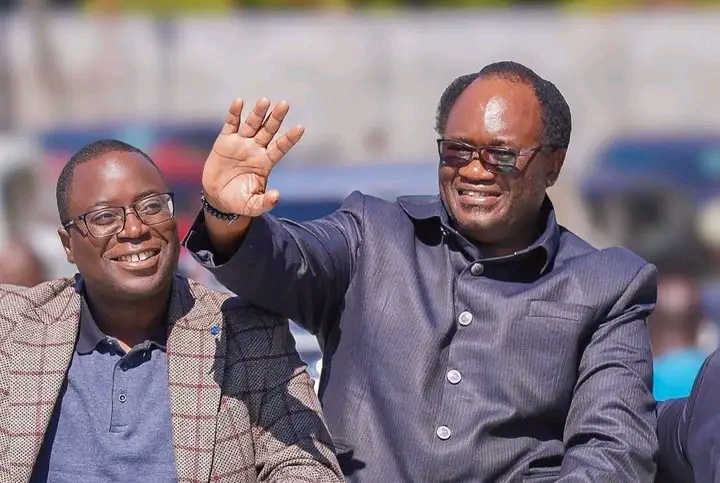
FAILED HH PLEDGES VERSUS BRIAN MUNDUBILE’S VISION OF HOPE
FAILED HH PLEDGES VERSUS BRIAN MUNDUBILE’S VISION OF HOPE
By Tonse Pamodzi Media
As Zambia approaches the August 13 general elections, the contest is no longer being framed around two competing narratives but has settled on one likely winner Brian Mundubile, leader of the National Revolutionary Party of Unity and Progress (NRPUP.
Brian Mundubile, a politically-tested politician who has served in government for many years has gone beyond what many Zambians have seen as attainable goals other than the incumbent President Hakainde Hichilema.
Mundubile has at all rallies articulated how he is going to address challenges of job creation, sustainable community development and improved social welfare.
One of the areas frequently highlighted by President Hakainde Hichilema and his UPND government like Social Cash Transfer programme including the government expanding the number of beneficiaries and increased budgetary allocations, critics contend that the programme has become a symbol of dependency rather than empowerment.
They argue that many vulnerable households continue to struggle with the high cost of living despite receiving government support.
NRPUP maintains that social protection should not only provide temporary relief but should also be linked to income-generating initiatives, skills development and access to affordable financing so that beneficiaries can eventually become self-reliant.
Employment remains another central campaign issue. Although the government has recruited thousands of teachers, health workers and security personnel into the public service, opposition voices argue that unemployment among young people remains stubbornly high. Many graduates continue to search for work, while a large proportion of Zambians survive in the informal sector with limited access to credit, markets and social protection.
Brian Mundubile has presented his campaign as one centred on job creation through industrialisation, support for small and medium-sized enterprises, value addition in agriculture and incentives for private sector investment that can generate both formal and informal employment opportunities.
Education has also become a major point of political debate. The introduction of free education by the UPND government has enabled many children to return to school, but critics argue that increased enrolment has not always been matched by adequate classrooms, desks, teaching materials and teachers.
They further contend that school feeding programmes remain inconsistent, particularly in rural areas where hunger contributes to absenteeism and poor academic performance.
Mundubile’s team argues that education reforms must go beyond eliminating school fees by ensuring quality learning environments and reliable nutrition programmes that keep children in school and improve educational outcomes.
The utilisation of the Constituency Development Fund (CDF) has equally attracted contrasting views. The UPND government describes CDF as one of its flagship decentralisation programmes, pointing to increased funding for community infrastructure and youth empowerment.
However, critics argue that implementation has been uneven, with some constituencies struggling to utilise the available funds due to bureaucratic procedures, inadequate technical capacity and delays in project execution.
NRPUP proposes a model that places greater emphasis on identifying locally available resources, supporting community-based enterprises and ensuring that development projects directly stimulate local economies instead of depending heavily on central government direction.
For Brian Mundubile and his vibrant and focused team, the 2026 election is therefore presented as a choice between continuing with policies they consider to have fallen short of expectations and adopting what they describe as a practical vision built on employment, productive social protection, quality education and community-driven development.
It is this message from a well-tested politician and pragmatist that has resonated with voters that will ultimately be determined at the ballot box, where competing visions for Zambia’s future will be put to the test.
However, it is clear that Mundubile’s light is shining on President Hakainde Hichilema and his cocktail of falsehoods.