
PRESIDENT HICHILEMA’S TROUBLES IN NORTH-WESTERN AND WESTERN PROVINCES RALLIES
PRESIDENT HICHILEMA’S TROUBLES IN NORTH-WESTERN AND WESTERN PROVINCES RALLIES
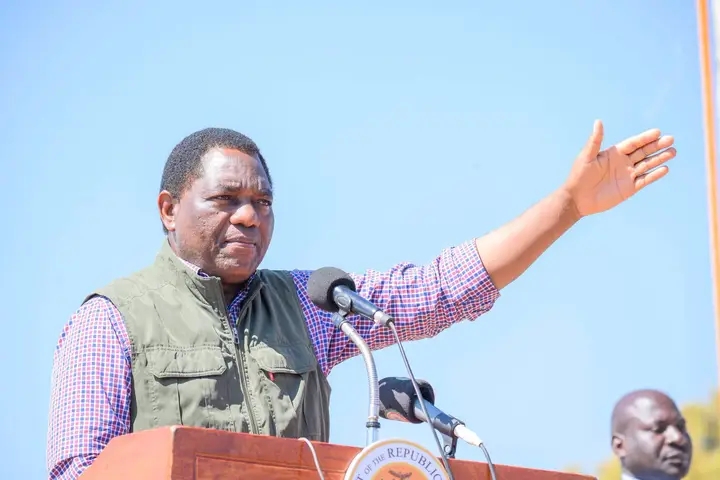
In the run-up to the pivotal August 13 General Election, President Hakainde Hichilema embarked on an intense campaign tour through North-Western Province, staging four rallies all in a single day.
The crescendo of this political tour culminated at the Kyawama Ground in Solwezi where throngs of enthusiastic supporters gathered, waving banners and chanting in a fevered show of support.
However, behind this spectacle lay a storm of complexities and growing disenchantment that quietly shadowed his path.
While the rallies ignited fervor, the President notably abstained from visiting several key places—Kasempa, Mufumbwe, Kabompo, Ikelenge, Kimpushi, and Mushindamo—areas historically crucial to his political base.
Official sources reveal that the intelligence wing warned of potential revolt due to unfulfilled election promises dating back to 2021.
This advisory exposed a brittle reality: skepticism and frustration have taken root deep within communities feeling neglected and disenfranchised.
Such avoidance signaled a troubling rift between campaign rhetoric and grassroots expectations.
The drama intensified as President Hichilema extended his tour to Western Province.
Despite his presence in the region, two prominent districts, Sesheke and Mwandi, remained conspicuously omitted from his itinerary.
Once again, intelligence warnings came into play, cautioning that protests might erupt centered on the government’s failure to deliver on a once-promised road construction project—a tangible symbol of progress starkly missing in the eyes of locals.
What emerges from this charged political theatre is a portrait of a leader caught between ambition and the burden of unmet commitments.
President Hichilema’s public rallies paint a façade of vitality and support, yet the shadow of unkept promises looms large, breathing life into growing opposition sentiment.
His inability—to confront dissatisfied constituents hints at a deeper crisis of trust, challenging the narrative of seamless governance and progress.
Consequently, the president’s support base is eroding where it matters most. Many voters see through the grandiose displays to a leader whose seemingly empty pledges have bred cynicism and disappointment.
The political expediency of winning hearts in visible arenas risks unraveling at the grassroots level, where the reality of governance is felt through daily struggles and tangible development—or the lack thereof.
Therefore, the tale of President Hichilema’s campaign tour reveals the clash between hope and reality, rhetoric and action, presence and absence not only in the North-Western and Western Provinces but also across all the provinces.
This unfolding episode stands to shape not only the outcome of the election but the very future of democratic accountability in the nation.
In politics, as in life, promises made but not kept inevitably invite reckoning—one that voters in the North-Western and Western Provinces are clearly preparing to deliver.