
THE LOOMING ELIGIBILITY CASE OF PRESIDENT HICHILEMA
THE LOOMING ELIGIBILITY CASE OF PRESIDENT HICHILEMA
By Given Mutinta
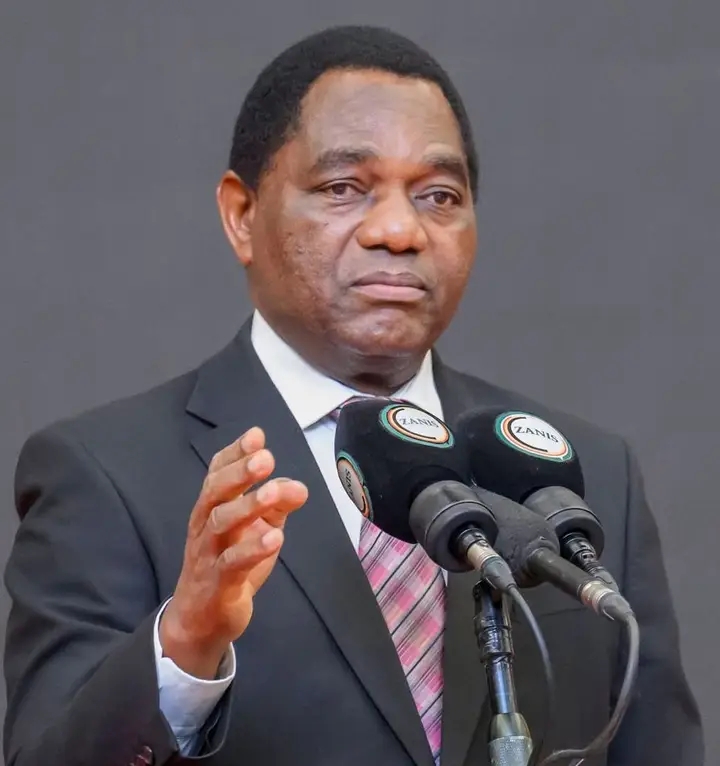
This Friday the Constitutional Court undertakes a case scrutinizing the eligibility of President Hakainde Hichilema.
Brought forward by Charles Longwe, the challenge alleges that the ruling United Party for National Development (UPND) contravened both its internal regulations and national constitutional mandates during its recent leadership convention.
The core of Longwe’s argument centers on the assertion that the UPND failed to conduct its elective convention “within” the stipulated five-year cycle, as required by Article 52 of the party constitution.
This delay purportedly resulted in the expiration of the mandates held by President Hichilema and the National Management Committee (NMC), thus stripping them of the legitimate authority to organize the convention that elected new office bearers.
Furthermore, Longwe invokes Article 60 of Zambia’s constitution, which requires regular, free, and fair intra-party elections to uphold democratic values within political parties, citing, among other things, handpicking of leaders, intimidation, and violence.
Should the court find substance in these claims, the consequences for President Hichilema could be profound, potentially rendering him disqualified from office.
While such a scenario may surprise some, it is consistent with long-standing concerns about his contentious relationship with constitutional norms, which has led some to label him a constitutional delinquent.
Since taking office, President Hichilema’s tenure has been shadowed by controversies, including his advocacy for Bill 7 despite prior constitutional court rulings deeming parts of its enactment process illegal, as well as support for 74 hastily passed bills with questionable procedural transparency.
This pattern highlights his prioritization of political expediency over strict constitutional adherence, raising alarms about governance, separation of powers, and respect for democratic practices.
Coupled with tribal and regional divisiveness, selective justice, and weaponised anti-corruption measures, these issues complicate the his legitimacy and public trust.
Regardless of the court’s ruling on the eligibility case, President Hichilema’s political future looks uncertain.
The erosion of constitutional discipline and the accumulation of systemic governance challenges have not only significantly weakened his standing but jeopardised his political career.
These developments make winning the August elections difficult, as people have seen through his true colours, namely a constitutional delinquent lacking national leadership qualities.